Computer Literacy and Virtual Reality experiences
Samsung Gear VR - Oculus rift - HTC Vive
Samsung Gear VR - Oculus rift - HTC Vive
Stravistix for strava is a Chrome plugin. It allows you to analyse the data from your ride in more detail and with more graphs. In the detailed view you can see heart rate information, speed, power, grade, elevation and  ascent speed. It allows you to see each metric in more depth. It allows you to look at your statistics in detail. You can see what percentage of the ride was flat, uphill or downhill. You can see how fast you were climbing and how your speed varies. [gallery columns=“4” ids=“2707,2708,2709,2710,2711,2712,2713”] This breadth of data is fun to play with. It allows you to see whether you do spend as much time as you thought climbing. It also allows you to see how much of your time was spent static or moving. There is a weather module for wind, temperature, clouds and humidity. This is a nice way of checking whether the wind is favourable to the ride you are thinking of doing that day. What I would like to see next is a log of the weather and especially wind during the ride. It would like to see ground speed in contrast to wind speed. This data should be relatively easy to acquire. Plugins are great because they allow you to do more with the data that you or other people generate. They allow weekend and professional riders to analyse how they are progressing. It also allows riders to compare themselves with others.
The history of entertainment is a long one. We have gone from banquet entertainment during Roman and Medieval times. We have had radio and television to entertain us. We have also had books, magazines and kindles. The idea of Virtual Reality and dinner is not that strange. What is fascinating about Virtual reality is that in our lifetime it has gone from requiring massive computers and cumbersome devices. Today virtual reality can be experienced with a mobile phone. The technology has shrunk and become affordable to such an extent that restaurants want to take theme restaurants from décor, painted walls and location to virtual reality.
When people write about self-driving cars they write from the perspective of people living in cities. I live in the Swiss countryside at the foot of the Jura which results in me seeing the potential of self-driving cars differently. For a start at the moment buses operate from 5 in the morning to 9 in the afternoon. There is a tow hour gap at lunchtime when there is no service and at other times the frequency is once an hour, except at rush hour. When self-driving cars are available I see the bus and taxi services being discontinued. I also see the space dedicated to parking in cities vanishing. I see cars being used to connect villages to town. You get into the self-driven car and it takes you to the train station. From the train station in Nyon you get to Geneva or Lausanne. From Geneva or Lausanne you have trains and buses to take you to your final destination if you are either recovering from an injury or carrying too much weight. Scuba diving and winter sports require a lot of gear so a self-driven car would be helpful. I also see self-driving cars as being great for teenagers living in the countryside. Self-driving cars will provide a 24 hour per day transportation. This means that teenagers will be able to take the last train home and catching a self-driven car from the train station to home. I see this as being just as useful for grown ups who like to have more than one drink when out socialising with friends. For now society believe in designated drivers. With self-driving cars the designated driver will be a thing of the past. The train will transport you from the train station to your home. It will also provide country bumpkins with the opportunity to stay out even after the last train. It will equalise city slickers and country bumpkins. On weekends when groups meet up to do activities self-driving cars will be of great use. At the moment when you hike or do Via Ferrata there is a need for wide open spaces where cars can be parked and sit for hours. Self-driving cars would bring people to the hiking or via Ferrata base and drop people off. These cars will be able to return to active use in the region until activity participants return to the starting point ready to return home. Car ownership would be replaced by car allocation. For now when cars are not used they are parked and space is used for them to get in and out of that parking space. Space is also needed for the car driver and passengers to get in. When cars drive themselves that space will no longer be needed. Car will be parked as they are on ferries. Only a few centimeters are left between cars and unloading is one row or row at a time. Parking could be designed to maximise space and efficiency. Mobile phones and smart watches can also be used to increase efficiency at rush hour. When two or more people are heading from the same train station to the same village their smart devices will see this and allocate a parking bay or vehicle with a display to show the name of the destination village. For now the limitation with buses is that they have a set route. If you are at the end of the route you have to wait for everyone to be dropped off and this can add minutes to your journey time. Self-driven cars you would be routed straight to your village square and walk from there. The point of self-driving cars would be to minimise waiting times. Rather than wait from half an hour to an hour for a bus you would be taken home within 10 minutes of arriving at the train station. Cities and traffic lights today are designed for human drivers, whether for trams, buses, cars, cyclists, pedestrians or motorbikes. In the self-driven future we could do away with traffic lights. Traffic flow in cities will be reduced because trains and public transport will make it easy and convenient to get from point A to point B. In a city like Geneva where the system is nodal from the centre out we would have private transport to go between distances where a 15-minute walk is needed. The point is to reduce the need for people to go from the periphery to the centre and then back out to the periphery. The point of self-driving cars would be to maximise network efficiency and provide people with a smooth and efficient way to commute and participate in social activities. It should equalise life for city slickers and country bumpkins. The purpose of self-driven cars should be to maximise use of the existing infrastructure whilst making the last mile more convenient and flexible.
People like me do not need a 48 hour digital detox. I spend time online socialising and finding people with whom to do interesting activities. With one group of people I would scuba dive every Sunday that I was not working. With another group of people I went canyoning and explored rivers from the river bed rather than from a path on the side. With another group I explored via ferrata and this passion has kept me entertained every summer weekend for five years now. With videos like the one, about digital detoxes, and with articles speaking about teenagers jettisoning social media because this is not the real world it is easy for people like me to develop concern for our well being. For a few minutes we feel guilty about our passion for the world wide web and online interaction. As I eventually made it to the end of this video I felt really good about the life I am living. I noticed that I am really lucky. I do not need to think about what to do on weekends. I have the problem in reverse. Should I do a via ferrata or should I go for a hike. Should I go out to town tonight or should I be on top form for the mountains tomorrow? If I was in a town or a city I would feel the need for a digital detox but as I live in the countryside I feel that my online habits are healthy. Look at my instagram pictures, look at flickr and look at Google Plus. I spend a lot of time doing things in the analogue world. Some day luddites will learn to be happy with current technology habits. 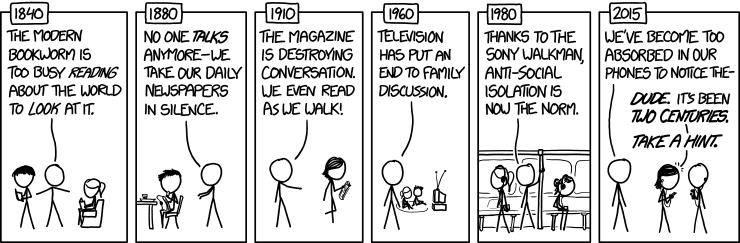
Piotr - Oct 1, 2015
Great video!
Moonriders from Christian Mülhauser on Vimeo.
Gear used: Sony a7S @ ISO 40’000-51’200 Slog2 Canon 5D Mark III with Magic Lantern for timelapse only Lenses: Canon 24mm f2.8, Canon 16-35mm f2.8, Tokina 24-70mm f2.8, Canon 70-200mm f4 UAV: DJI S900 with DJI A2 Flight Controller UAV Gimbal: FTBO G10 (no post stabilization) Handheld Gimbal:DYS HHG5D (no post stabilization) Gimbal Controller: 2 Basecam SimpleBGC 32bit V2.44b9
This video is interesting because of it’s demonstration of how well the Sony A7S copes with low light conditions. This was filmed with moonlight rather than daylight. We see the details in the snow tracks and we see the snow. We need to see some more night riding but in a city or in the countryside where existing light is sparse. I look at the detail of the snow which is crisp but I also notice the lack of detail in the clothes worn by the riders. I would like to see this camera tested in a cave where the only light source is a helmet light. It expands the shooting day. It means that when night comes you take an opportunity to get more footage. Imagine using this technology in the arctic circle where the sun does not rise for more than a few minutes a day or when night lasts for a few days or weeks at a time. It means  that you can film arctic wildlife during an extended period of time.
For those who appreciate documentary screenings there will be the Screening of The Pursuit of Endurance at the CICG in Geneva. This event will take place on Tuesday 6th of Octobre, 2015 from 6:00 PM to 8:30 PM The event is free and will include a Q&A session. This screening is happening within the context of the 2015 Conference for a Green and Inclusive Economy from the 6th to the 7th of October 2015.
On Friday I received the Sony Xperia Z5 compact and so went to film some cows coming down from the mountains at 4K resolution using the H265 Video codec. I then found out that none of my current editing solutions accept H265. For this reason I spent the next day getting beauty shots of Nyon, handheld and in full automatic. From the variety of scenes above you can see where the camera is well suited and where it struggled. You will see that the camera focus pumped when filming the boat sailing on the lake. I notice also that in the foliage of the trees it had a tendency to underexpose and loose detail. For this reason it is better to take video in manual mode. Image stabilisation seems to work well and does stabilise the image effectively. As I do not have a 4K monitor to review this footage on I am not certain whether some jitter is due to downscaling or whether it is related to image stabilisation. At Nyon gare I filmed two trains moving. In one case the train was a direct train and in the second case the train stopped. In the first instance you will see that the rolling shutter was only a problem when I panned to follow the train’s movement.
In December I filmed some events at a staff party in 4K and never did anything with that footage because it was a private event. Two or three days ago I went to Geneva with the Sony Xperia Z3 compact and filmed some street scenes as well as the locks closing and transferring a small boat from the Rhone to the Lac Léman. I look forward to seeing what the Sony Xperia Z5 compact can do. The boat being raised from river level to lake level I filmed these scenes as a wide shot because I didn’t have the choice but also because 4K is ultra high definition. For me this is an opportunity to film things so that viewers can see context. Imagine landscapes, cityscapes and sports events in 4K or even 8K. With images good enough to fill a wall or two IMAX quality footage will become common place and at a fraction of the price. SES, NASA and other groups are making serious progress in to providing their audiences with UHD content. Swiss cable operators are also advancing towards this new and emerging market. One of the interesting and key selling points is HDR as well as UHD. With cameras such as the FS-7 among others, capable of shooting in raw the latitude that screens and cameras will capture is closer to what the human eye can see. The limitation for now is the contrast ratio. New legislation will have to be approved to permit brighter screens for example. Tourism and marketing Tourism boards, car manufacturers, watch manufacturers and many more industries will benefit from UHD because it will allow them to show their products in ultra high definition. Look at the image I have looking at the Ile Rousseau. You can see more detail and you can get a real feel for the place. If you went to Krakow, to the London eye, to the Eiffel tower you could see not only the famous landmark but people walking and possibly even which camera they’re using. It will give advertisers IMAX quality footage at a fraction of the price, and without the barrier to entry of an imax theatre. Sony’s Xperia Z5 Premium already offers a 4K monitor. UHD is already several years old but with Sony’s 4K mobile phones, Samsung’s 4K displays and Apple’s 4K recording capability there are many brands that are providing people with the motivation to buy 4K capable monitors or televisions. I read an article that mentioned 2019 as a key date. It was for when regulators would be ready for UHD content.