Uncategorized

360 photos of Via Ferrata

Yesterday I was up above Leysin climbing the Tour D’Aï via Ferrata. It was an opportunity for me to take 360 photos of Via Ferrata. The beauty of panoramic pictures is that they provide you 360° of vision both vertically and horizontally. It means that you can get a sense of size and scale. You can look at the person exploring the via ferrata and how precarious their situation is as easily as you can admire the beauty of the landscape. [vrview img=“http://www.main-vision.com/richard/blog/wp-content/uploads/2016/07/R0011307_20160701130638.jpg” pimg=“http://www.main-vision.com/richard/blog/wp-content/uploads/2016/07/R0011307_20160701130638.jpg” width=“500” height=“400” ] Another great aspect to 360° photos is that you can show specific bits of via ferrata and show where the challenging bits are. “Here is where the via ferrata is overhanging” so that you can assess whether you have the strength and courage to try that section or “Here is how high up you are” and so you get a sense of whether you would be paralysed with fear or enjoy yourself. [vrview img=“http://www.main-vision.com/richard/blog/wp-content/uploads/2016/07/R0011321_20160701133926.jpg” pimg=“http://www.main-vision.com/richard/blog/wp-content/uploads/2016/07/R0011321_20160701133926.jpg” width=“500” height=“400” ] Most via ferrata are like the one that you see in these images. You have what I call staples, pedals and occasionally direct contact with the rocks. In other places you have spikes or you have to pull yourself up along the cable. With these images you see how well equipped the via ferrata is and you are not going in to the unknown. This is good when taking less experienced people. A side effect of 360 pictures is that you capture a self portrait of yourself in situ over and over again. It is by nature of the medium rather than desire.


Finding the Time to Enjoy the Cycling Season

Finding the time to enjoy the Cycling season this spring was complicated. Between the rain and bad weather it was hard to find two days in a row with good weather. As a consequence of this I have not been very active. I set myself the goal of cycling 50 kilometres per week which is conservative and I have been unable to reach that goal. During this time I am really happy about one thing. I started climbing every Thursday with a Glocals group from Lausanne. We go to Rocspot, an indoor climbing wall where you can practice routes from 4a up to 9a or more. It has indoor and exterior walls. This place is perfect for rainy days and training. Go when the weather is nice. You have the freedom to choose your routes. I am really happy with one achievement during this day’s ride. I reached 57.2 km/h cycling down from La Rippe to Crassier. For some reason I had the power to reach that speed. That isn’t bad for a mountain bike with slick tires. [gallery columns=“2” size=“medium” ids=“3019,3020”] A good reason to cycle in the countryside is of course to see nature change from season to season, to see the crops from their infancy to their harvest. Today I saw two combine harvesters. One was collecting crops and the other was travelling between fields. Two days ago when I was cycling I passed by the Paléo festival fields and saw that event tents are going up. As a last thought it is that time of the year when you cycle hard and when you stop you feel really warm. I love that feeling. I hope to cycle a lot more in coming weeks and months.

Self Driving Cars and ethics

In recent months we have seen articles about self driving cars and ethics. The question the research asks is whether to kill, a group of people, the driver of the car or others. The question is perfectly logical if you have never driven a car. If you have never driven a car then you believe that accidents may be unavoidable.

So these guys posed these kinds of ethical dilemmas to several hundred workers on Amazon’s Mechanical Turk to find out what they thought. The participants were given scenarios in which one or more pedestrians could be saved if a car were to swerve into a barrier, killing its occupant or a pedestrian. source

Cosmic Trip - Physical Video gaming - Throw it like a frisbee

Physical Video Gaming

Physical video gaming is coming of age thanks to the HTC Vive and related Games. Cosmic Trip is one of these games. You can use both controllers to prepare machines that will prepare robots for mining and defence. These two sets of robots are autonomous. The more resources you mine and the more robots you have. These robots are attacked on a regular basis so defence is important. The laser robots provide some assistance. You can attack the enemy bots by throwing disks at them as if you were throwing frisbees. Most people should find this instinctive. In the last 17 hours more than half a million people watched the video on how to play this game. The game is still in development and building up hype for when it is released properly. The creator of the video above now has eleven million subscribers on youtube. When he produces a video eleven million people are notified that there is a new video to watch. [caption id=“attachment_2961” align=“aligncenter” width=“660”]Half a million views in 17hrs Half a million views in 17hrs[/caption] Out of those 11 million subscribers on youtube only 1.6 million follow on twitter and a quarter of a million on Facebook. Within the next year or two I would like to see social networks such as Youtube and others expand and become niche communities where people can find content of interest without using Facebook or Twitter. I found Jack Septiceye content when I was searching for VR demos. I use youtube rather than Twitter and Facebook because I don’t want content creators and sharers to tell me how to feel or why the content is of value. I want to make that decision for myself. Youtube and social networks that allow us to browse and discover content based on niche interests are going to become increasingly important. Screen Shot 2016-06-21 at 08.58.19 [caption id=“attachment_2962” align=“aligncenter” width=“726”]A small Twitter audience A small twitter audience[/caption] The creators of the game have just two thousand eight hundred followers on Twitter and approaching one thousand on Facebook. When youtube personalities make videos about products they provide companies with a lot of extra visibility. You reach game players, people who want to see what new technology such as the HTC Vive can do and people who like to watch gameplay videos without necessarily being game players themselves.

The Post Social Media Era

I believe that we are shifting towards a Post Social Media Era where social networks are built in to online activities. People love to say that online social networks and social media are a waste of time and that they have a negative impact on how we feel about ourselves. For years I have been trying to demonstrate that social networks and social media are as valuable and important as socialising in person. The first 17 minutes are about a game that attempts to provide the player with empathy for those suffering from Anxiety. It then inspires Jack Septiceye to provide us with a look at how he felt after leaving college, how youtube helped him connect with people and how it had a positive impact on his life. When most people read about social networks and social media they read about making money, social media marketing, trolling, disinformation, depression and many other topics but very few of these articles look at the positive impact that connecting with people can have through social media. Social media, after all connect people whether they live in the middle of a big city or in the middle of the countryside. When you live in the countryside and practice sports in the mountains then the car and social media are equally important for having a sociable life.

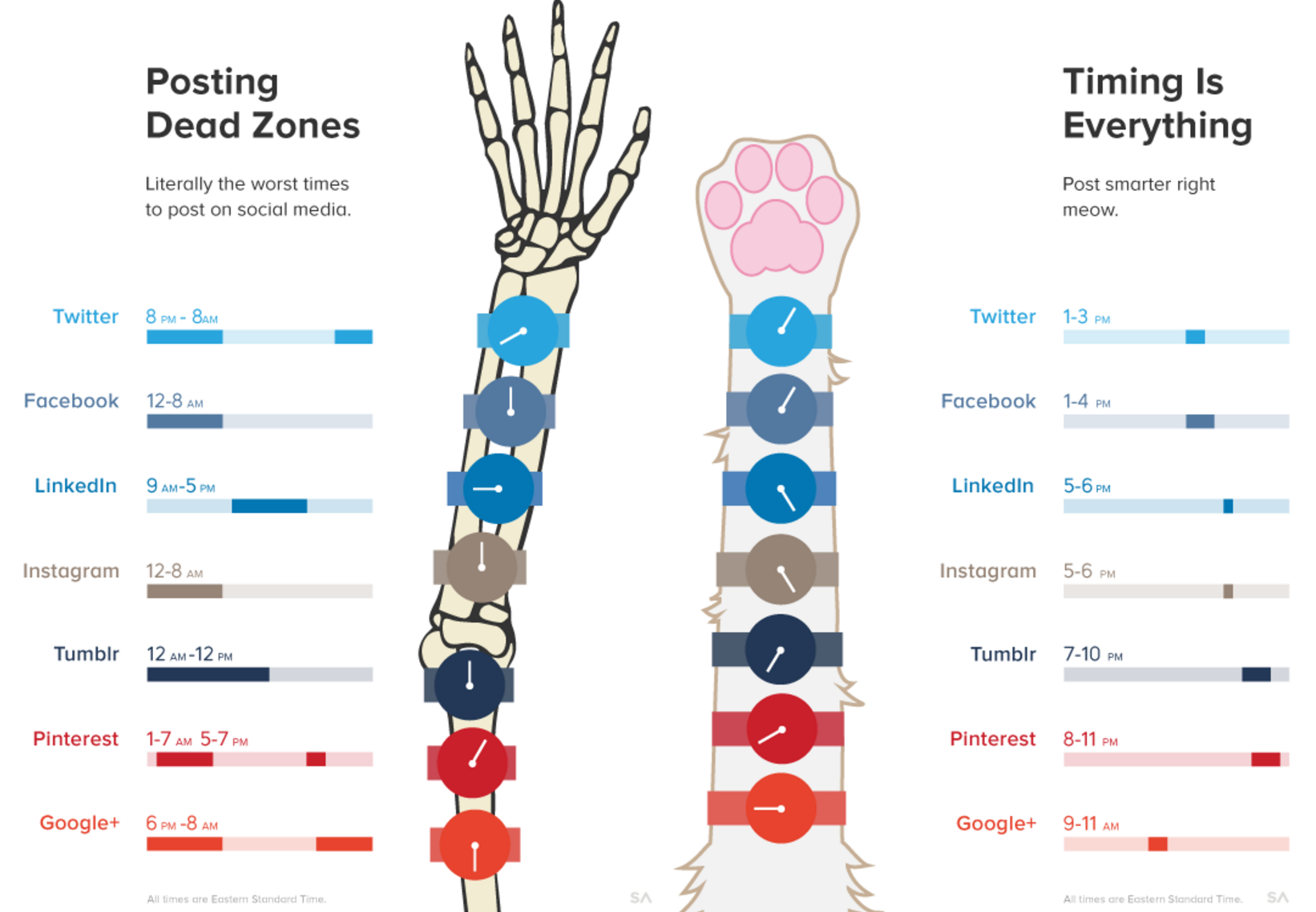
"Posting Dead Zones" Are Encouraged by Social Media Practitioners Taking a Utilitarian Approach to Social Media.

A few years ago we were part of social networks. These networks were based on social interests, activities, passions and more. Over time as attention shifted from Social networks to social media so the activity that people were busy with changed. With that change social media professionals filled the channels, pushed for “audience” rather than friendships and eventually created what they call the “posting dead zones”. This is both amusing and sad. [caption id=“attachment_2909” align=“aligncenter” width=“300”]The fallacy of dead times Social media sites are part of social networks[/caption] It is amusing because social networks, later called social media were entirely about conversations and sharing content and experiences of interest. In such an environment you would use social media from the moment you woke up to the moment you went to sleep. You would meet with members of your social media social networks a number of times a day. The Return on investment for having no “posting dead zones” meant that people would be attentive to what you posted. With time, and as early adopters were replaced by mid to late adopters, as conversations became less private and less personal so the opportunities to connect with people declined. Instant messaging via Google Hangouts for Ingress, Facebook messenger for personal friends and whatsapp encourage exchanges between existing networks. The work of adding new people to a social network has shifted back to face to face meetings.  As a private user the return on investment in regards to social networks has imploded. We see this with Facebook and Twitter. Their stickiness has declined. [caption id=“attachment_2910” align=“aligncenter” width=“660”]Articles about the social media dead zone Taking a utilitarian approach to social media will encourage people to disconnect from brands that fail to engage them. I follow brands, people and projects that engage with me when I post and comment. I look for content. I do not wait for it to pop in to my feed.[/caption] Social media practitioners forget that social media are about social networks. People use the social network where they connect with other people. When a social network is no longer sociable “posting dead zones” get extended so much that vibrant networks become ghost towns. Facebook and twitter spent so long focusing on getting advertising and mainstream media on board that they forgot the essence of social networks.

The World from a baby's perspective

How would you feel if you had access to video footage taken with a 360° camera of the world from a baby’s perspective? This is a question I find interesting to answer. I decided to try this experiment a few days ago. The limitation of most cameras is that they only show what is within the field of view. They only show what the photographer or camera operator felt was worth capturing. With a 360° camera placed at the child’s eye level you can see everything from their perspective. You can see the entire room and you can look up to see the grown ups or down to see the hands and other objects on the ground. You can also see the underside of chairs and tables. With VR goggles you would see the world from that perspective. Imagine a birthday or Christmas party from this perspective. You would see the opening of presents, the reaction of the infant but also of the grown ups, of the brothers and sisters and maybe pets if there are any around. I think that this way of documenting the world would be most interesting for the child when she becomes a teenager or grown up. Imagine the pleasure that could be had by seeing how everyone looked at this time. Conventional cameras are always missing at least one person. With 360 cameras everyone would be in the image. The camera operator becomes part of the scene. One advantage of 360° videos is that they cover what is taking place in front and behind the camera so people may behave more naturally than if a standard video or photo camera was pointing at them. I love being behind video cameras rather than in front. With 360 cameras I am forced to be in frame. I believe that people will behave in a more natural manner than if they were filmed by a conventional camera. We see how people enjoy letters and paintings, photographs and conventional videos. Imagine how much enjoyment people would get from taking a step back in time. Imagine looking at the furniture, the gadgets, the architecture from a decade or two ago.

Experimenting with Spherical photographs

I was in Spain with the Ricoh Theta S last week so I took the opportunity to experiment with the Ricoh Theta S in a number of locations. What I like about such a device is that it takes a click to get pictures. I experimented with a manfrotto monopod and a smaller monopod. The Manfrotto base was clearly visible in shots so the immersive experience is degraded. With the smaller monopod the base is the same width as that of the camera. This means that at least the support was hidden.