Uncategorized

Reaction to Social media and the loss of identity

My answer to:

Social media and the loss of identity

From 1996–2007 I saw the World Wide Web, discussion forums and other places as opportunities to socialise with like minded people. Over the years we went from one platform to another using nicknames rather than our real identity. in 2006–2007 there was a shift. When Twitter came about I would post about my dissertation progress and eventually converse with more and more people. Eventually the @ symbol started to be used for answers and then we discussed meeting in person.

Black Mirror - A television series

Black Mirror - a television series Black Mirror is a television series that was broadcast by Channel 4 a few years ago and made available to Netflix audiences recently. The series explores a variety of topics and issues to do with technology from death to crime and existentialism. It also explores themes like family and friendship. We spend a lot of time thinking about technology and how it has changed our lives. Sometimes it’s fun to watch 80s series to see the world as it was before computers and the internet and sometimes it is fun to watch dystopian essays or short stories exploring facets of modern life. In modern society we see that social media is affecting the discourse that is taking place between politicians and normal people. We see how social media and the lowering of the barriers of entry to the fourth estate have created a golden age for propaganda and disinformation. We see in The Waldo Moment that a CGI bear can mock the political system. It could be directly related to what we have seen happen recently. Be Right Back deals with online identity and how a person can be emulated once they have died. The question is an interesting one. The more active we are on social media the more our character and personality can be understood and reflected back. This is limited. We are not entirely ourselves online. There are some things that we hide from the online world. In Fifteen Million Merits we see a dystopian vision of the world where everyone lives in a small dark room. They get out of this room to go and peddle for a few hours to get Merits. Once they have 15 million merits they can “apply” for a different kind of job via a talent show. Nosedive explores popularity and social networks. Everyone is constantly being rated based on what they share, how they interact with others and more. In such a dystopia people can progress or lose privileges based on reputation. In such a reality people are vulnerable. A vertovian theme is explored in “The Entire history of You”. An implant called the Grain records your entire life and you have the ability to fast forward and rewind moments of your life. In so doing you can analyse what went well, what went badly and more. You can also see more than you were intended to see through other peoples’ recorded experiences. In this episode we see the Kino-Eye, the all seeing eye. Your life is no longer private. I like some of the themes that are explored in this series and I recommend people to watch at least some of the episodes. I feel that they are relevant to our discussion about social media and online lives.

The New Mac Book Pro

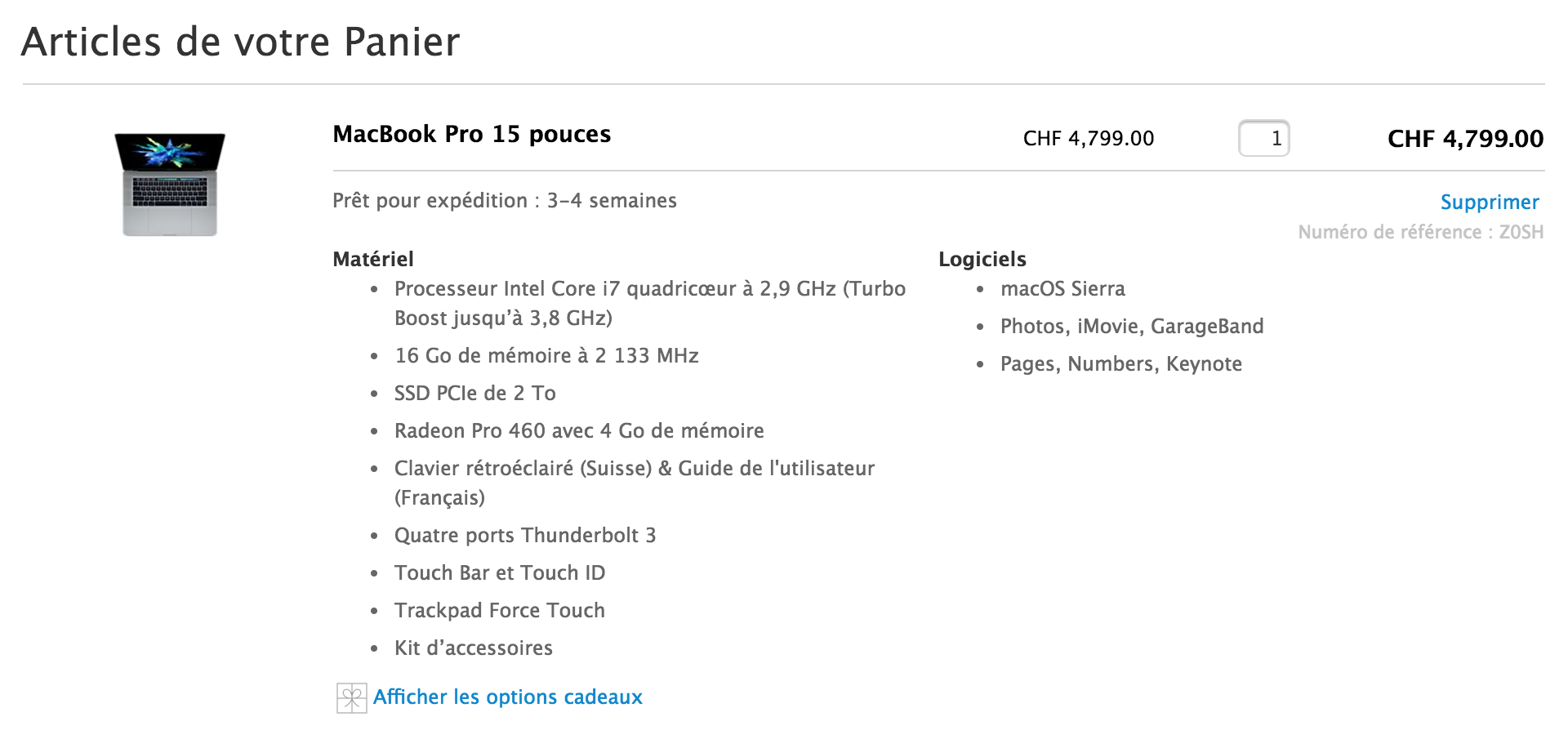
Last night when I saw the new Mac Book Pro I was turned off by the lack of USB-3 ports. To me that lack of ports made the machine unattractive as I do not want to use dongles or pay a premium for thunderbolt drives. Ingestion of data from fitness devices is by USB ports so I would need a dongle for that. I would also need a USB to Thunderbolt 3 adaptor to ingest from the SxS cards I use with the Sony PMW-200. The Mac Book Pro becomes interesting when you look at the storage options of either one or two terabytes of internal storage. My current machine has about 250 gigabytes of internal storage so I only keep the project that I am currently editing. Once I finish I shift it to an external drive. With the new system I would have more headroom. I could easily have a number of projects on the machine and would need a thunderbolt 3 to USB-3 dongle for archiving that material. It means that I would use my current mac book pro for my fitness trackers, USB-3 drives and more. The new machine would be a dedicated editing machine as my current MBP was until the Mac Book air stopped being a reliable machine. As the investment for a new machine is so high I would wait until I have a number of projects to work on. At that point I might consider upgrading to the new machine. You might also remember that I posted that what I wanted was a dual screen editing laptop where the keyboard part of the machine would be for the timeline whilst the monitor would be for the playout monitors and more. With the touch bar we’re a step closer to what I wanted. [caption id=“attachment_3375” align=“aligncenter” width=“300”]It might be practical. It might be practical.[/caption]

Climbing 5C comfortably

Yesterday I was climbing 5C comfortably and consistently for the first time. I often climb 5a, 5b and sometimes attempt 6a and 5c. Yesterday I skipped the easy grades and went straight for the 5C+. I expected it to be hard and I expected to struggle. I expect strength and fear of falling to be issues but they were not. I believe that three factors contributed to this. The first of these is that last time I went climbing I was also bouldering. I believe that bouldering got me to work different muscle groups and that these muscle groups were primed for use when lead climbing. The second factor that helped is that I noticed that the door frames in the building where I live have tiny ledges that I can grip and pull on laterally. By making this lateral effort I was strengthening my grip for tiny holds. I was using the strength I developed on holds that I would not otherwise have trusted. Amusingly it seems to have worked. The third and most important factor is that I took a one week break from climbing. In this time my body had the time to recover and so did my mind. It had the opportunity to absorb what it had learned and desaturate from the previous climbs. In effect I arrived to the wall with a clean slate (no pun intended). I love to go climbing because it is a wonderful form of escapism from all of the stress of adult life. It provides you with a workout and with an opportunity to clear your mind. Some would describe it as a form of meditation. As a former diver I would call it desaturation. You have the opportunity to live in and enjoy a moment with no past and no future. That’s why people love these sports. It can be summarised to one phrase. Well being. Yesterday’s successful climbs contributed to mine.

The Iphone 7 has Raw support and is waterproof

The Iphone 7 has RAW support. This will allow people to take mediocre quality images and re-work them in post production. This is an interesting development because in theory you no longer need to get dedicated hardware capable of shooting raw. This is good for covering events when you do not want to carry a DSLR or compact camera. This could include via ferrata, a night out or a trail journey where weight reduction is key. if you’re going to shoot RAW then I would strongly recommend getting the highest capacity iphone possible. It has 256 gigabytes of storage and will allow you to take at least a hundred pictures before offloading them to an external hard drive or storage solution. Ideally you would want the iphone to be like most android phones. SDHC card support is useful because you can easily buy these cards and increase your phone’s memory capacity. With the latest devices you can use SDHC cards with a capacity up to 200 gigabytes. The cost of these cards is decreasing. I like being able to take images with a mobile phone, ejecting the card and downloading to the computer in an instant. If you’re travelling you can walk around with terabytes of storage, if you’re that way inclined. Samsung, Sony and other brands have recently started to make mobile phones that are waterproof. When playing Ingress we would play in the rain thanks to this feature. Crosscall has been designing weatherproof phones for a while now with an IP certification of 68. The new iphone only has an ingress protection of IP 67. It’s waterproof enough to survive caving but don’t take it canyoning. For that you should still rely on Crosscall devices. In essence Apple have come out with a waterproof camera that has internet connectivity and can make phone calls. They are moving towards a more adventurous market at least two or three years after I said they should. I might soon consider using them again.

Climbing in Dorénaz

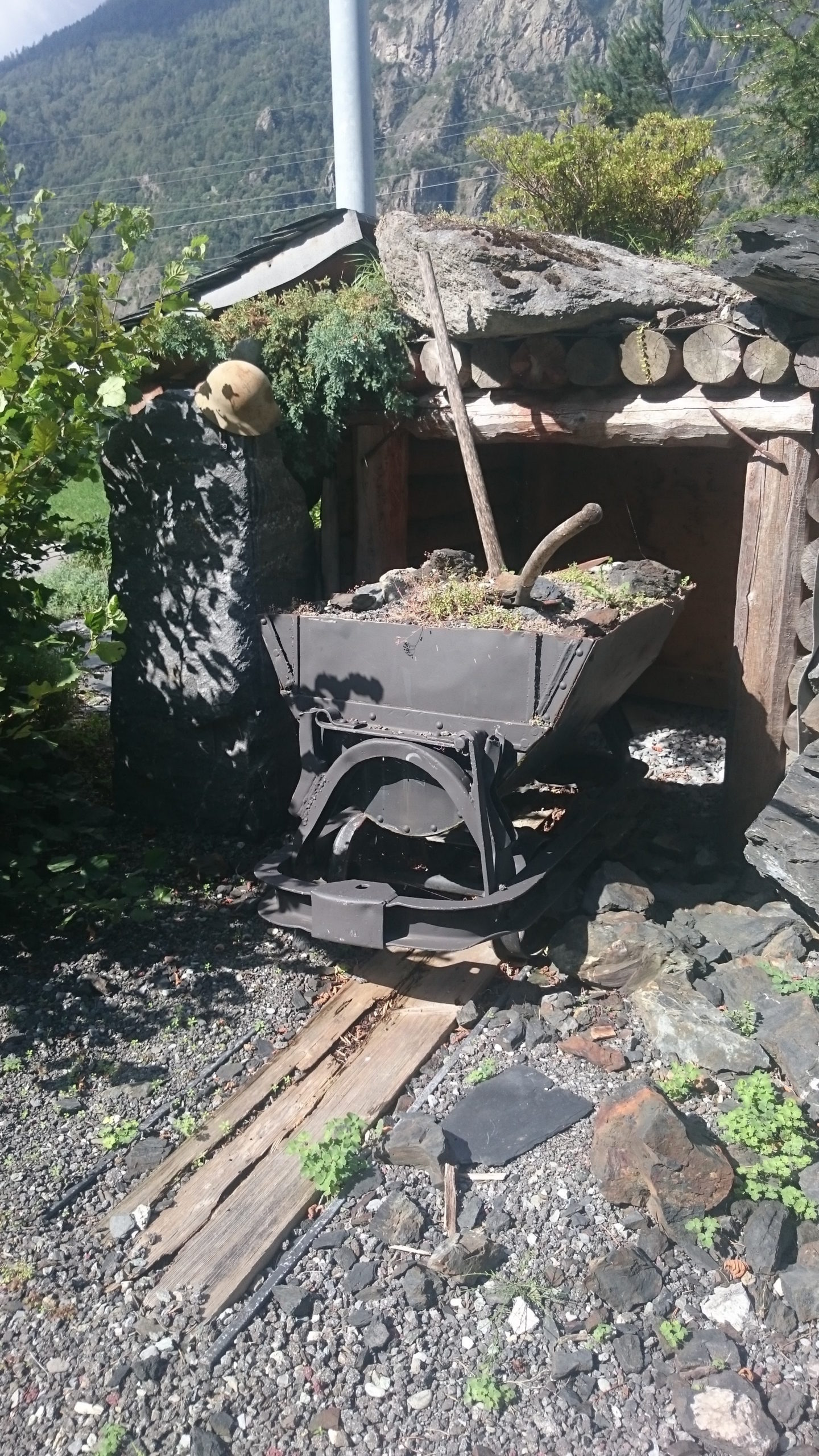
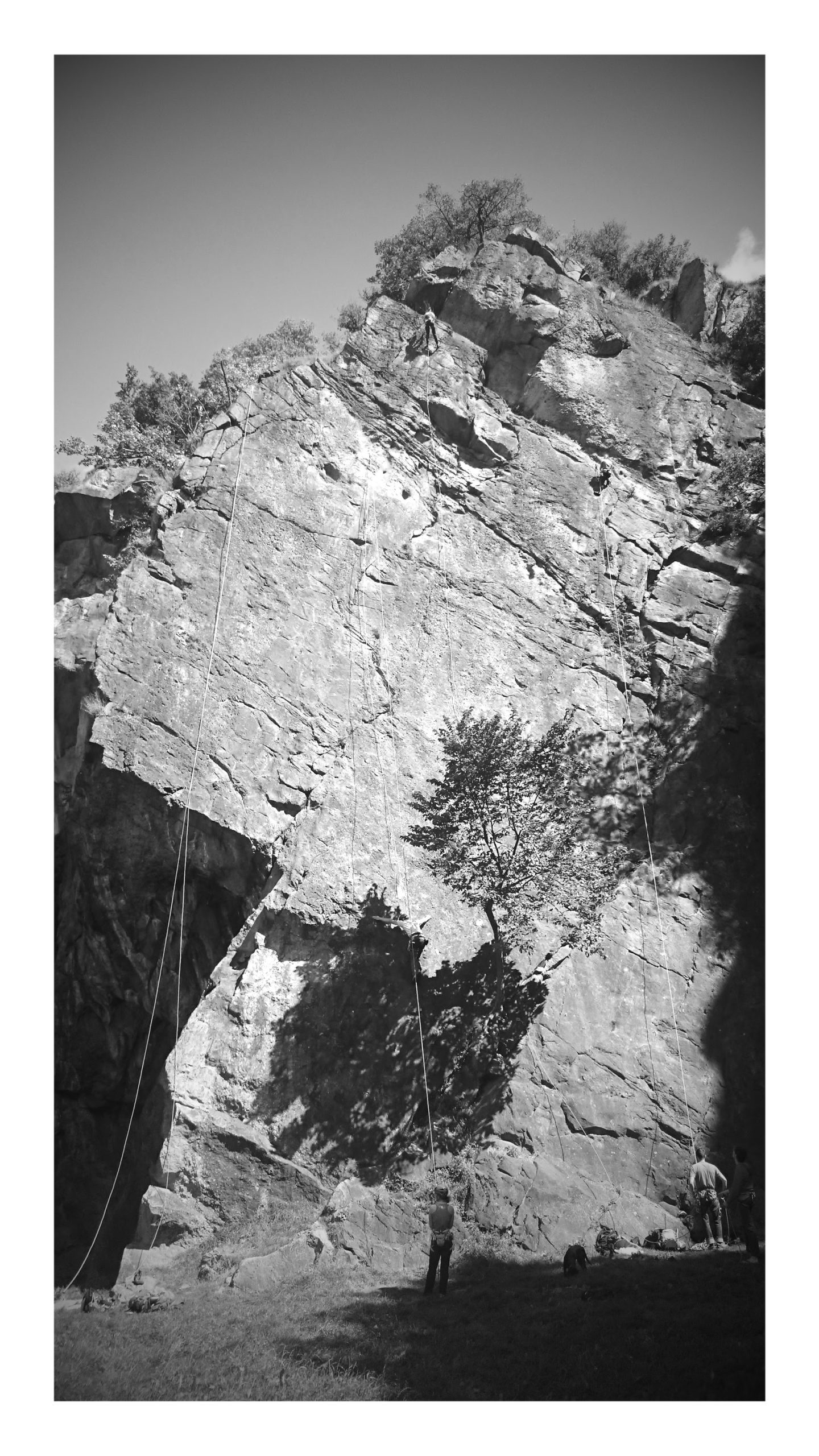
Dorénaz is a small village on the way to Sion and about 18 minutes from Saillon. It is also a few minutes from Aigle. I walked around the area before climbing two of the routes and I noticed that the rocks around here appeared to be magnetite. I saw rust where old climbing equipment had been removed. The magnetite idea came from the rust colour on some of the larger blocks that had broken free decades ago. [caption id=“attachment_3305” align=“aligncenter” width=“576”]Climbing in Dorénaz One of the climbing walls in Dorénaz[/caption] As I continued the exploration of the village I noticed that on one roundabout they have a mining wagon so I looked up the village but there was no mention of mining so I extended the research to include mining in the region. It is at this point that I found mentions of anthracite mining in this village. As this pdf illustrates coal mining was one of the local activities. The coal was hard to extract for two reasons. The first is that the deposits are only thin and they have been folded by geological activity. In 1881 they extracted 900 tons of coal from one of the deposits. [caption id=“attachment_3307” align=“aligncenter” width=“576”]I did not expect that Dorénaz was going to be a former coal mining town. I did not expect that Dorénaz was going to be a former coal mining town.[/caption]

Paragliding from Plan Praz to the Mont Blanc

In this video we see someone paragliding from Plan Praz to the Mont Blanc. To do this the individual finds ascending air at a number of points going from 2800 metres up to 5000 meters before finally landing on the summit of the Mont Blanc. This video gives you a practical example of how a good paragliding flight should go. When I flew at Les Diablerets last week I was surprised that we don’t feel the wind as much as we would expect when on a parapente and I was surprised that you do not feel when you are going up or down. In this video you hear a beep that increases in frequency and intensity as you ascend. The faster it beeps the faster you are climbing. There is another beep that we hear just once in the video that indicates that the parapente is going down. It’s a shame that in this video we do not find out how long the flight lasts. We hear him at one moment speak about the need for patience as he looks for pockets of rising air to raise him to the desired altitude. We hear him comment about how certain people seem to struggle and we hear that his breathing is more laboured as he gets higher. It would be nice to see them take off from the summit and head back down in to the valley. It must be nice to ascend the Mont Blanc in such a way. We seldom hear of people ascending the Mont Blanc by parapente so this video is interesting. In this second video we see people hike up the Mont Blanc and take off from the summit. The view from there must be spectacular and the feeling must be pleasant. Many of us have seen the vista from the Aiguille Du Midi but imagine seeing it from a place as calm and quiet as below a parapente.

Climbing Virtual Reality, Uniform and Grip

Climbing Virtual Reality tuition is an interesting idea. Learning to climb is fun because it is a physical and intellectual challenge. The first step is to familiarise yourself with the sensations of climbing and learning to see where foot holds are and where hand holds are. When you begin the hand holds are easy to find and hold on to but as you progress and attempt more challenging routes you need to develop finger strength to hold on to those holds. Climbing Virtual Reality tuition is an interesting idea. In some cases though finger strength is not the only challenge. You also need to learn to read the route and to know which hand to hold a hand hold with, which foot to use on a foot hold and how to reach the next hold. You can learn through trial and error which is fun or you can climb other routes and wait until someone who knows the route that has you flummoxed decides to climb that route. Virtual reality Goggles are an alternative way of learning how to climb a route. In the example provided in the video above Grip by Uniform provides climbers with an alternative. In their example they speak about Shauna coxsey participating in the project and allowing people to film her as she is coached on how to climb a route. In other locations it could just as easily be the route setters. It’s interesting to see such a project because the question we often hear people ask is “How did you climb that route” and the answer is often “I don’t remember”. With this technology it would be easy to provide people with guidance for the routes they find more challenging. It is a new and immersive form of tuition which could help people progress and learn climbing skills more efficiently and within a shorter amount of time.

FIFAD Day 6 - Women and Extreme sports

On the 6th day of FIFAD two films stood out. One looked at a wheelchair bound woman who still had the urge to go climbing and the second film looked at a woman who went from riding snowboarding lines in winter to base jumping in summer. By having these two documentaries the FIFAD event promoted women who appreciate and enjoy extreme sports. A few weeks ago I wrote about superhuman climbers, it explored how differently abled people were empowered through the efforts by climbing centres to allow wheelchair bound people, people with mental issues and others to climb despite the challenge. Rêver sous les étoiles was a documentary exploring this topic from another angle. Vanessa François moved to the mountains with the goal of becoming an Alpinist but was paralysed from the waist down after a block of ice damaged her spinal column. Thanks to the people she surrounded herself with she was able to continue climbing, cycling and doing other sports despite this disability. In the film we see how friends set up a route on El Capitan for her to climb and how the CRS in France prepared the equipment for her to spend a night at over 4000 metres near the Aiguille du Midi. We see how a woman, surrounded by the right people could, despite her injuries, keep living adventures. There is a moment in this film where we see that she is given the opportunity to act in a play where actors in wheel chairs and conventional actors could interact to provide people with a show. As I watched this documentary I thought about how technology could be adapted to be invisible in the performance. At the moment wheelchair bound actors need to rely on conventional systems to move the chair around. Imagine if engineers from EPFL and other tech universities designed a wheelchair control system that would allow wheelchair bound actors and performers to control the wheel chair with arm and head movements. Imagine if the movement of the chair did not rely on a joystick but rather a harness or sweater which controlled the chair’s movement. In future I expect that technology will become invisible, to provide these people with wheel chairs. The documentary is great because it shows that injuries are an opportunity to adapt new techniques to conventional sports rather than to give up and live a life that is more limited. This empowering documentary should encourage people not to give up on their passions and to continue striving for more.
FIFAD Day 5 - A visit from Claude Nicollier and more

On the Fifth day of the FIFAD event Claude Nicollier came. He is the Swiss Astronaut who went on a number of STS missions to fix the Hubble Telescope between 1992 to 1999. He is an astrophysicist with connections to this part of Switzerland. The Sonneurs D’ormont rang cow bells as the group moved from one area to another. The conference centre where this event is taking place is now named after him.