Uncategorized

11 years of Wordpress Blogging

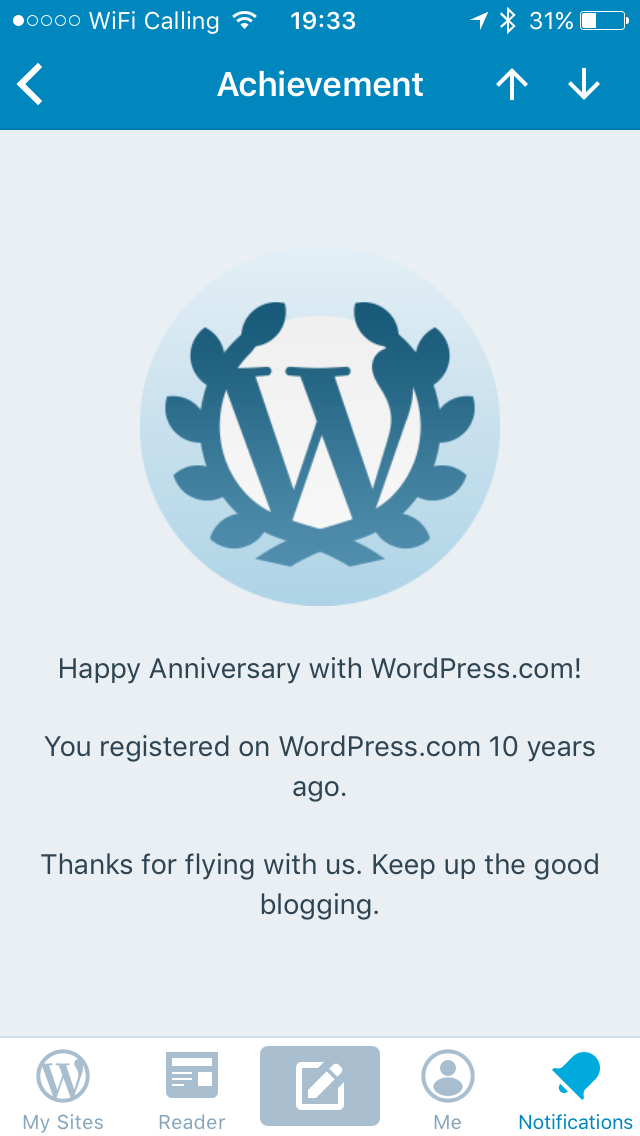
As serendipity would have it I have been a wordpress blogger for at least 11 years. As I was looking through notifications on worpdress.com I came across the notification below yesterday. As I searched for ideas for blog posts for today I came across an e-mail. [caption id=“attachment_3709” align=“aligncenter” width=“169”]10 years of Wordpress 10 years of Wordpress[/caption] [caption id=“attachment_3710” align=“aligncenter” width=“1024”]11 years of Wordpress 11 years of Wordpress[/caption] On this day, eleven years ago I set up this blog. Since then I have written about one thousand two hundred posts, tens of thousands of tweets and many many facebook messages. I mention this because blogging and social media are two different challenges. With blogging you spend the day thinking about a topic. You’re searching for something that you can write about for 300 or more words. Compared to nanowrimo where you try to have an average of 1666 words per day this is easy, until you add the public dimension. Writing for the world wide web is different to writing for yourself, with the knowledge that you will go back and edit it, eventually, if ever. Writing for twitter and facebook is easy. Twitter is a conversation so the more you socialise with other people the more dynamic your posting can be. The same is true of facebook except that facebook is a “silo” of people you vet and trust. Twitter is in essence a chatroom. A blog post is more time consuming. I like to write about technology and about the adventures I have. That’s when inspiration is easier. Imagine for an instant that Wordpress.com was more popular than Facebook or twitter. Imagine for a moment that people decided that instead of spending a few seconds per update they spent half an hour to an hour per post. Imagine that people read long form posts rather than short updates. Imagine that we go back to a blogging social media landscape where people write reflective posts. Imagine that we read rather than skim. The beauty of the long form, of writing blog posts is that we create content that people search for and read. Emotion is involved, but so is thought. Through blogging we generate an income for our content. More people should blog, and more people should share their posts.

Improved Belaying - perfecting our technique

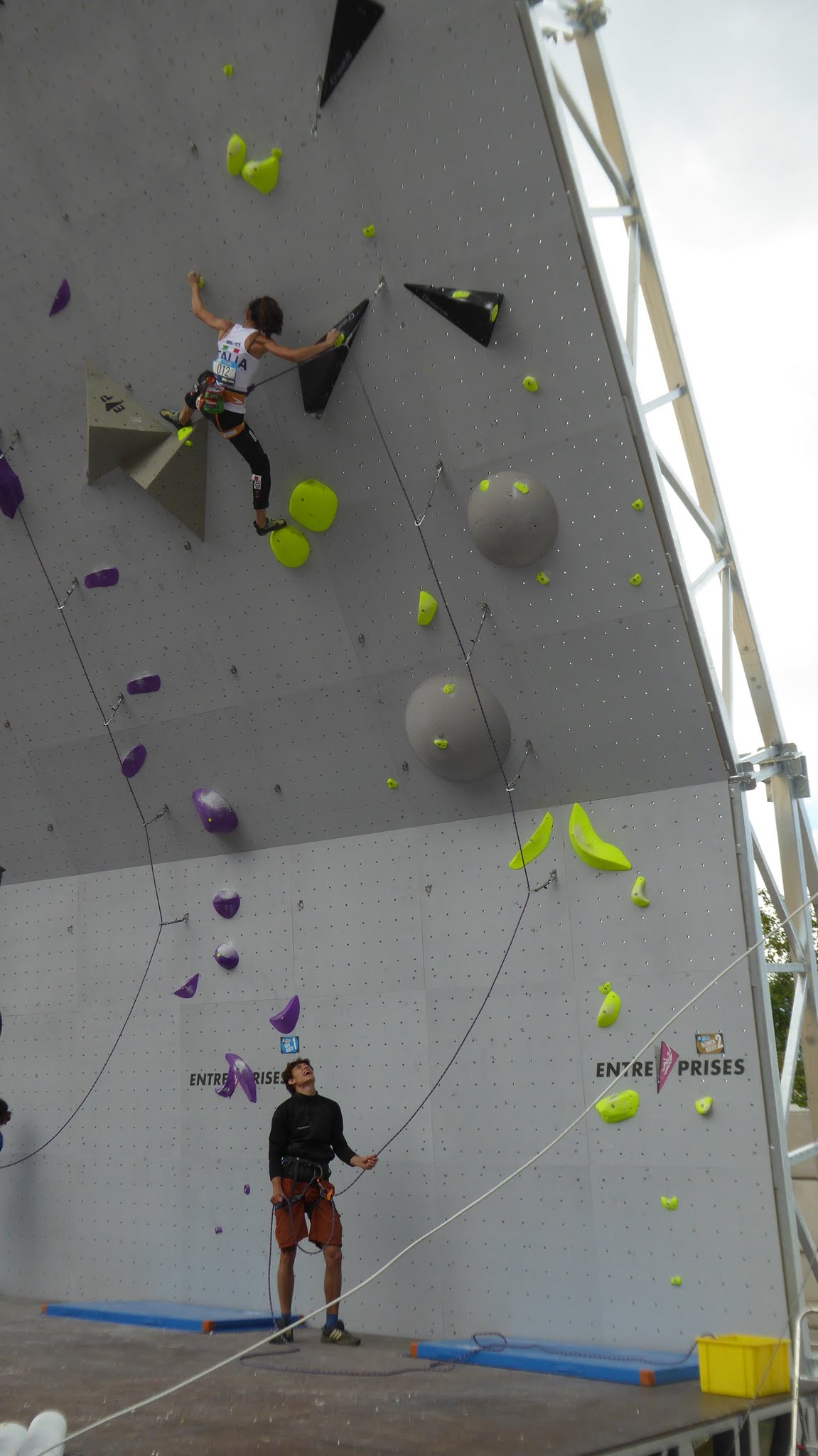
Belaying is a core climbing skill. With good belaying a climber can climb as fast as he is comfortable to climb, as if without a rope and yet have his fall cushioned at be safe at all times. The belayer needs to be active. He needs to observe and be attentive. I first learned to rock climb with a rope about ten years ago on the Italian side of the Alps and at the time I enjoyed climbing more than I enjoyed belaying. I then spent several years climbing via ferrata instead. The advantage with via ferrata is that it’s a simplified form of climbing. Over a year ago I started climbing indoors daily as I finally found a group with which to climb. My interests and skill in belaying improved. Yesterday I assisted a short belaying perfection course in anticipation of the Villars IFSC climbing event. During this session we were reminded of a few key points.

The Facebook Monopoly

I am tired of the Facebook monopoly. While Google gets fined for helping people shop websites like Facebook do the opposite. Instead of increasing the diversity of content on the web and the sharing of ideas it has helped create silos of like minded people. Likeminded people is a polite way of saying brainwashed in the case where opinions are based on opinions rather than facts.

Low value posts

Shorts on Facebook are usually very short. You skim through dozens, even hundreds of posts but none of them have much value. Compare this to blogging. When you blog you need to develop ideas that you can expand to at least three hundred words. With those three hundred words you can include images, video, tables and more. You can tell a complete story. On Facebook you post some text and people might read it.

Laptop Backups - anticipated battery failure

Laptop backups are an integral part of my daily routine. I backup to the cloud with crashplan as well as to an external hard drive. I also back up files as they are every few days or weeks so that if a drive fails I have at least one or two backups. In some cases I have more backups.

Imminent battery failure

Recently I was backing up the files from my most recent mac book pro because I noticed that the mouse was starting to fail every so often. When this happened on other mac book laptops it meant that the battery was starting to fail and to inflate. The battery was in a critical state so I expected it to fail and to take it to the apple store. I created a login just so that the Apple Maintenance team could fix it without having to log in to my main profile.

D-Day Film archives on Facebook

Yesterday D-Day Film Archives were shared on Facebook. These film archives were of landing crafts landing troops on the beaches, of battleships firing rocket salvos at the coast, of gliders being pulled by planes, of paratroopers getting and more. Over the years films have been preserved by transferring the footage from one film stock to another and then transferred from film to tapes. The problem with film and tape is that they are stored in a physical location that only archivists have access to. This means that if we’re curious about seeing the footage, like the footage included in this post we would have to go to the film archive and ask for permission to see this footage. Within a few hours, days or weeks we might get an answer. We would have transport costs, access costs and more. The advantage of digital video archives accessible online is that everything is accessible within a few seconds with the right keywords. This means that a child hearing about the Second World War for the first time can do a quick search and see this footage. History, rather than being words on a page, is brought to life. It stops being an abstract subject for the mind. In this footage, we see our grandparents and our nephews and nieces see their great-grandparents. An effort, by the international community, should be made to preserve, digitise and then make available as much of this film material as possible. The technology exists today so that, at the very least, we can have digital backups of all of this material and in the best case scenario for this material to be available for future generations to watch and study. I have already spent 15 months as a video archivist and media asset manager and I would like to continue this line of work. I find it to be a fascinating and interesting way to learn about history. It inspires to find books that contextualise the material that I am seeing on screen. This material makes us more informed citizens of the society in which we live.

Unhappy facebook users - Marketers and Academics are looking in the wrong place.

Unhappy Facebook Users - Marketers and Academics are looking in the wrong place.

Every single day they publish articles about why social media is bad for us. Every day they ignore that we meet people via social media rather than bars. Every day they ignore that those I meet through social media work on interesting projects. Every day they ignore that if it wasn’t for social websites I would not have taken up via Ferrata, rock climbing and other sports. Every day they assume that we prefer alcohol, weed and hard drugs rather than textroverted conversations with people we get to feel comfortable with online, before meeting them in person. Do you really think that Facebook users would be happy sitting at a bar with a half empty glass of alcohol?

The age of Bloggers and Self installations

I come from the age of bloggers and self-installations. In fact, I come from the age of HTML pages and static websites. In those days we surfed the web looking for and finding content. We also found interesting bits of code and we added new features to our websites. We would install forums, guestbooks and more. In so doing our static websites became dynamic. At this point, our website could grow a community. At this time we had our PhpBB forum, our own wiki, our own WordPress installation. When we said, “My website”, “my blog” or “my forum” it was ours. We were the webmasters. We were the ones that had found the code and figured out how to install it on our web host. Communities were small and geographically dispersed across countries, continents and time zones so most interactions were verbal. Fast forward to today and most people do not have their own web server, their own wiki, their own web page or their own blogs. What they have are social media accounts hosted by others. They are not administrators, they do not have the technical knowledge. According to investors, marketers and other groups, these people are users of Twitter, Facebook, Instagram, Google Plus and other websites but their power is restricted to what they post and whether they delete their account. They are so disconnected from the mechanics of websites that they say “My Facebook”, “My Instagram”, “my twitter”. Web sites and by extension social media are not like books, mobile phones or bikes. Facebook, Instagram and Twitter are not yours. Your influence is restricted to your personal account, no further. I wanted to have my own microblogging platform, I wanted to have my own diaspora server and more. I never did because my technical skills and budget did not allow it. With both of these, you needed server permissions that I was not willing to pay for. At that time I would have had my own Twitter or my own Facebook. I would have installed them. I would have been the administrator. I would have had the challenge of finding a crowd or tribe to populate it with content. Recently I was also thinking about the discussion about curation that people were having. There was a time when the idea was to get people to surf the web, find content and organise it in such a way as to make it easy for others to find content. Now that we’re in 2017 the idea of curation has evolved. Everyone shares content so the need for dedicated people has dwindled.

Using an Xtorm Solar Charger

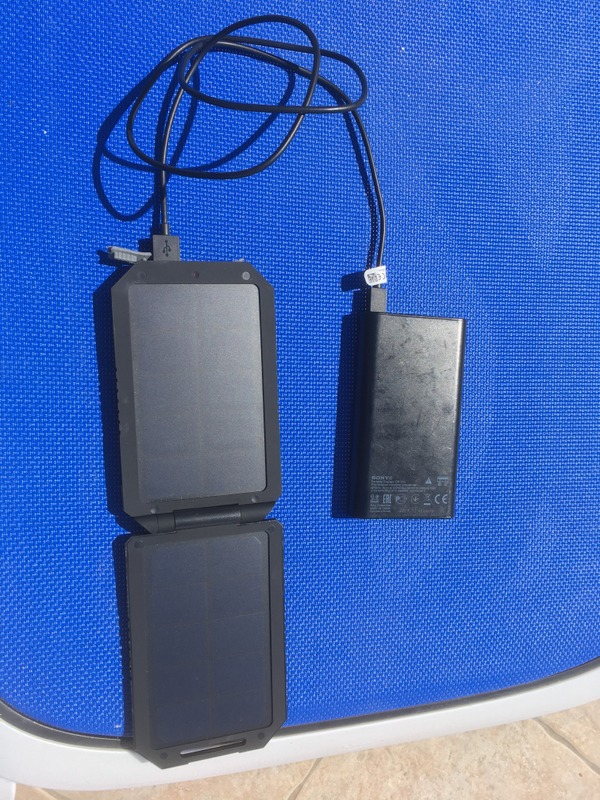
While in Spain for three weeks I was playing with the Xtorm solar Charger. I found that it worked well for the charging of tablets and e-book readers but not mobile phones. [caption id=“attachment_3462” align=“aligncenter” width=“225”]Solar charger and external battery Solar charger and external battery[/caption] For years I have wanted to play with solar power. I have wanted to buy a solar panel that I could fix to my bag or that I could use to charge devices. I often looked at the price and weight and changed my mind. I don’t want something that adds kilos to my load, especially if I am climbing. With a small device like the one pictured above you can carry it with you and use it to charge devices. When you drive to the hike or climb, or when you stop for lunch or a drink you can take out this device and start charging your phone, gps, led lights or other devices. if you want to charge devices to 100 percent then I would recommend charging ipads, ebooks, gps watches and other devices with this device. I found that it’s great for providing a phone with a top up charge but that because of my mobile use patterns it will only provide one full charge per day. When we hear people speak about solar power we always hear about “How do we store the power we generate so that we can use it when we need it?” and I found a way. When I woke up in the morning I would put the solar charger near a window or outside if there was no chance of rain to charge up to over 75 percent. When it reached this charge I connected the solar charger to a 10,000mah external battery. It is by using this technique that I have been able to keep my external battery fully charged with no need to plug it in to mains power. In effect it means that I can charge the ipad, the phone or the e-book reader without using mains power.

What is There to See in the Lake

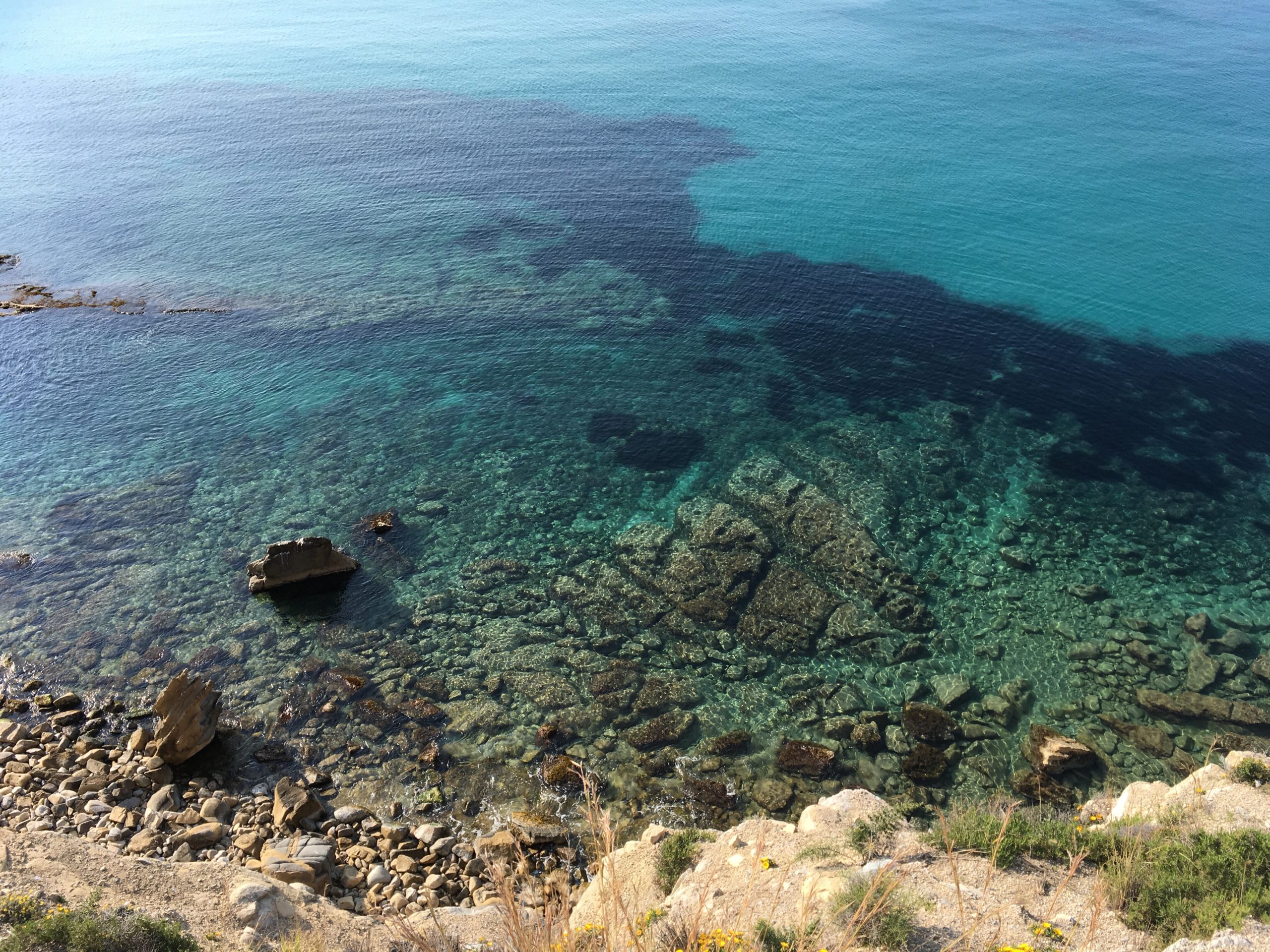
What is there to see in the lake is a question that people have frequently asked me. For at least two years I would go diving nearly every weekend. I would dive in the Lac Léman, the Lac de Bourget, the Gouille Du Duzillet. I also dived the English channel in November. I dived all year round. In summer we would cook in our dry suits and in winter our hands were sometimes so cold that we couldn’t take off our dry suits. Lake divers are an eccentric, hardy bunch of people. I used to say that the beauty of lake diving is that it is not affected by weather. You’ll get wet anyway and if you go below a certain depth water is always at 5°c. I’m in Spain at the moment and I decided to go snorkelling with my semi Dry Suit around El Portet. This is the cove where I worked on getting my rescue diver certification. I snorkelled by the rocks to the west at first. The waters are shallow and I did see a school of juvenile fish. As I finned further I saw some slightly larger fish and urchins. After a while of searching I finned to the other side of the bay. New sand has been deposited along this beach. As a result of this new sand visibility has suffered near the beach. By the rocks the visibility is still good. From the image above you can see that the water is really clear. I thought that with such clear waters I would see a lot. I was hoping to see fish, maybe an eel or two and maybe some crabs. It’s good to dive and snorkel close to marine reserves. In marine reserves fish are allowed to mature and grow and eventually they branch out to other areas. As a result diving and snorkeling are more rewarding. It’s at the supermarket fish section that I saw the most fish. It’s a shame that they were lying dead, on ice, rather than swimming underwater. In effect I see as many fish in the mediterranean as in the lakes of Switzerland and France so you travel for the climate rather than aquatic life. People need to allow the seas and oceans time to recover. It’s a shame not to see much aquatic life. I should try again in a different location where there are fewer people. I might be luckier.
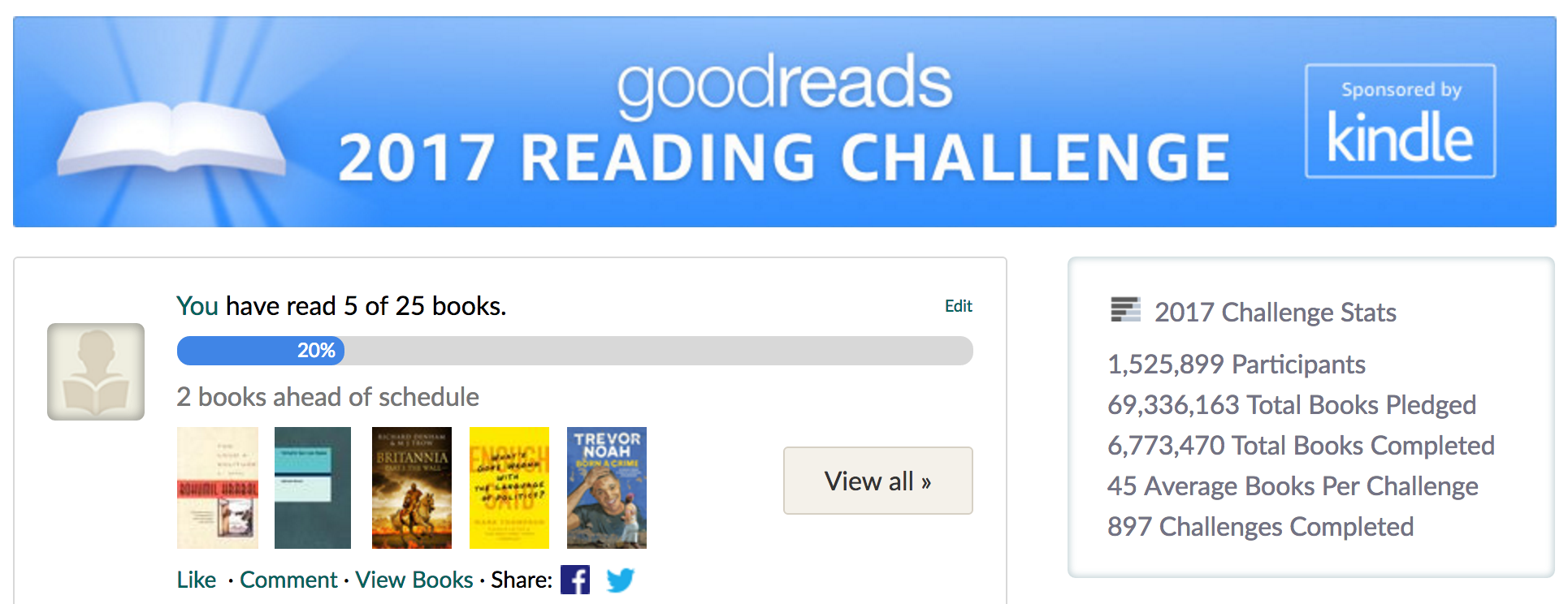
Replacing Social Media with Book reading

This year I am replacing Social Media with Book Reading because social media is no longer a conversational place. It has become a place for sensationalism and the spreading of fake news and emotional news. As a result of these factors the potential gain of new friendships and interesting conversations has declined. For this reason you might as well find some interesting books and broaden your horizons. [caption id=“attachment_3412” align=“aligncenter” width=“300”]Replacing social media with book reading Replacing social media with book reading[/caption] I currently have hundreds of books on Kindle and Audible and my collection on the Kobo reader is bound to grow. Recently I read Too Loud A Solitude. This is a book I came across by accident. I was browsing through Goodreads recommendations and it came up. The book is interesting because it tells the story of a person who worked compacting books for 35 years. Every chapter begins with the phrase “For 35 years…”. The journey is an interesting one because we see how someone with a passion for books rescues some before they are destroyed. It is worth reading when you have the interest and motivation. Another interesting book I read is Tartarin Sur Les Alpes. This book is interesting because of its age. It is about the early days of Alpinism. It speaks of various mountains and locations that are easy to get to today but that were accessed by horse and carriage at the time. It also explores the early days of tourism. Books require an investment of time of several hours in the same way that television series require. You can read a chapter or “episode” a day or you can binge through them reading several chapters in a single day. They usually require from seven to 21 hours to get through just like television series seasons. It’s easy to lose entire days. I like e-books and I like audible books. As a result of this I can walk around with hundreds of books at a time and read from one book and then another. It transports me to different time periods and places. For a moment I stop living in the present. With audio books I can drive, hike or walk at the same time. I can be a bookworm without being stuck in a building. It’s a shame that we don’t read more.