Tech Related

European Identity and Free Roaming

European Identity will benefit greatly from free-roaming. Today roaming fees between European countries have been scrapped. This means that your mobile phone is the same whatever country you go to. It means that you will have the same access to minutes and data. When you travel you will no longer need to change app permissions to reduce data cost. It also means that your images keep backing up via your data plan.

Google Arts & Culture

Google Arts & Culture App

Google Arts & Culture is an app that allows people to look at Arts and culture from around the world easily and intuitively. This app allows you to learn more about arts and culture based on your current location as well as by topic, art medium and more. With this app, you can look at 360 images of monuments and locations. You can also zoom into artworks. When we were teenagers we studied the history of art. We looked at artworks in books and in documentaries. We then went to Florence and saw some of these artworks in person. We saw Michelangelo’s Statue of David and more. As children in Europe, we went to Pompei, to the Vatican museums and many other locations. When you walk in the Sistine chapel you see this art in context and you see how large it is. This app, by Google allows you to do the same thing. It allows you to study art from your phone as you commute or as you queue or do other things. In effect it helps to educate and inform us about Art and culture. We are no longer restricted to small pictures in arts books.

The Insta360 Nano and Air - A climbing test

The Insta 360 Nano and Air are two affordable cameras. The first is designed to work with the new iPhone shape as well as a stand alone device. The Insta360 Air works only when it is plugged into an Android device. Both are good for specific uses.

Insta360 Air

The Insta360 Air requests a firmware update the first time you want to use it. This takes a few minutes and then the device uses the phone’s gyroscopes to keep the image stable. On the Via Ferrata I climbed this weekend I used the insta360 Air and Xperia Z5compact phone to take one or two landscape pictures. In these images you can look up at the cliff, look across at the landscape or look down at how far from the ground I am. This is a nice way of giving people a feel for what it is like to practice Via Ferrata. For the use of this system, it is good to have both hands free. [vrview img=“https://www.main-vision.com/richard/blog/wp-content/uploads/2017/06/export_1496508048682-1.jpg” width=“500” height=“500” ] Use the mouse/trackpad to rotate the image

Ecosia - Planting trees with a search engine

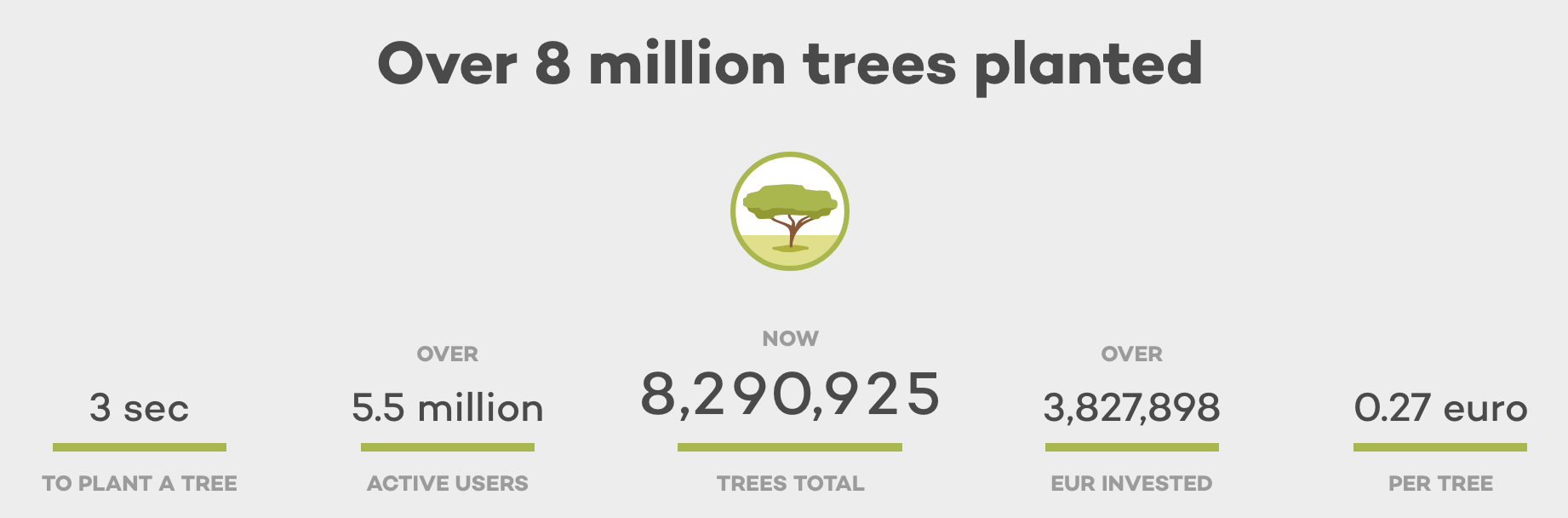
Ecosia is an environmental search engine for those who want to do social good through their web browsing habits. The principle is simple. You go to the Ecosia main page and type in your search engine query. For every search engine query that you do ad revenue is generated. This ad revenue is then invested into tree growing projects in a number of countries. [caption id=“attachment_3527” align=“aligncenter” width=“300”] At the time of writing, Ecosia earned enough to plant 8.2 million trees.[/caption] Deforestation is a threat faced around the world because as trees are removed so the environment of certain species is destroyed and this can lead to the extinction of species. The other consequences of deforestation are that the soil runs off of the land and clogs rivers. It also means that the humidity that was kept around by the trees and plants is now gone. When I worked as a video archivist I watched news items about refugees and how they were planting trees in their camps. They planted them as an investment in the future. Ecosia produced a video with a similar message which you can see above. They currently have projects in Peru, Madagascar, Burkina Faso, Tanzania and Indonesia. These projects cover a number of needs. They help to reforest areas where excessive logging has taken place such as in Peru. In Madagascar they are hiring villagers to replant the forests to help preserve biodiversity. In Burkina Faso they are planting trees to try to stop the desert from encroaching on the areas where people live. In Tanzania we find another conservation of biodiversity effort. In Indonesia they are planting ten tree species to stop the spread of Palm oil farming and to save the natural habitat of Orang Utangs. Europe, North America and other parts of the world were once covered in forests that were thick and full of life. With population growth and development forests were cut down for firewood and to provide space for fields and more. It is nice to know that today there are projects like Ecosia that aim to reforest areas around the world so that future generations may still play and enjoy forested landscapes. Either install the Chrome plugin or bookmark the website.

Mental Health and Social media

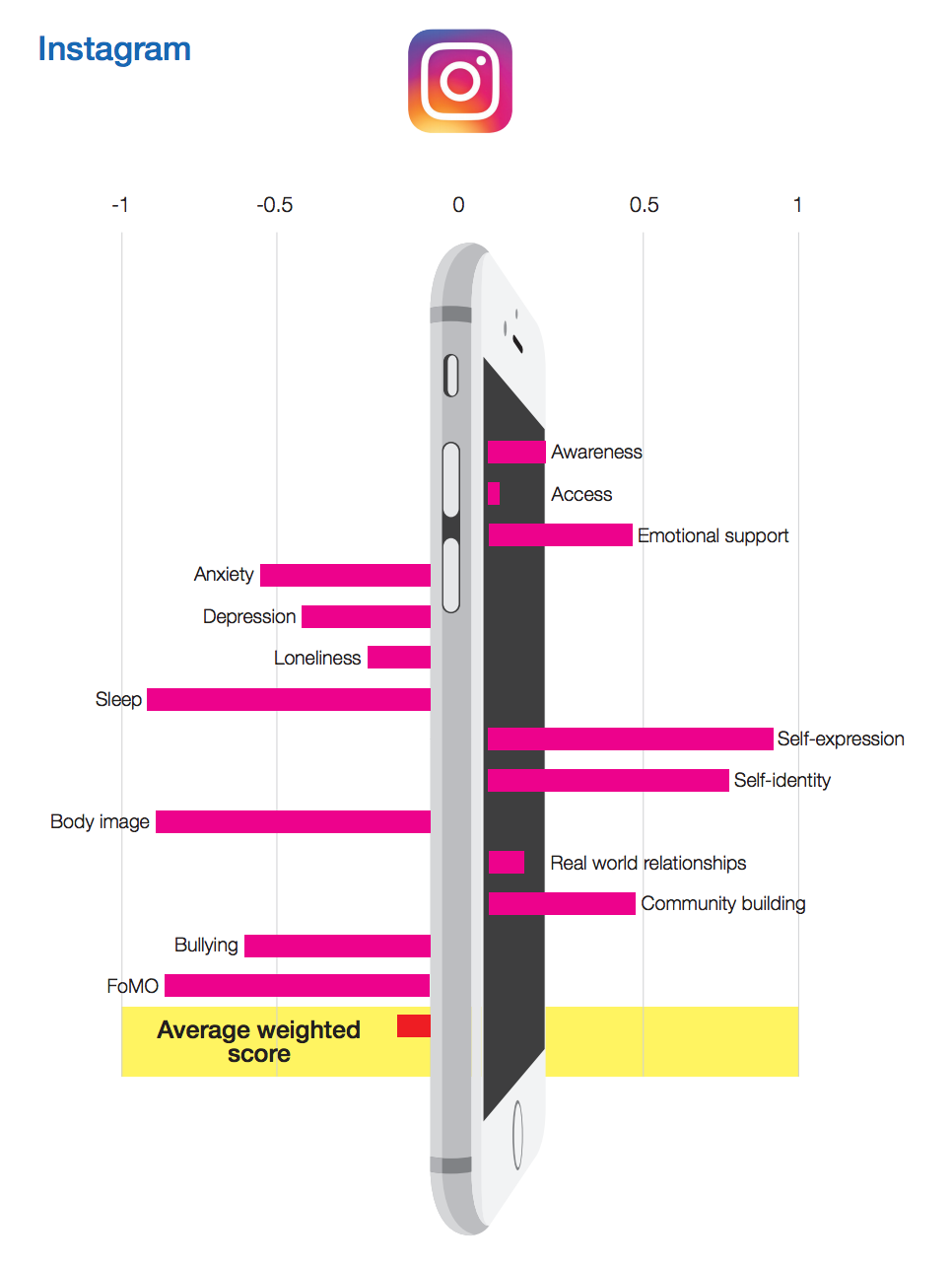
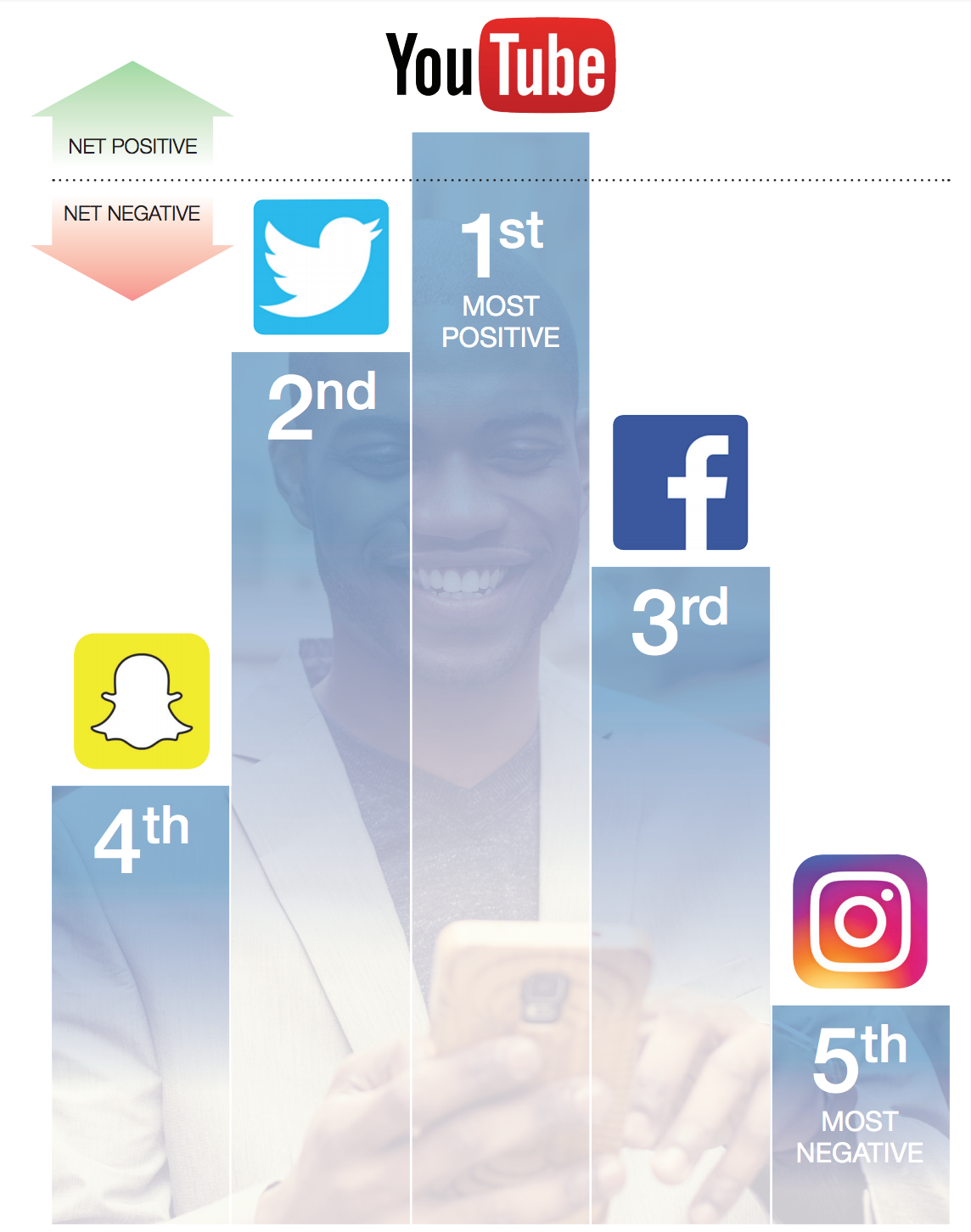
There is a lot of discussion about Mental Health and social media because most people are not social media natives. They are either Luddites who do not appreciate playing with technology. They see themselves as users rather than participants and then there are extroverts and other people who see Social Media as a threat to their way of life. We live in societies built for extroverts rather than textroverts. As a textroverts social media is a place for me to have full conversations without having to compete with extroverts who often hijack conversations through charisma and the superficiality of what they have to say. The Royal Society for public health wrote a paper on the topic [caption id=“attachment_3508” align=“aligncenter” width=“770”]instagram graphic Instagram is bad ;-)[/caption] It’s amusing that Instagram is theoretically the worst social app because if people use it like me then they would share their hikes, their climbs and their adventures. These would lead to FoMO and a feeling of solitude if people were motivated to do the same activities as me but unable to. Anxiety, body image, depression and bullying are all consequences of how marketers have encouraged people to use instagram. When brands and social media “personalities” post certain images and when brands promote certain behaviours then they encourage people to idealise the wrong things. They encourage superficiality rather than genuine interactions. It should be highlighted that a lot of people use Instagram for selfies and this leads people to compare themselves to others. If they photograph food, sports, mountains, seasides and more the negative aspects highlighted above would vanish. [caption id=“attachment_3509” align=“aligncenter” width=“807”]Ranking social media Ranking social media[/caption] It’s amusing that Youtube is the highest and most positively ranked social medium because it is the one that my generation see as having the most negative comments. We often joke that youtube is fine until you read the comments. It’s good that people like Twitter and Facebook because twitter is great for getting to know people and Facebook is a useful way of staying in touch with friends when we travel and move around for work and university. The Royal Society for Public Health came out with a few recommendations:

Using an Xtorm Solar Charger

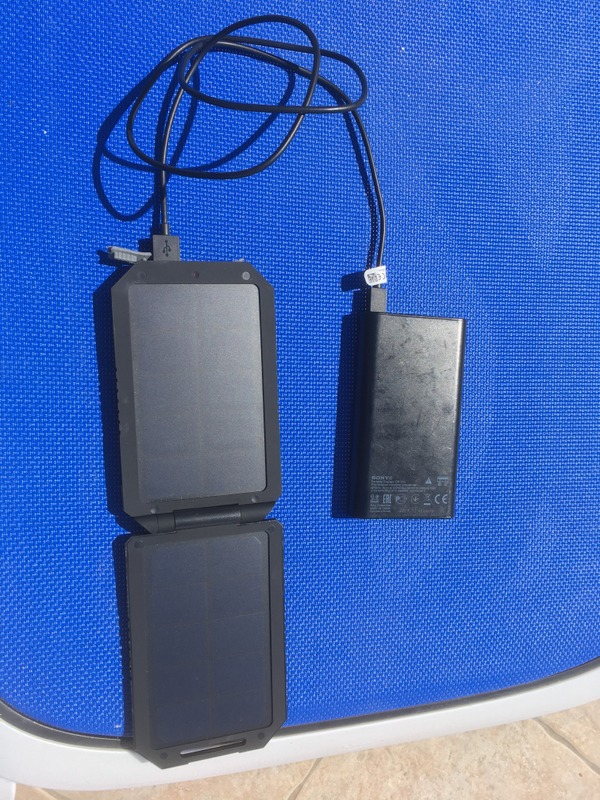
While in Spain for three weeks I was playing with the Xtorm solar Charger. I found that it worked well for the charging of tablets and e-book readers but not mobile phones. [caption id=“attachment_3462” align=“aligncenter” width=“225”]Solar charger and external battery Solar charger and external battery[/caption] For years I have wanted to play with solar power. I have wanted to buy a solar panel that I could fix to my bag or that I could use to charge devices. I often looked at the price and weight and changed my mind. I don’t want something that adds kilos to my load, especially if I am climbing. With a small device like the one pictured above you can carry it with you and use it to charge devices. When you drive to the hike or climb, or when you stop for lunch or a drink you can take out this device and start charging your phone, gps, led lights or other devices. if you want to charge devices to 100 percent then I would recommend charging ipads, ebooks, gps watches and other devices with this device. I found that it’s great for providing a phone with a top up charge but that because of my mobile use patterns it will only provide one full charge per day. When we hear people speak about solar power we always hear about “How do we store the power we generate so that we can use it when we need it?” and I found a way. When I woke up in the morning I would put the solar charger near a window or outside if there was no chance of rain to charge up to over 75 percent. When it reached this charge I connected the solar charger to a 10,000mah external battery. It is by using this technique that I have been able to keep my external battery fully charged with no need to plug it in to mains power. In effect it means that I can charge the ipad, the phone or the e-book reader without using mains power.

The SUUNTO SPARTAN SPORT WRIST HR BLUE

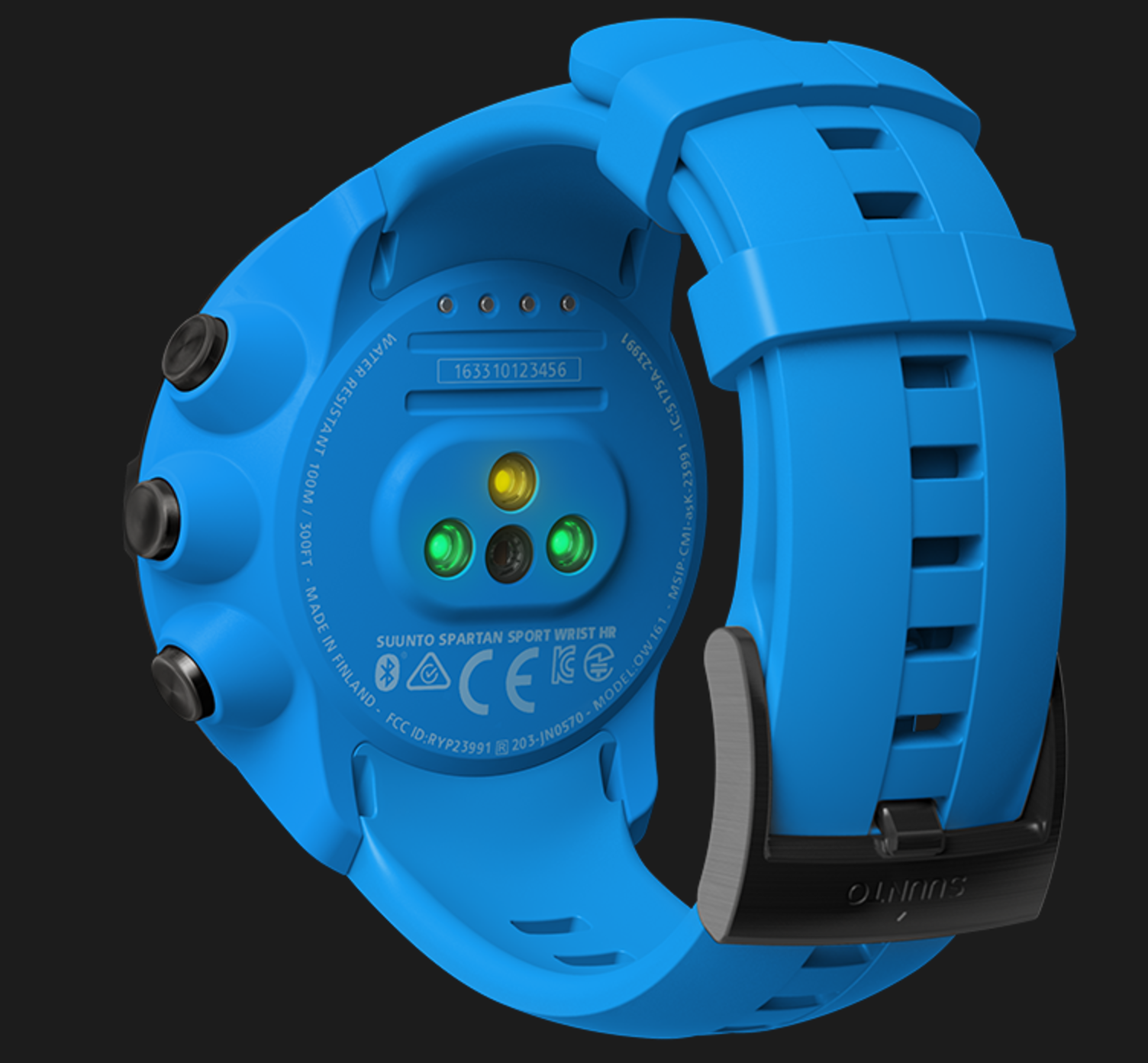
I have logged 799 activities with my Suunto devices. This includes hikes, via ferrata, climbing, swimming and scuba diving. I like Suunto devices because their battery life is good enough to last through entire days of hiking and the battery lasts for weeks between charges when used as a simple watch. Spartan HR I like to track my heart rate but I often feel self conscious about putting the heart rate monitor belt on. With the latest Spartan watch I no longer need to worry about the belt. At the same time as I start the activity I will be able to keep track of the heart rate. This is especially good for group activities when you do not want to keep people waiting and in winter when you’re wearing layers of clothing. I like that devices like the Fitbit Charge 2 can be worn at almost all times and track heart rate effortlessly when at the climbing gym and during other activities. I look forward to the same simplicity with a Suunto device. I especially like that Suunto devices survive swims and showers. I like that the Suunto Ambit 3 tracks how many steps I take during the day. It’s a shame that the step count is not logged and visible on Movescount. I like to see how energetic or lazy I have been on a daily, weekly, monthly and yearly basis. It’s not unusual for me to go from a 21,000 step day to a 6000 step day. It depends on weather, work and other factors. If you go for a bike ride your step count will not be high. I will wait to see whether they apply this technology to the Suunto Ambit watch collection. If they come out with the Suunto Ambit 4 Wrist HR then I will be tempted to upgrade. With 799 tracked activities I believe Suunto devices have demonstrated that they are reliable.

Life Cycle by Northcube AB

Life Cycle by NorthCube AB is a life tracking application available on iphone. It allows you to keep track of your sports activities, time spent at work, sleeping, shopping, socialising and more. At first it knows nothing about it. It learns of your home location, your work location, where you go climbing and do other activities and then automatically logs the time spent doing various activities. At the end of the day you can see how much time you spent at work, at home and running errands. If you go for a walk, a bike ride or a run it detects the difference in cadence and will log that sport. I did get false positives when riding the scooter. It logged this as cycling. It also keeps track of the time you spend in transportation as well as the time you spend commuting to and from work. They are separated so that you can see how much of your day is devoted to commuting as opposed to travelling between locations for other activities. If you practice sports such as swimming or climbing you can tell it that at this location you practice that sport. From this moment on every time you go to this location it will log it as being for that sport. This is valid for socialising, coffee, the cinema and more. At the end of the day you can see a summary of how long you spent doing each activity. At the end of the week you can see how much time you spent on each activity. The bigger the donut slice the more time you spent on an activity. Assessing whether you spend too much time commuting, at work or socialising is simpler. As a freelancer working in a number of locations you could mark the locations where you worked and at the end of the week log your hours to double check that they are correct. This app is simple and intuitive to use. Unlike Foursquare/Swarm and other apps it requires minimal interaction. This app is a natural progression from apps such as Google Latitude.
Learning about Tiny Houses

Learning about Tiny Houses is interesting. There are a number of features/documentaries online where people build their own tinyhouses either from shipping containers, trailers or other structures. The aim of these tinyhouses is to maximise space and reduce costs. Some of these homes are entirely off the grid. They collect rain water and solar panels provide power. The bedroom is often built above the kitchen and climbing wall holds are used instead of ladders or conventional stairs. One home folds out from a truck to become a castle. One tower serves as a toilet and the second one serves as a shower. The space above even features a bath. Another Tiny home is designed as a tree house providing a beautiful 360° panoramic view of the landscape around. This tiny home is interesting because it’s built out of half a shipping container. For a change the bed is below and the living room is above. The kitchen and office are next to it and there is a shower from which to watch birds. I have seen a lot of people speak about minimalist living, living off the grid and living out of cars, campers and other vehicles. By watching videos about tiny houses you begin to understand that there are certain basics that you need to have and that these basics fit in to small spaces. If you have a van, a caravan or other vehicle then you can live as comfortably as these people. This last video would make for a perfect summer home for recent university graduates or high school graduates. It’s small, light and mobile. You’re self sufficient to a great extent and as long as it’s warm you have your own space. It’s amusing that in at least three videos we hear about people learning to be neater through living in such small spaces. As a scuba diver, rock climber, cyclist and geek the biggest challenge for someone like me would be to find a place where I could store my diving gear and especially the scuba tanks. They’re bulky. Diving gear also needs to dry properly to avoid the smell of the lake (as I used to dive weekly in the lake). My view of living in a tinyhouse has changed through the watching of these documentaries. It shows you that what you want is functionality rather than size. You want “gadgets” as these maximise how you use available space.

Black Mirror - A television series

Black Mirror - a television series Black Mirror is a television series that was broadcast by Channel 4 a few years ago and made available to Netflix audiences recently. The series explores a variety of topics and issues to do with technology from death to crime and existentialism. It also explores themes like family and friendship. We spend a lot of time thinking about technology and how it has changed our lives. Sometimes it’s fun to watch 80s series to see the world as it was before computers and the internet and sometimes it is fun to watch dystopian essays or short stories exploring facets of modern life. In modern society we see that social media is affecting the discourse that is taking place between politicians and normal people. We see how social media and the lowering of the barriers of entry to the fourth estate have created a golden age for propaganda and disinformation. We see in The Waldo Moment that a CGI bear can mock the political system. It could be directly related to what we have seen happen recently. Be Right Back deals with online identity and how a person can be emulated once they have died. The question is an interesting one. The more active we are on social media the more our character and personality can be understood and reflected back. This is limited. We are not entirely ourselves online. There are some things that we hide from the online world. In Fifteen Million Merits we see a dystopian vision of the world where everyone lives in a small dark room. They get out of this room to go and peddle for a few hours to get Merits. Once they have 15 million merits they can “apply” for a different kind of job via a talent show. Nosedive explores popularity and social networks. Everyone is constantly being rated based on what they share, how they interact with others and more. In such a dystopia people can progress or lose privileges based on reputation. In such a reality people are vulnerable. A vertovian theme is explored in “The Entire history of You”. An implant called the Grain records your entire life and you have the ability to fast forward and rewind moments of your life. In so doing you can analyse what went well, what went badly and more. You can also see more than you were intended to see through other peoples’ recorded experiences. In this episode we see the Kino-Eye, the all seeing eye. Your life is no longer private. I like some of the themes that are explored in this series and I recommend people to watch at least some of the episodes. I feel that they are relevant to our discussion about social media and online lives.