Tech Related

Strava Now Has Rock Climbing, Hiking And More

David - First of May 2018

Hey Richard. I actually built an app to solve this problem. I’m a climber and a runner and I wanted to be able to track my climbing and see all my exercise in one place. You can log your indoor climbs in the app and it lets you enter the grade, how many tops you completed and tailors everything to the specific gym you’re in. There’s no outdoor climbing yet but it’s planned for the future. Check it out on https://www.clamberapp.com if you think it will help you.

Strava Now Has Rock Climbing, Hiking And More

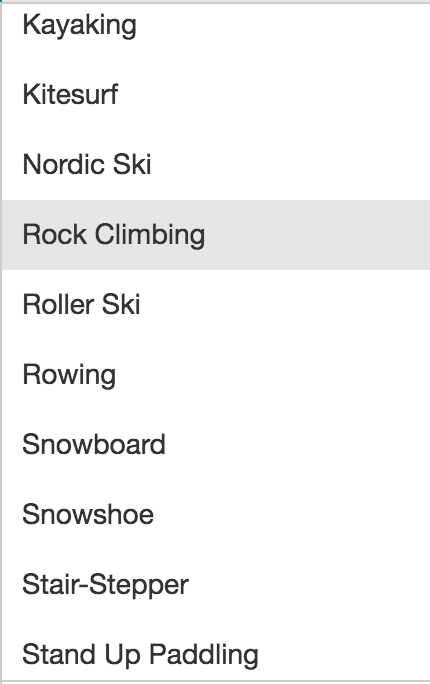
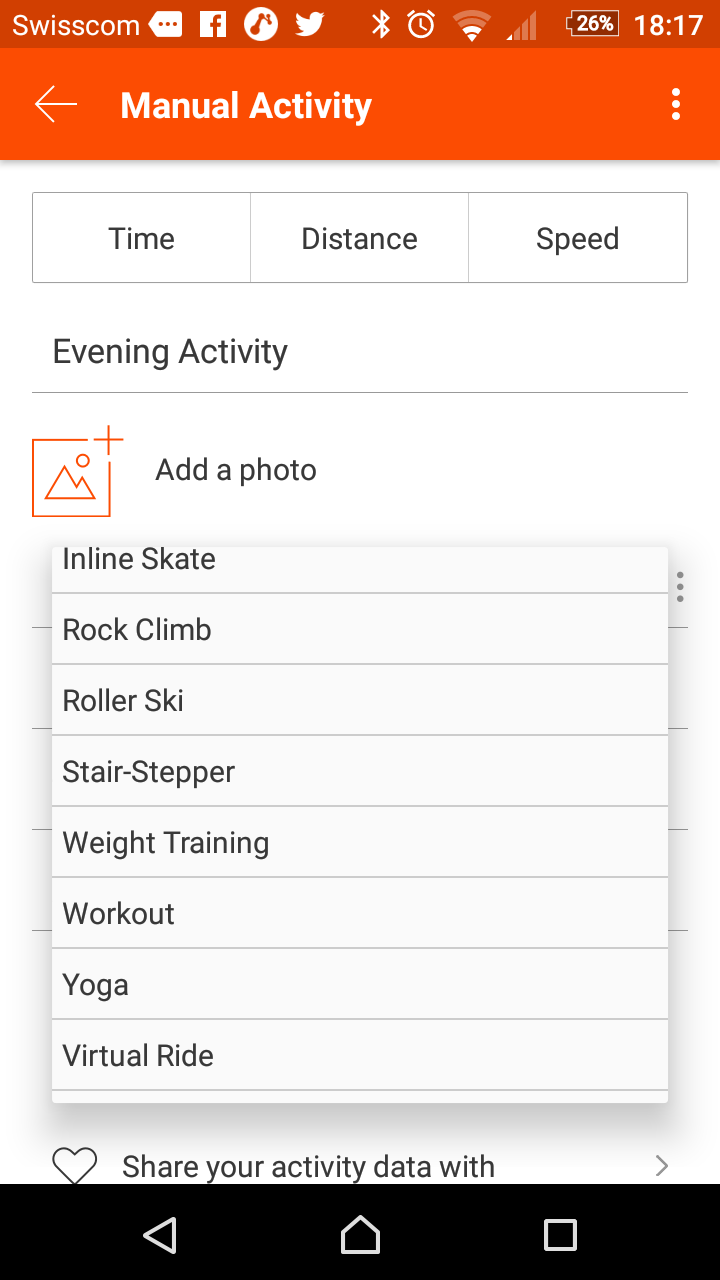
Strava now has rock climbing, hiking and many more sports. Sports tracker, movescount and other applications already allowed you to do this but it is nice to see one more network provide us with this option. [caption id=“attachment_3340” align=“aligncenter” width=“189”]Strava expanded the number of sports you can track Strava expanded the number of sports you can track[/caption] Up until now I had to make sure to go for a bike ride or three per week to keep people updated on what I did. During week days I am likely to go for bike rides. On two to three evenings per week I may go climbing and on the weekend I may go hiking or for a walk. As a result I can track the diversity of my activities. [caption id=“attachment_3341” align=“aligncenter” width=“169”]Strava has updated the list of sports Strava has updated the list of sports[/caption] With rock climbing I would like them to add two or three more fields. I would like them to add an option to add the grade of the climb we did. This would need to use the European and the American systems. It would help us track our progress and even track how hard we worked if we’re wearing a heart monitor as we climb. In effect it could provide us with a way of seeing who else is climbing and whether we match their skill level. In the long run this could contribute to new groups. I have created a group for Swiss Via Ferrata in anticipation of via ferrata practitioners joining the network and sharing their climbs. Until recently I would only track cycling and running. Now that walking, hiking and climbing have been added I can track a number of new sports. It should result in people using the app more frequently.  It could be fun to see climbing and hiking heat maps. We will see how they adapt the input section to match the sports.

Online communities and socialising in person

Online communities and socialising in person can be a challenge for people. Either they are shy, lacking the courage to meet with strangers and start a conversation or they are introverts, interested in being in a group but not necessarily to participate in the conversations. The question was “how to go to a glocals meeting when you are really shy ?”. This applies to couchsurfing hangouts, Google+ events, Pokemon Go meetups, slow ups, critical mass and more.

Playing Ingress and Pokemon Go in parallel

People are playing Ingress and Pokemon Go in Parallel. Both games use the same geo-located points and walk the same routes. They have the same places to farm and combat. I started playing Ingress again, but only a few minutes here and there. As I play I see new faces and new people at Ingress portals. They are no longer my age or older. They are much younger, in their teens. Yesterday as the neighbours were having a party I decided to take advantage of the excuse to go out and play Ingress. I went to the four or five portals in my village. At the village church I saw a youth drive up to it on a scooter, farm via the Pokemon Go layer and then leave. Nothing changed on the Ingress layer. No damaged resonators, no upgrades. I like that people can play two entirely different games at the same location. I see this as the future of geo-located games. I see this as the next wave. The physical world provides the location and then the layer (or game) provides the user interface, the virtual world we interact with. With imagination more and more layers can be added. This will provide people with choice. The next step is smartwatches and augmented reality goggles. Those who have played Ingress intensively know where all the portals are so they can put their phone away when walking from point to point. The same is probably true of Pokemon Go players. One person wrote that he uses his smartwatch to farm when walking around. Imagine if Google Glass had come out now. If it had come out now, with the Pokemon Go craze people would buy them. At the moment to play pokemon Go and Ingress you walk in a position, that given time, will turn us in to hunchbacks. Rather than being from manual work in a field or a coal mine it will be from walking staring at a phone. I write this with a certain sense of humour. The market for Augmented reality goggles is ripe. Device manufacturers should grab this opportunity while it lasts.

Networking around Pokemon Go

Networking around Pokemon Go is less interesting now that everyone plays the game. I have heard non geeks talk about Pokemon Go. They spoke about the large crowds that are staring at their phones in places like Ouchy. The value of social movements is to be part of a small, passionate group of players where the community is large enough to be fun but not so large as to become mundane. With a game like Ingress players were more sparsely distributed. When we met other players there was an immediate connection because we were few and far between. You would walk around certain cities and villages and you would not spot other players for hours of game play. When you met another player you wanted to meet, you wanted to interact. Communities are fun when they are small. Pokemon Go has risen in popularity at such a rate that old social networks may be privilieged over new ones. I was at the Chateau de Prangins a few days ago playing ingress for a short period of time raising the level of Ingress portals. During this time I saw at least 5-10 adolescent boys playing Pokemon Go, walking and running around the park. Pokemon Go is like alcohol or snowboarding. As everyone plays the game the opportunity to create new social groups is reduced. Why mix with new people when your core group of friends is already playing? The Facebook, telegram, slack and Google Hangout groups are alive and well this summer so people are connecting with new people. Although a new network of people is forming around this game I feel that it is hindered by the popularity of the game. Introverts can connect online via these groups, Meeting new people face to face may not be as comfortable due to the large crowds. It’s great that a location based game is encouraging people to run around while staring at their phones. [Phone screen replacement](https://www.amazon.com/gp/search/ref=as_li_qf_sp_sr_il_tl?ie=UTF8&tag=mainvision-20&keywords=phone screen replacement&index=aps&camp=1789&creative=9325&linkCode=xm2&linkId=1c111358728211918c4a817124a0e3d0) companies are very happy with the increase in demand for their skills and external battery sales are going up. Prices are going to go down and innovation is going to go up. If you’re an introvert, bad at small talk, then Pokemon Go has reached its peak usefulness and you can revert to other less popular activities. You can skip the craze.

A Nonverbal Autism Video Interview

I saw Horyou share a link to Speechless with Carly Fleischmann. This is a Nonverbal Autism Video Interview carried out via typed words on a tablet.  The text is read out electronically. The interview is warm and convivial. It stands out because it does not use a fast talking or energetic host. The interviewer does not talk, in the conventional sense. They could easily have inter-titles rather than synthesised voice. It is because they show the challenge of this interview that it is interesting. It shows that charismatic fast talkers are not the only people with an opportunity to interview artists. It shows that given the right circumstances anyone can interview artists and that desire and interest are required but that solutions can be found for other challenges. It opens up the world to a diversity of people. Imagine video interviews in sign language for example. There is no reason for a specialist channel not to take on this challenge, to fill this niche. Three things make this possible: Video production costs have gone down so it is easy to find the budget to record such an interview, technology makes communication for nonverbal people much simpler and finally Youtube makes content distribution to an audience easy. This video has three and a half million views. I will find more videos like this. I believe that they play an important role in modern society where we believe that everyone should be treated equally, to have equal opportunities. It is too easy to idealise the charismatic radio presenter who has a way with words and forget that charisma can be found in people’s intellect. You see it through the laughter in the interview, you see it in the way the interviewee is so relaxed. It’s a shame that there is just one interview. Imagine it as a weekly show.

The Moléson VF with the Narrative Clip 2

The Narrative Clip 2 is a specialist camera that can be programmed to take photos at regular intervals whilst you enjoy activities. This is sometimes referred to as life logging. The idea is that you wear the camera either on clothing or place it somewhere where it can capture the passage of time. [gallery columns=“4” ids=“3063,3064,3065,3066,3067,3068,3069,3071,3072,3073,3075,3076”] For this event the camera was worn around my neck and took pictures throughout the activity. As you can see from the last image I had the Ricoh Theta S on a monopod and the Sony Xperia Z5 compact for other pictures. You do not see that I had a fourth camera with a 30 times optical zoom. The camera took over four hundred images during this event and I chose just a few. I avoid sharing images of people unless I have their informed consent. I share the images that best represent the pleasant moments. If I took the time I could rotate this camera to be horizontal and I could capture daily timelapses. Every time I go for a bike ride or a hike it would capture regular images. The camera has enough battery power and you can keep the camera in your pocket until you want to start logging the event. When the event is finished you can place the camera back in to your pocket and head home for example. An improvement which I have recently noticed is that when you put the camera to charge it can automatically upload the day’s images to the narrativeapp website and you can then select what you want to share. As cameras get smaller and more portable and as they become more specialised so we have an opportunity to get different types of images. One is for time lapses, the other has a powerful zoom, the third allows us to capture spherical images and the fourth is practical for sharing to social media.
Watching clouds form as a 360 timelapse

Time-lapse videos are fun because we can see something happen faster or slower than real time. By watching this content we gain a better understanding of the world and how it works. For years I have been filming time-lapses and the results can be fun. In some cases we record time-lapses with video cameras and at other times we set an interval timer to take pictures every so many seconds. In this post you will be watching clouds form as a 360 timelapse. I have chosen to share both the flat image and the spherical image. The reason for sharing both versions is to give you an overview of how objects move in both.

Cosmic Trip - Physical Video gaming - Throw it like a frisbee

Physical Video Gaming

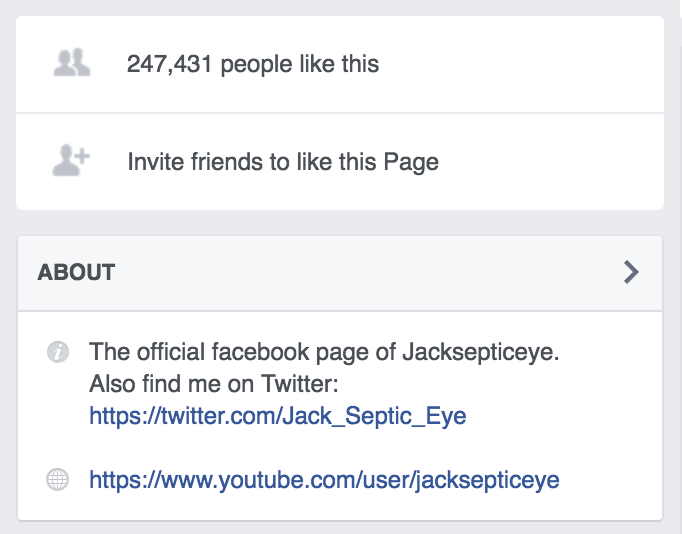
Physical video gaming is coming of age thanks to the HTC Vive and related Games. Cosmic Trip is one of these games. You can use both controllers to prepare machines that will prepare robots for mining and defence. These two sets of robots are autonomous. The more resources you mine and the more robots you have. These robots are attacked on a regular basis so defence is important. The laser robots provide some assistance. You can attack the enemy bots by throwing disks at them as if you were throwing frisbees. Most people should find this instinctive. In the last 17 hours more than half a million people watched the video on how to play this game. The game is still in development and building up hype for when it is released properly. The creator of the video above now has eleven million subscribers on youtube. When he produces a video eleven million people are notified that there is a new video to watch. [caption id=“attachment_2961” align=“aligncenter” width=“660”]Half a million views in 17hrs Half a million views in 17hrs[/caption] Out of those 11 million subscribers on youtube only 1.6 million follow on twitter and a quarter of a million on Facebook. Within the next year or two I would like to see social networks such as Youtube and others expand and become niche communities where people can find content of interest without using Facebook or Twitter. I found Jack Septiceye content when I was searching for VR demos. I use youtube rather than Twitter and Facebook because I don’t want content creators and sharers to tell me how to feel or why the content is of value. I want to make that decision for myself. Youtube and social networks that allow us to browse and discover content based on niche interests are going to become increasingly important. Screen Shot 2016-06-21 at 08.58.19 [caption id=“attachment_2962” align=“aligncenter” width=“726”]A small Twitter audience A small twitter audience[/caption] The creators of the game have just two thousand eight hundred followers on Twitter and approaching one thousand on Facebook. When youtube personalities make videos about products they provide companies with a lot of extra visibility. You reach game players, people who want to see what new technology such as the HTC Vive can do and people who like to watch gameplay videos without necessarily being game players themselves.

Rock Climbing in Virtual Reality

Rock Climbing in Virtual Reality has an interesting future because some people are afraid of heights, others don’t have the muscle tone to climb and yet more live too far away from climbing locations to enjoy the sport. Virtual reality is a great way of enabling people to get some of the sensations of rock climbing without the safety concerns. As I watched this video I was curious to see whether it was a passive experience and then noticed the playstation controller. That’s a nice enough way to go “rock climbing but it it was up to me then I would pair this with the HTC Vive and it’s related controllers. Ideally I would go a step further. I would develop a conveyor belt system, place it vertically and program it to put handholds where the climber has somewhere to grip. As he or she climbs they would place their weight on the hand hold and it would slide down as the person climbs. We have seen demonstrations of equipment that can emulate 3d shapes and textures. The challenge would be to take this from being flat on a table to being vertical and strong enough to hold someone’s weight. Tests should be carried out on near vertical and vertical “climbing routes” before being rotated to allow for the climbing of overhanging routes. You would definitely get a workout from such a configuration. Gamers would go from their current physiognomy to being toned and healthy. The next generation of gamers are going to be fit thanks to Virtual reality workouts. This could also be attempted for sports like Via Ferrata, via cordata and others. Via Ferrata is a simplified form of rock climbing and via cordata is walking around a nice landscape where safety gear is available to keep you safe in case of a slip or fall whilst hiking. I really look forward to when this gaming/fitness training experience comes of age.