Archives

48 hour digital detox

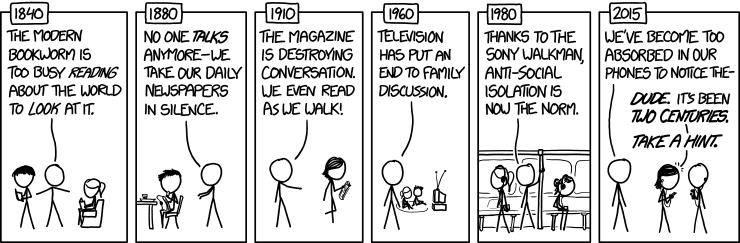
People like me do not need a 48 hour digital detox. I spend time online socialising and finding people with whom to do interesting activities. With one group of people I would scuba dive every Sunday that I was not working. With another group of people I went canyoning and explored rivers from the river bed rather than from a path on the side. With another group I explored via ferrata and this passion has kept me entertained every summer weekend for five years now. With videos like the one, about digital detoxes, and with articles speaking about teenagers jettisoning social media because this is not the real world it is easy for people like me to develop concern for our well being. For a few minutes we feel guilty about our passion for the world wide web and online interaction. As I eventually made it to the end of this video I felt really good about the life I am living. I noticed that I am really lucky. I do not need to think about what to do on weekends. I have the problem in reverse. Should I do a via ferrata or should I go for a hike. Should I go out to town tonight or should I be on top form for the mountains tomorrow? If I was in a town or a city I would feel the need for a digital detox but as I live in the countryside I feel that my online habits are healthy. Look at my instagram pictures, look at flickr and look at Google Plus. I spend a lot of time doing things in the analogue world. Some day luddites will learn to be happy with current technology habits. XKCD isolation

The idiocy of the Hashtag

Every day I am reminded of the Idiocy of the Hashtag. Twitter is a conversational medium where the more we converse the more addictive the social network becomes. Every single @ reply was a reaction to what we said or shared. Connections between users were strong and so the network effect took twitter from being a strange experiment in 2006 to being a social network from 2007-2009. In those days we engaged with people directly. Social media marketers, people with families and other priorities came to twitter and decided that they would indoctrinate people in to seeing twitter as a broadcast rather than conversation tool. Broadcasting did away with the conversation. It replaced the conversation with buzz words like ROI (return on investment) and other buzz terms. From a conversational medium where everyone talked directly to everyone else these “experts” hijacked the conversation and encouraged the use of the hashtag. The hashtag took person to person communication, encapsulated it in a hashtag and neutralised the individual to individual communication channels. Individual to individual communications are what makes all social networks addictive. If I believe that someone wants to listen to me, to talk, to exchange ideas then I am likely to make time for them, to read what they have to say, to create a personal connection. That personal connection had me travel to Paris, London, Geneva, Lausanne, Lille and other destinations. Imagine that twitter was still a conversational medium. Imagine that we established personal connections with the event organisers. Imagine that instead of a hashtag we were talking with the twitter account of event organisers. Imagine for a moment that twitter was seen as networking, that socialising on this network was not seen as a waste of time. Imagine that it was seen as a wise investment of time. I was at two international events last month in Geneva and I had my laptop and a data connection (or two if we count event wifi). I could have listened and live tweeted the events and I could have engaged people socially. I could have engaged with the panel and the speakers. They want me to use a hashtag. I refuse to use hashtags because a hashtag is not a conversation. A hashtag is metadata. Metadata should be used to help with threading but should not be the conversation. The conversation, comments and thoughts should go directly to the organisation. The impact of a conversation is far stronger than a hashtag. A hashtag is solitary, is lonely, is disjointed, fails to engage. We see it’s weakness every time an event takes place. I was at one event where I saw that the hashtag only appeared in tweets by the event organiser. The only other place it appeared was in retweets. If you work as a social media marketer you need to engage with people. You need to get people to reply to your tweets, not tweet a hashtag. Event twitter accounts should serve as a conversation hub. They should trigger groups of people at the event and following the event remotely to converse, to share what they think, what they do, who they need to help them. There are two strengths to twitter that very few people use. These are the ability to connect with like minded people before an event, so that by the time you meet them in person you can proceed with a collaboration rather than small talk and secondly to connect with other people after an event, to establish more personal connections. Remember that twitter is a 140 character medium. Twitter is great for short conversations and quick updates. It lacks in substance when it comes to sharing content. Facebook, Google Plus are better when what you have to share takes more than 140 characters. Facebook and Google Plus allow you to build connected communities in a way that is impossible on twitter. Both Facebook and Google Plus have threading, have topic separation and more. They are modern web forums. Twitter is a chat room. Use the web forums to have threaded conversations around specific events and panels and use twitter to establish personal connections with event attendees and others. Yesterday Twitter decided to allow people to follow 5000 twitter accounts. “While it’s entirely possible to see a lot of activity when you’re following 2,000 accounts, the 5,000-user limit increases the chances that you’ll see something interesting.“ Social network stickiness relies on familiarity and a personal connection. If you follow 5000 accounts there is an excellent chance that you will fail to personally engage with any of these accounts. As a result twitter will be the place you visit because of hype rather than personal interest. Twitter is a conversation medium that has identified itself as a broadcast medium which is why there are so many spammers present today. It has encouraged people to have millions of followers, it has encouraged people to follow other people whom there is no chance of personal engagement. They have encouraged their user base to listen rather than interact. Look at the million follower accounts and how they idealise this, rather than the more manageable 300 person limit. Three or four years ago there was some discussion on the number of people that individuals could know well and that number was low. They said that we could get to know about three hundred people well. This means that if we’re on twitter we should not follow more than three hundred people. We should follow those whom engage with us. We should make time available to those who make time available for us. We should make sure that we have personal connections with as high a percentage of those we engage with in social media as possible. When twitter was still a social network and twitter celebrities were still normal people we could converse with iJustine, Sarah Austin, Chris Brogan and many others. With Seesmic we could connect with Scoble and Le Meur. In the early days we could create warmer connections because there were fewer of us and attention was not as costly as it is today. Essena O’Neill is one of the people who came to social media too late. She managed to have more than half a million followers which is fantastic for the ego. Half a million followers would make most people happy.
The Nanowrimo Challenge

The Nanowrimo Challenge is interesting for me to challenge because I am an introvert. As part of this introversion I like to be concise and to the point. That’ why I like twitter conversations. Why say in one hundred and fourty words what you can say in one hundred and fourty characters? Trying to write one thousands six hundred and sixty seven words per day is very hard for me. It requires me to extend what I have to say. It requires me to elaborate and to answer the “So what?” question in more depth than usual. Every year I start November thinking about how I want to attempt and succeed and eventually I give up. The first year that I attempted NANOWRIMO I made it. I managed to write more than 50,000 words in a month. It was my first time writing fiction and my first time writing something so long winded. I never re-read what I wrote because I never found the courage. Interestingly enough I think that what I thought and wrote about a few years ago has become a reality. On other years the attempt failed because I found work and so had insufficient time and motivation to write for two hours a day. How convenient. ;-) This year I wanted to explore social networks and the history of how people interact on them, from web forums, deviant art and other forms of interactions to myspace, facebook and twitter. I want to look at how conversations went from being blog posts to being comments to being tweets to being silly emoji and eventually become a listening rather than a conversational medium. I believe that I am a textrovert. When I use the word textrovert I do not mean that I like to send text messages by phone as SMS. I mean that I like to get to know people via the written word before I meet people in person. I want to learn what I can converse about without worrying about other people listening in. I also dislike competing with other people for attention. Sometimes I want to have conversations with people but I struggle to engage them properly and so I go back to the written word. People don’t like the written word. They often feel that you are ignoring them by looking at your phone, by having a conversation with other people. If you have the intention of listening then you have the right to feel that people should put their phones down. If you only want to talk then do not be offended by people living in a text based world instead. We need to get back on track. I expect to gain two things from this month’s challenge. The first of these is that I expect to develop ideas in more detail than usual. Instead of using a single sentence I will fill in the gaps, provide context and relevant information. I will attempt to behave like a standard/normal person. Why say in ten words what you can say in two hundred words right? How can you do this whilst adding more information rather than going around in circles? I am out of my comfort zone. I feel that by writing far more than I need to write I am rambling, and I want to avoid rambling. At the same time as a camera operator and as a photographer I am used to creating more content than I need and then editing that content to something short and entertaining. When it’s with a video camera I do not worry about rambling because rambling provides me with more choice, more opportunities and more coverage. There is of course the small matter that when I take pictures or video I edit, and that with the written world I am less methodical. It is not that I don’t know how to edit but rather that as I write for pleasure I write for myself. People can read it if they like, and if I allow them to. Over the next month we will see how many ideas I explore and develop. We will see how I find 1667 words of inspiration every day for another 29 days. I expect that I will manage. I managed half a decade ago. I should manage again today. When I reach the fifty thousand word count I will feel good about it.

Film and Video archiving

Film is Fragile - Film needs your help! | BFI Trailer from BFI on Vimeo.

Recently I spent more than a year working as a video archivist for the United Nations High Commissioner for Refugees. During this time I digitised several decades of documentary films and news stories. In the process I went from knowing very little about refugees to being a better informed member of the public. We can learn a lot from watching old films and old television series. We can also learn a lot about society. One documentary I watched was about the Bamboo city. It looked at refugees living there and tried to understand why those trying for asylum were refused. It followed their skills training, language training and finally their acceptance to host countries. Another documentary I watched was about the 1980s Afghan war when the Soviets went in to try to win over the country. It was fascinating to watch how one generation of Soviets and then a generation of Americans met the same challenges and trials. Le Monde Du Silence, film by Jacques Yves Cousteau from 1956 is a fascinating documentary because of it’s reflections of what people knew of the seas and oceans at the birth of self contained underwater breathing apparatus (SCUBA) exploration. This documentary as well as all Jacques Yves Cousteau documentaries are an interesting glimpse back to what people were learning about and discovering. It allows us to study and understand the way in which attitudes and understandings have progressed over the decades. I watched Magnum PI and it’s interesting to see a pre-mobile phone society. It’s interesting to watch these series and see the world of my youth. Another series of interest is Friends because of how seldom we see mobile phones at least at the beginning of the series. We see how society was in the 1990s. If we watch this series in parallel with Big Bang Theory we see how much society has changed. We see how knowledge has progressed. We need to keep the film and video heritage alive and well. We, as a generation must work to preserve our film and video heritage. We must either donate our time or the funds to help preserve our heritage. In so doing books about film and television history are not just books. They are interactive. When I was reading about Eisenstein and Dziga Vertov these films were on film or VHS tapes and hard to find. Today they are available on demand. If we continue to digitise and preserve our cultural heritage then future generations will see and understand how ideas and art forms have progressed over the decades and eventually centuries.

Lensational - Empowering Women through Photography.

From Friday to Sunday this week SIGEF2015 took place at the Batiment des Forces Motrices in Geneva Switzerland. This event was organised by Horyou, a social network for social good, where people were connecting and networking, discussing how best to help people with various projects around the world. Living in the Western World we hear and see selfies of friends and many images of food, autumn and things they find appealing to look at. Lensational is a project to bring photographic equipment and photography skills to people around the world. They recycle cameras, resell cameras, conduct photography training and sell photographs. They are looking for camera donations from both private individuals and corporations so that they can resell these cameras at an affordable price to those who would otherwise not have access to digital cameras. Women are then taught by NGOs and photographers about photography and this is seen as a means by which to empower women. Some of these images are then sold internationally to provide these women with additional income from stock photographs. Photographs by Marginalised Women. Photography is a pleasant and enjoyable way of understanding daily life. It provides us with moments or instants from people’s lives. In these images we can see how people live and how they have fun. It is a window in to their world and now that technology makes it possible sharing our day to day lives has become easy. We no longer require National Geographic, GEO and other publications to show us how other cultures live. We can now gain access directly with these people. It also gives marginalised women an opportunity to represent themselves.

Moonriders - a low light experiment in the snowy mountains near Zermatt.

Moonriders from Christian Mülhauser on Vimeo.

Gear used: Sony a7S @ ISO 40’000-51’200 Slog2 Canon 5D Mark III with Magic Lantern for timelapse only Lenses: Canon 24mm f2.8, Canon 16-35mm f2.8, Tokina 24-70mm f2.8, Canon 70-200mm f4 UAV: DJI S900 with DJI A2 Flight Controller UAV Gimbal: FTBO G10 (no post stabilization) Handheld Gimbal:DYS HHG5D (no post stabilization) Gimbal Controller: 2 Basecam SimpleBGC 32bit V2.44b9

This video is interesting because of it’s demonstration of how well the Sony A7S copes with low light conditions. This was filmed with moonlight rather than daylight. We see the details in the snow tracks and we see the snow. We need to see some more night riding but in a city or in the countryside where existing light is sparse. I look at the detail of the snow which is crisp but I also notice the lack of detail in the clothes worn by the riders. I would like to see this camera tested in a cave where the only light source is a helmet light. It expands the shooting day. It means that when night comes you take an opportunity to get more footage. Imagine using this technology in the arctic circle where the sun does not rise for more than a few minutes a day or when night lasts for a few days or weeks at a time. It means  that you can film arctic wildlife during an extended period of time.

You often play an instrument to help you relax and think clearly

The wind outside howled as it made it’s way up and around the shape of the car parked at the top of the hill. Ahead nothing but the white of clouds could be seen. These clouds had not obscured for long. Just 15 minutes ago you could see the valley below. A u shaped glacial trough with fields and human settlements at the bottom and many trees on the slopes of the mountains. While the left side windows stayed dry those on the right were getting covered in white specks. They were in fact rain drops. Humidity from the clouds was collecting and forming in to water droplets. The transmission mast behind was a shadow of it’s former self. Although it was still in use today it was far less interesting. For a start line of sight communications had moved from being from land station to land station across dozens of countries to distribute the signal to satellite broadcasting where line of sight was still important but satellites and distribution took place over hundreds of kilometres. Geo-stationary satellites were used. A few metres away there was a map. This map was designed so that those standing at the centre could look out at the view and see which shape represented which peak. It showed how each related to each one. It’s at this moment, as the collections of peaks and related stories emerged to create a sound that was only now becoming noticable. “You often play an instrument to help you relax and think clearly don’t you?” “Yep” and he continued on playing. “Do you always bring a violin with you when you’re climbing the mountains? “Well, when I was younger I’d carry a cello up the mountains but recently I found that it has become too heavy so I’m sticking to the smaller violin instead”. “What gave you the idea?" “Alpenhorns! When I was hiking as a child I would often hear the alpenhorns being played somewhere in the valley and as I enjoyed the sound of music in the mountains I decided to bring my cello. Imagine the view from the top of the mountains and the sound the instrument makes. It’s crazy and eccentric enough to be amusing."

Childhood and environmental conscience in Switzerland

I attended the Green Cross International event in Geneva and took pages and pages of notes. There was a lot of information and a focus to provide COP21 in Paris with a message from Geneva, Humanitarian city to Paris and the leaders present for that conference. Dr. Somthai Wongcharoen – Founder, Wongpanit Group of Companies (Thailand) made a speech about the company he started in 1976. He saw waste not as a problem but as a resource. Through encouraging people to bring their rubbish and paying for it, by establishing recycling centres around the world he helped turn waste in to commodities. During his presentation the topics he covered were familiar. That’s because in Switzerland PET plastic has been recycled for 25 years, a quarter of a century. It is an inherent part of my character that I will recycle plastic bottles whenever I can. Recycling culture in my village is strong. For several years now we have had a recycling centre rather than a dump. Aluminium, PET plastic, other plastics, paper, and cardboard are all recycled. So is garden rubbish. The amount of rubbish that heads to an incinerator is now a third of a bag every three weeks. In other words I drive to the recycling centre and drop off recycling in the appropriate places and the waste that heads to an incinerator is minimal. This is such an ordinary part of my life, as a person living in the Canton de Vaud that I feel bad about throwing away rubbish in garbage bags rather than sorting it. Recycling is easy. I started as a child and continued as an adult. It is nice that it has become such an important part of village life. It seems funny that just 20 minutes from where I live recycling culture is so much weaker. I’m thinking of Geneva. In Geneva people still treat rubbish the old fashioned way. They don’t sort it. This is an abberation and I hope and want Geneva to follow suit. I want to see more places like we see in Geneva train station. In the train station you can sort your rubbish by PET, Paper, Aluminium or other. This is a fantastic initiative by the CFF and needs to spread to conference centres, places of employment and more. If you sell aluminium cans or plastic bottles you should offer a place to recycle these resources. I will leave you this video to show how waste management can be seen as resource management.