Archives

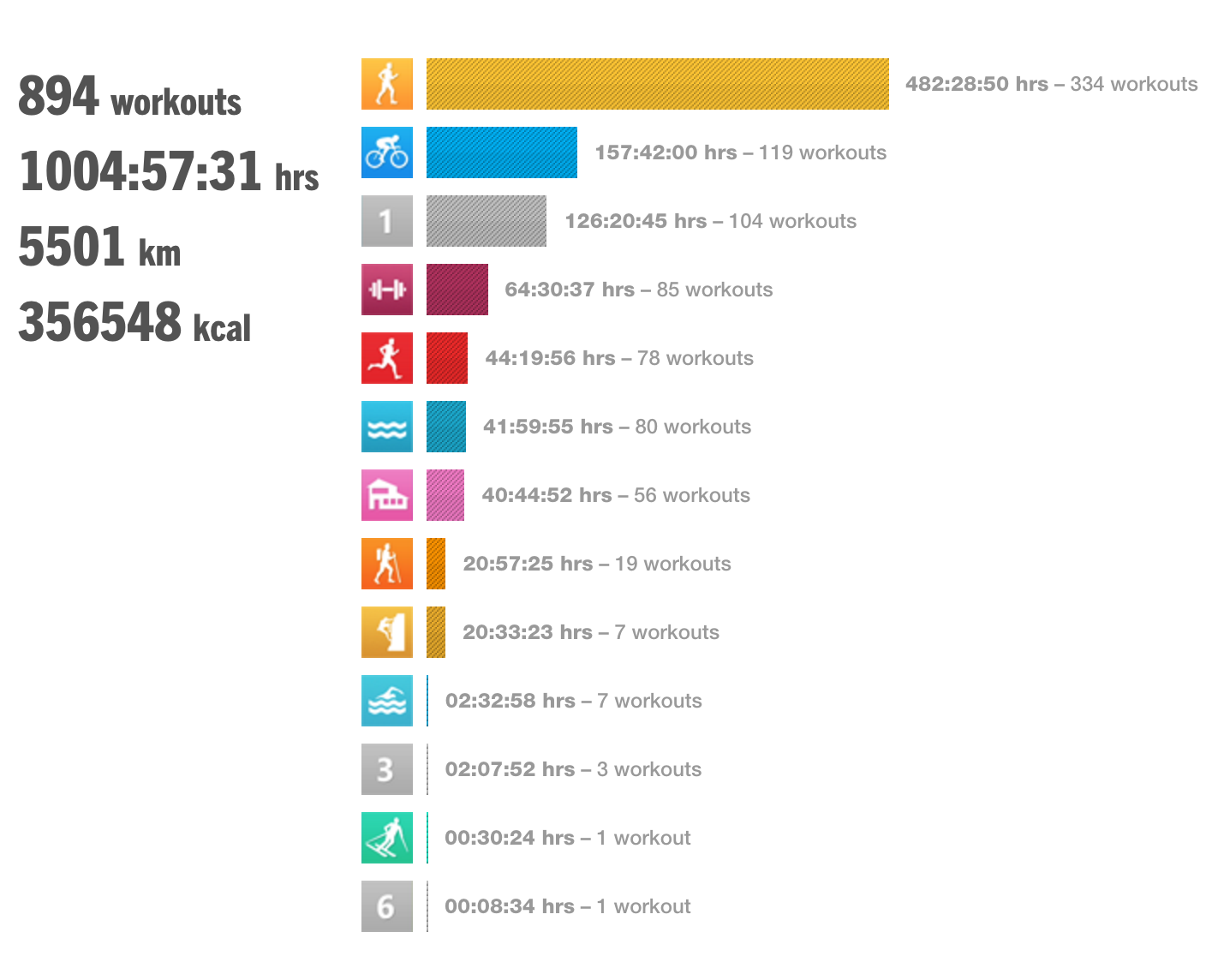
Sports tracker: 1004 hours tracked across multiple devices over the years.

For years now I have been tracking my sports activities with sports tracker on a variety of mobile phones, dive computers and sports tracking watches. I have gone canyoning, hiking, swimming, skiing, snowboarding, climbing, to do via ferrata, explored caves and trained indoors. In that time I have not had too many injuries and I have taken hundreds, if not thousands of photographs. [caption id=“attachment_2809” align=“aligncenter” width=“300”]1000hrs with sports tracker I have tracked more than 1000 hours[/caption] These activities have been in France, Spain, Switzerland, Italy, England, Poland and maybe in or two countries that I have forgotten about. Sports tracking has progressed enormously since I started tracking activities. In the beginning I was using the N95 8gb and the battery lasted for about an hour. I then switched to various iphones and android devices before deciding that mobile phones were crap. That’s when I moved over to the Suunto Ambit 2 and later Suunto Ambit 3 devices. Since then I have been very happy tracking my physical activities. One key step was when Suunto and Sports tracker decided to share data between their services. At this moment I could track with the Suunto Ambit 3 and share to Sports tracker without four or six steps per activity. Since then the service has been reliable.

Video Editing in a virtual Reality environment

A few years ago I said that I would upgrade my mac book pro when apple came out with a dual display laptop where the keyboard is a touchscreen display that changes to suit the application in use. Two days ago I had a change of heart. I do not expect Apple to come out with such a device. I have set my sites on a different idea. An edit suite which requires VR goggles to use. The edit suite could be used either by standing people or sitting people. Turn your eyes to the left and you see the rushes. You would have a choice. The rushes could be shown as keyframes on a board or as film strips. Motion feedback gloves would be worn that provide tactile feedback. Double click and the selected clip appears in the player window. With current editing systems keyboard shortcuts are learned and memorised by editors to avoid using the mouse. In this case specific finger positions would be short cuts. You could trim, splice, insert, overwrite, make multiclips and more. Sound and vision could be faded as if using physical controls. Imagine multicamera editing in Final Cut VR. The setup would be like in an OB van except that you’re in an edit suite or in a park. You could even be sitting in the back seat of a car. The beauty of such a setup is that monitors and displays could eventually be removed from the desk to be replaced with goggles and a pair of gloves. This means that the same edit suite could have a virtual 64 channel audio mixing board for sound technicians, colour correction wheels for colour graders, vision mixing console for vision mixers and standard video editing controls for video editors. In theory we could go back to the jug/shuttle controls from linear editing days. I now look forward to seeing whether Avid, Apple or Adobe come out with the first virtual audiovisual creation suite. Imagine how immersive the experience would be. Enjoy the notion that this virtual environment will allow you to stand or sit down.

My love/hate relationship with twitter turns Ten

I have been active on the World Wide Web for two decades, two thirds of my life. Half of that time has been spent as a twitter  user. I was among the first to use the service and I saw it go from being a curiousity to being the most popular conversation tool around. When twitter was young the iPhone was in it’s infancy and data plans did not exist. As a result it was SMS based. The SMS idea was short lived as it ended up costing the twitter founders too much. Twitter owes an immense debt of gratitude to Apple, the iPhone and the shift towards mobile data plans somewhere other than Finland. When we were Twitter infants, when we were discovering the network and thinking of how to use it we were stuck at a computer and dependent on wifi and power sockets. If we left the house we missed on the conversation. Twitter at the time was a compelling network, especially since I was lucky enough to live in London during the golden age of Twitter. Twitter is a fantastic and compelling social network that has the wrong people affecting its feature. Marketers, public relations professionals, investors and other groups are too busy trying to push content to people rather than attract people. Yesterday afternoon I came across the term “Organic Social media” in relation to Instagram’s shift from a reverse chronological timeline to an algorithm driven timeline. A shift in the definition of social media has taken place. A decade ago social media implied that people were sharing content and commenting on it. They were making statements and friends and colleagues would comment conversationally. Marketers et al have destroyed the conversation and shifted everything towards an “I am the best so look at me” fed by likes, comments, shares and other tricks. As Twitter turns ten years old I grow curious about the future of friendships and online conversations. I question whether social media landscapes will become as unfriendly to introverts as bars in the physical world. Will social media become the place where the most conventionally appealing individuals thrive?

Pay-to-win Futility.

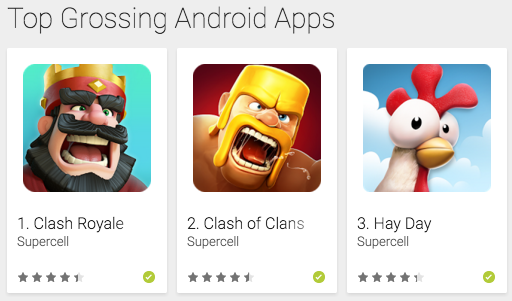
[caption id=“attachment_2795” align=“aligncenter” width=“300”]Pay to Win games make casual gaming futile Pay to Win games make casual gaming futile[/caption] Several years ago a friend told me about Clash of Clans and I began to play the game. The game is an enjoyable distraction for when you have a minute or two three. You perform a few actions and then you get on with your other tasks. When you play for free patience is an asset. You have to wait to get enough gold, elixir or gems before you can complete certain actions. The game is designed in such a way that you can play for years and still progress. I like to joke that the Pay  to Win model is both encouraging and training people to bribe their way through life. If you’re impatient you pay a little supplement and you complete the action. Instead of taking a week for an action to be completed it takes seconds. Supercell has made millions this way as individuals spend more than a thousand euros. Those who are willing to pay get to the top of the leaderboard.

Stop wasting time on Instagram with friends - Algorithms and attention

Instagram is a photo based social network that allows two types of users, ego-maniacs on one side, and explorers on the other, to share images of interesting things they see and do. Some people share beautiful mountain images and others share images of their trips to Paris, Rome and more. I share images of Via Ferrata, climbing and a number of fun sports. The ego-maniacs share images of themselves in as many places as possible. Instagram is a “last active, first seen” kind of social network. We see the most recent images first. We see active users frequently. Less engaged viewers are less visible. This is a participation reward model. The more engaged you are with the community and the more people will see your content. There is no favouritism. The algorithmic timeline will penalise the most active users and encourage the cult of personality. The Cult of Personality social media model is great for marketers and public relations accounts because it makes those with the most likes and comments more visible. When you’re conversing with two hundred or more people this is enviable. As people interact connections are created and communities form. Conversations are a two direction affair. According to Statista Instagram now has 400 million users. Selena Gomez is the most followed person on Instagram at the time this post was written. 69 million people follow the account. Images from the account are suitable for a glossy magazine rather than a social network. They lack in warmth and familiarity. The account is cold as a result.  These cold and impersonal images can easily get a million likes and algorithms will push this content to the detriment of images by friends and family. [gallery ids=“2784,2785,2786”] Chronological timelines are great because activity and personal engagement reward account holders. When you switch to an algorithm based timeline you will unfollow celebrities to avoid having their posts flood your timeline. Facebook demonstrates what happens when you shift from a chronological timeline to an algorithm timeline. User engagement and interest declines and what were once vibrant conversations lose in appeal and the return on invested time, for users declines. This decline results in the network’s tab being closed in our browsers and the app becomes dormant. Dormant networks resort to sending e-mails to re-engage their users. Both Twitter and facebook do this. Imagine if you received a tweet to let you know that you got an e-mail or that e-mails appeared in your Facebook timeline. It demonstrates that networks like Facebook and twitter, by focusing on making money, forgot to make their products essential. By making this mistake both Facebook and Twitter need to nag us to come back via e-mail. If algorithms are used in timelines then the algorithm should keep posts by our friends chronological and apply the algorithm to celebrity accounts. We already have an algorithmic option on Instagram via the explore tab. Instagram must resist the urge to break personal timelines as this will disengage users. [gallery columns=“2” ids=“2787,2788”]

Sentiment Analysis and Social Media

  I have two opinions about sentiment analysis technology. The first one is that social media have already suffered greatly through the actions of social media marketers, PR professionals and “internet famous” individuals. This technology could lead to broadcasting without a human bothering to listen as the human is replaced by algorithms and data analysis. This will benefit data analysts. I do feel encouraged by another aspect. Automation. Social networks such as Twitter, Facebook, Google Plus, Instagram, Flickr and others will be self monitoring. I understand “Self Monitoring” to use data analytics tools, with Artificial intelligence to look for keywords and key phrases to create a human readable graphic to understand how brand perception is evolving over a period of minutes, hours, weeks and months. We know the release cycle for apple products, Sony Products, expectations for the Oculus Rift and music festivals as examples. Twitter and Facebook have almost a decade of data about regional events, product releases and user reactions. If that data is processed then it could graph attention, interest and sentiment. Current affairs affect how we perceive brands and products. If a social network was paired with sentiment analysis and current affairs imagine how it could react to the FBI V Apple debate. In the timelines of privacy enthusiast Apple products could be promoted as sentiment towards that brand progresses. In the case where people side with the FBI posts promoting other brands of mobile phones could be promoted in their place. I love social media as a peer to peer communication tool and I hope that Sentiment analysis software will shift the social media practitioners’ focus away from getting followers to promoting their brand or products to people who are most likely to be receptive to the displaying of related information. Hypothetically a group of friends could join a new social network, the friends they communicate with most frequently are suggested as people to follow and interact with. At this point no broadcaster, no media company, no brand are visible to the user. The purpose is for conversation, not broadcast. As people converse the Sentiment engine would analyse the tone and topic of conversation and according to this suggest related products. As data is collected over weeks, months, and eventually years so the software provides relevant information automatically, without scheduling. Facebook, twitter, Sports tracker, Suunto and Google have ten or more years of data of the sports I practiced and events I have participated in. With that data they can see how passions grew and declined and how social networks changed from location to location and job to job. In effect social networks “know” me. Social networks could ban animated gifs from my timeline and sensationalist writing could be avoided. I would be interested in a social network where I choose my friends  and then big data and sentiment analysis offer me the most relevant content. It would provide further information when we make positive statements. When I joined social networks a decade ago they were blank slates in alpha or beta phases of development and we shaped social networks according to our conversations. Ten years later when you join a social network you are flooded with so much information that it is overwhelming. As it is time-consuming to pick and choose you either ignore the options completely or you select all of them and get noise. With big data and Sentiment analysis your conversation would automatically affect what you see, when and how often. As soon as you start being negative about specific things they fade away.
Narcissism and the World Wide Web

According to a New York Times writer, Narcissism and the World Wide Web are increasing. “Narcissism is increasing…

If our egos are obese with amour-propre, social media can indeed serve up the empty emotional carbs we crave. Instagram and the like doesn’t create a narcissist, but studies suggest it acts as an accelerant — a near ideal platform to facilitate what psychologists call “grandiose exhibitionism.” No doubt you have seen this in others, and maybe even a little of it in yourself as you posted a flattering selfie — and then checked back 20 times for “likes.”

Myshake - Earthquake app for Android

  Myshake is an android app developed by UC Berkeley to use mobile phone sensors as earthquake detection and measurement devices.

When the shaking fits the vibrational profile of an earthquake, the app sends the anonymous information to our central system that confirms the location and magnitude of the quake.

There are more than a billion smartphones currently in use. If everyone with an android mobile phone downloads the app and has it running then hundreds of extra data points can be collected. It will provide seismologists with a much larger and far broader data set. Seismologists will be able to collect such a breadth of data that they will be able to understand what is happening in more detail. They can compare data from a diversity of points, whether on one side of a bridge or the other, from the inside of one building or the other and more. It should help with computer models and provide more insight in how materials are affected by earthquakes.

Social Media and the Lizard brain

I wanted to write about Social Media and the Lizard brain. My experience of information technology and Social Media is that it is a great tool for people from different backgrounds to come together and have a calm and logical conversation. Some people believe that “we need a social media with heart that gives us time to think.” I strongly believe that the culprit is not social media but rather the way people are taught to think in general and how the stigmatisation of online interactions has led people to feel negative when using social media.

Reactions - What if Twitter died

You can tell when someone joins a social network by what they think the network is for. I joined twitter in 2006. No one knew what the network was best at, eventually everyone decided to use it as a conversation tool. When people understood how dynamic conversations could be the network grew. The author of “What if Twitter Died“wrote this: “it can’t seem to stretch beyond its celebrity, celebrity follower and tech roots. If you aren’t into celebrities or the tech industry, Twitter just isn’t that appealing, especially given all the other options for online social interactions.” It is clear from this writer’s post that he has not been with twitter since it’s earliest days. His twitter profile indicated that he arrived in 2010. That’s up to two years after the golden age of twitter ended. My previous posts have explored this topic in depth. While social media focus on marketers and public relations professionals I will keep blogging. It allows me to express myself without providing content for platforms that have destroyed the social dimension.