Archives

An emotional BREXIT

The More I think about BREXIT and the more I think that those of us, like me, who see themselves as British Europeans the more the BREXIT referendum is painful. BREXIT is painful for us because we are born in one country but we are nationals of at least two or three nations. We cannot call ourselves British because we went to uni but not school so we have not picked up that culture. We visited family on holidays but we are not locals. I believe that a high percentage of my generation went to uni in England probably worked at least temporarily before leaving again. As Europe based brits we remember when we were thinking about which universities we would go to and we thought about whether we would have home fees / Europe fees or international fees. At the time the difference was from 1000 GBP to more than 7000 GBP, excluding all other costs. That does shape whether you go to university as well as when. As an EU citizen living in Switzerland I always have the frustration of counting as an EU rather than British citizen and if I am really unlucky because of the current mood of politicians then I end up on international fees. In theory that is no longer an issue. Another aspect that I rarely see discussed in BREXIT discussions is that of emigrating from the UK to find jobs. In the post I shared a few days ago I had seen that several industries that were in Northern England migrated to France, Germany and other EU countries. In theory those who say they lost their jobs could migrate to continue doing the job that they enjoy. the European Union provides people with the opportunity to study, work and more with great freedom. The only challenge is to learn the local language. In Switzerland we see that Brits and other English speakers spend twenty years in the country without becoming fluent. At this moment in time we can travel from any country in Europe to any other country in Europe without a second thought. I really appreciate this freedom. My friendships and activities revolve around spending time with emigrants. I could use the word expat but it does not feel like an accurate portrayal of our identity. I was brought up in the international community where everyone is a migrant so see ourselves as citizens of the world. In this sense at least the International Baccalaureate has achieved its goal. BREXIT is a direct attack on the identity that friends, colleagues, family and fellow citizens of the world have. We can see endless opportunities as long as we are willing to travel, as long as we are willing to re-skill and as long as we are willing to adapt to new situations. The remain campaign and Pro-European movements are looking forwards rather than backwards. We are enthusiastic about the future rather than nostalgic about the past. BREXIT aims to destroy something that has been built over decades rather than weeks or months. The European Union is organised. Verhofstadt and others still believe passionately in the European Union and the benefit that it can bring to Europeans and those they deal with. We need to listen to such people. They have a vision for the future, they have an action plan. We should collaborate with them to turn it into a reality that we can all benefit from. The European Union is about a continental rather than national identity. It is about a set of universal values of equality, education, open mindedness and more. We need to keep that ambition alive and make it thrive. In a healthy media environment it makes sense for the whole of society to want what is best for everyone.
A Rock Crawler and Wildlife Film Making

When Gordon Buchanan was following bears in the United States we watched the resulting documentaries on television. We have seen him a number of times in episodes of countryfile as well. Now he is working on getting footage of wolves in the wild. For this project he is staying out in the wild and following a pack of wolves day after day for weeks. As part of this project he is filming with a broadcast camera and gopro cameras which he fixed on to a “rock crawler”. The Rock crawler is a remote control car with the body removed. The BBC were working on a documentary about polar bears and for certain shots they created a den for filming purposes. It helped to tell the story but people felt that the purity of that documentary had been tainted. This genre of documentary aims to tell a genuine story with no reconstruction or trickery. Everything has to be genuine. As we see from the footage above Gordon Buchanan was able to get the camera right up to the den and film the wolf cubs from the mouth of the den. This technology is great for story telling because it provides the camera operator with greater flexibility. He is able to get the camera to where he wants it to be without going there in person. In theory animal behaviour is genuine.

Cycling to Geneva and back

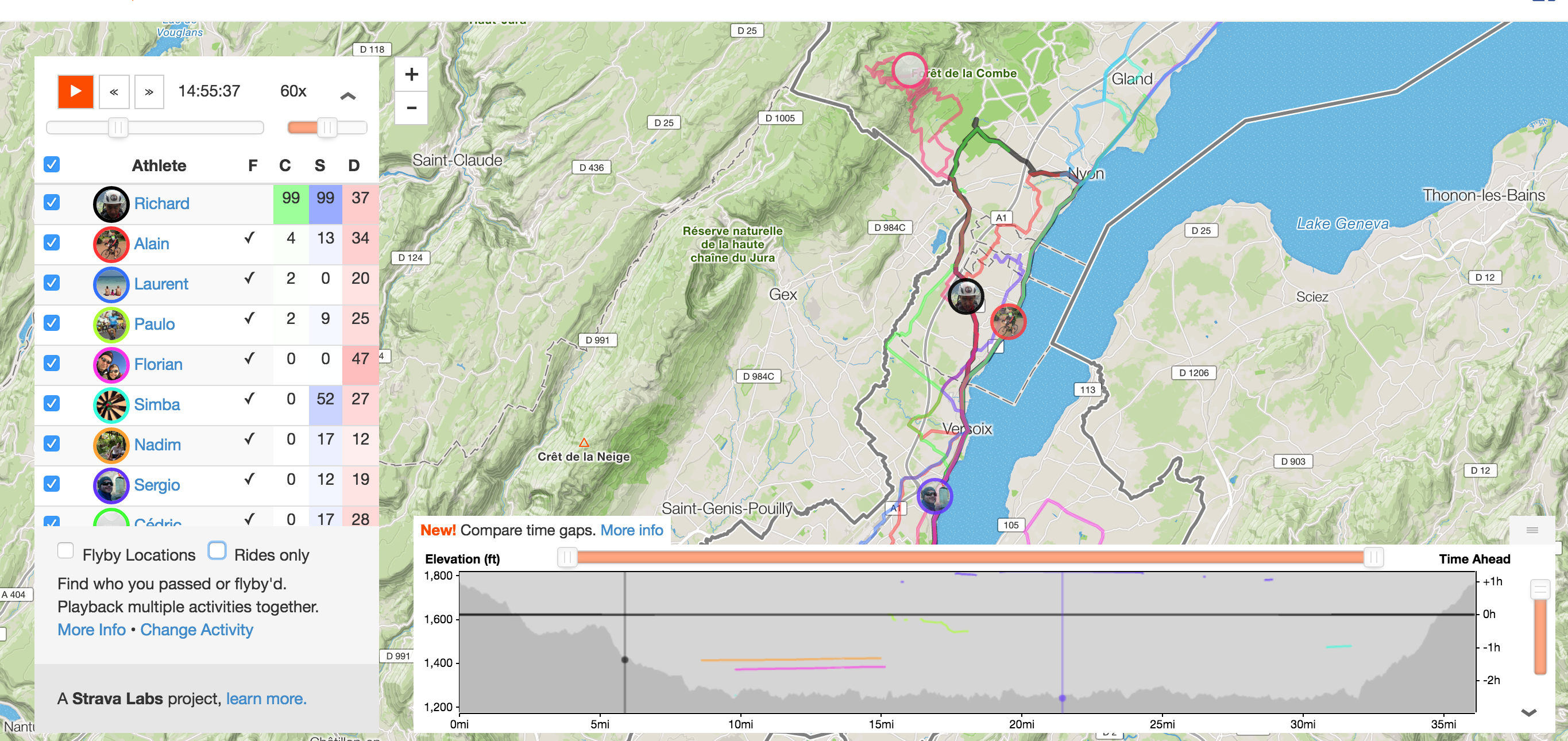
Cycling to Geneva and back is a relatively short route. It is a 60km round trip. Two things make this ride more challenging. The first is the wind if it is blowing against you and the second is the need to cycle uphill. This is true of all cycling in this part of Switzerland. You have to choose whether to cycle upwards at the start or the end of the bike ride. If you start with the uphill then heading back to the starting point can be a pleasure. I went cycling yesterday because the conditions were perfect. The weather was good, the temperature was low and as I was not rock climbing in the evening I could afford to invest my energy and stamina in this bike ride. The outward journey is easy. You start at the foot of the Jura and using the route I used you spend a lot of time cycling downhill towards Geneva. Once you are in Geneva you can cycle around the city and enjoy seeing the city as a cyclist rather than pedestrian or car driver. I like cycling in Geneva and other cities because distances become much smaller. Getting around is easy as long as you don’t cycle over glass and you can stop anywhere. On the way back you can cycle along the lake road. It is flat for most of the way. From Nyon you cycle uphill. I hadn’t noticed that we can see flyby information even when not riding in a group. If I am so inclined I can see who I waved to and find more information about their cycling habits. [caption id=“attachment_3081” align=“aligncenter” width=“660”]Strava flyby Strava flyby[/caption] By moving the mouse cursor around on the grey graph you can see where and when people overtook you or when you crossed path. You can see when you overtake people and when they overtake you. On the right ride you can see that there is a representation to show how far ahead of or behind people are. I find it comforting to see that with some people the separation was stable for extended periods. This is illustrated by the coloured bars on the graph. My projects for the coming weeks are to cycle to Lausanne and back and then to cycle around the Lac de Neuchâtel. Lausanne and back should be around 80km and Neuchâtel should be around 96km. The goal after that would be to cycle around the Lac Léman.

The Moléson VF with the Narrative Clip 2

The Narrative Clip 2 is a specialist camera that can be programmed to take photos at regular intervals whilst you enjoy activities. This is sometimes referred to as life logging. The idea is that you wear the camera either on clothing or place it somewhere where it can capture the passage of time. [gallery columns=“4” ids=“3063,3064,3065,3066,3067,3068,3069,3071,3072,3073,3075,3076”] For this event the camera was worn around my neck and took pictures throughout the activity. As you can see from the last image I had the Ricoh Theta S on a monopod and the Sony Xperia Z5 compact for other pictures. You do not see that I had a fourth camera with a 30 times optical zoom. The camera took over four hundred images during this event and I chose just a few. I avoid sharing images of people unless I have their informed consent. I share the images that best represent the pleasant moments. If I took the time I could rotate this camera to be horizontal and I could capture daily timelapses. Every time I go for a bike ride or a hike it would capture regular images. The camera has enough battery power and you can keep the camera in your pocket until you want to start logging the event. When the event is finished you can place the camera back in to your pocket and head home for example. An improvement which I have recently noticed is that when you put the camera to charge it can automatically upload the day’s images to the narrativeapp website and you can then select what you want to share. As cameras get smaller and more portable and as they become more specialised so we have an opportunity to get different types of images. One is for time lapses, the other has a powerful zoom, the third allows us to capture spherical images and the fourth is practical for sharing to social media.

"Why We Voted leave: Voices from Northern England

This short video provides us with voices from Northern England. We hear about the closures and about the strikes that took place decades ago. We hear superficially about migration but the key message is that the North feels abandoned by the South. The North has been fed the message that austerity is the fault of the European Union and that the European Union imposes its will on people rather than provide them with the freedom to choose. Why we voted leave: voices from northern England from Guerrera Films on Vimeo. Although mentioned briefly London has failed rural England. Mines closing down and jobs disappearing is one thing. To have poverty and the sense of hopelessness continue for generations is harder to understand. What about education and regeneration projects?

Post-fact Britain

I was in the graduating class of 2000 with 99 other students representing more than one hundred countries. As an individual I already have three nationalities and four identities. I am British, Italian, Polish and a foreigner living near Geneva, Switzerland. As a result of this mixture I said, when I was in Tanzania in 1999 that I was European because that was the simplest way to describe my identity. When I first heard about the Brexit Referendum months ago I thought that this was so stupid that I thought it was not a serious project. It did become a serious thing, especially in a post-fact Britain.

Google Local Guides and I

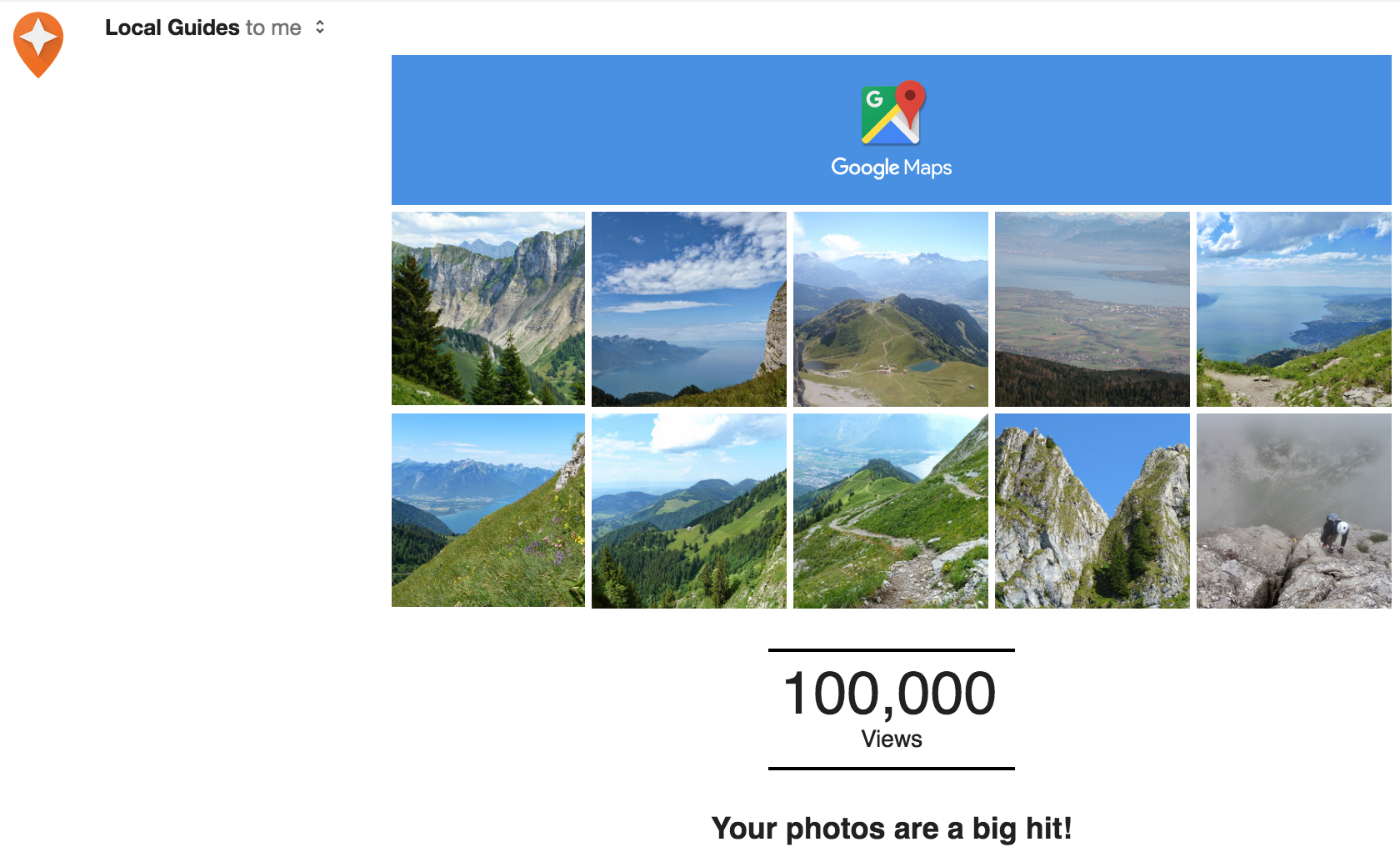
Google Local Guides and I are mutually beneficial. I love to go up to the mountains and document their beauty and Google Local Guides needs images and reviews. I have been sharing images with Google Services for several years but it Google Local Guides is relatively recent. When I was added to the program they had already included several of my contributions. [caption id=“attachment_3053” align=“aligncenter” width=“660”]One Hundred Thousand views One Hundred Thousand views[/caption] The images that you see below are from Via Ferrata and hikes in Switzerland. They show the Leman, the Alps, the Jura and other peaks and valleys. In Summer I am among them every single weekend. Recently I have started to document these trips as 360 photographs which I then share with this service. [gallery columns=“2” size=“medium” ids=“3054,3055”] My goal is to contribute at least 140 more images because I want to get a terabyte of storage for my pictures, to use as an online backup. As I use an android phone it logs the locations that I have been to and when I get home or to a computer I can review my location history and write a short review of the places as well as add images. This is an easy and intuitive process. The perks that I am currently entitled to are: Get noticed with your Local Guides badge in Google Maps. Connect with other Local Guides in our exclusive Google+ Community. Lead the conversation by moderating Local Guides community channels. Receive invites to Google-hosted events in select cities. For now the community travels internationally but it is principally United States cities that are active with Barcelona, Edinburgh, London, Madrid, Paris and Sydney providing the international side of things. Some would say that Local Guides will challenge other services offering the same features but as Local Guides offer one terabyte of storage for images I am motivated to contribute a further 140 photographs and reviews as the opportunities come up.

Discussing News on Facebook

Discussing News on Facebook is not as interesting as it is on Google Plus. On Facebook publishers and friends tend to share and promote clickbait rather than articles that they have actively looked for and read. Google+ in contrast is a place where people surf the web reading news stories and when they find a good one, link to and share it. For this reason I go to Google+ for news and current affairs if I go to a news aggregator rather than Facebook.

Via Ferrata with Climbing Shoes

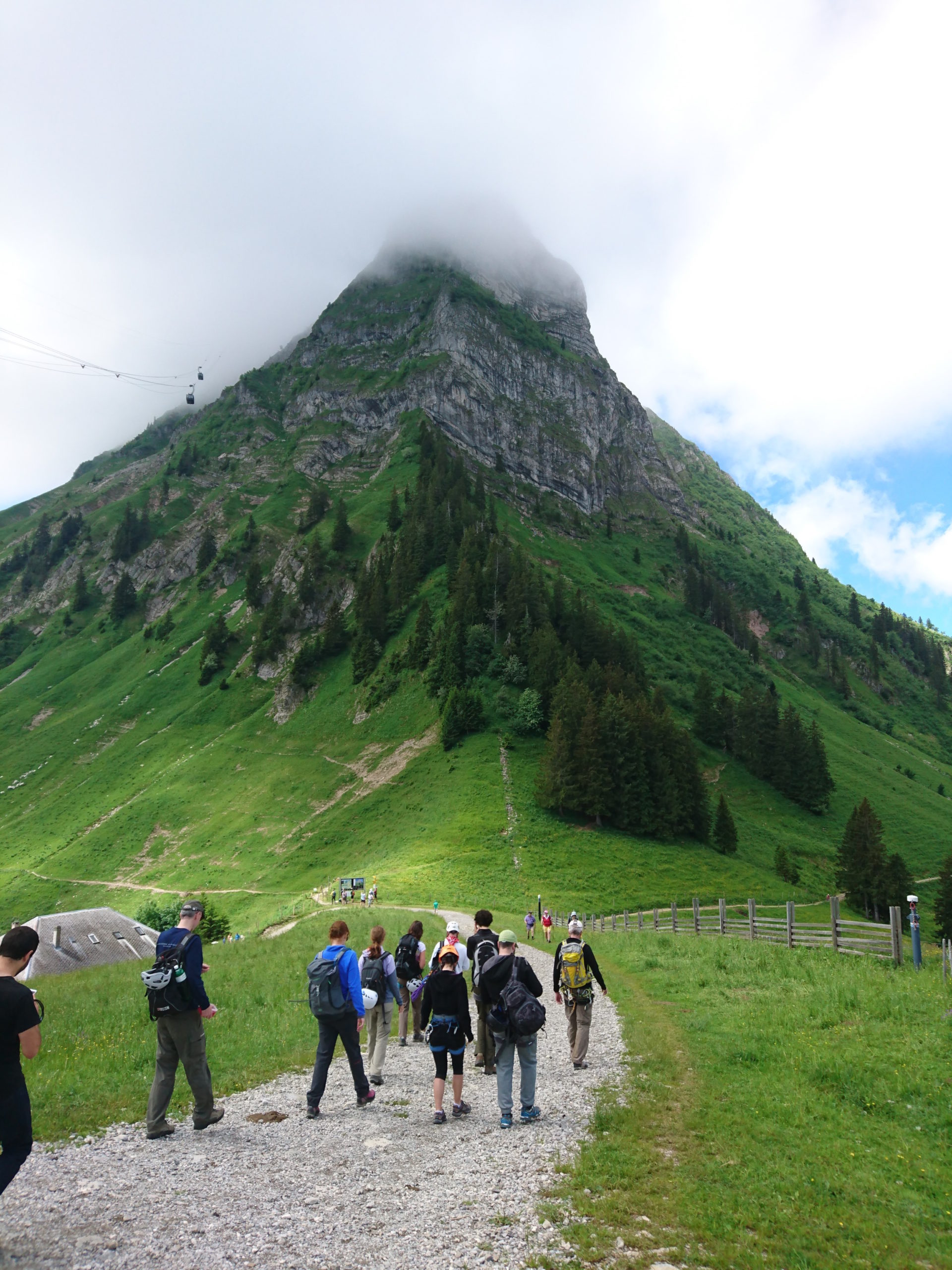
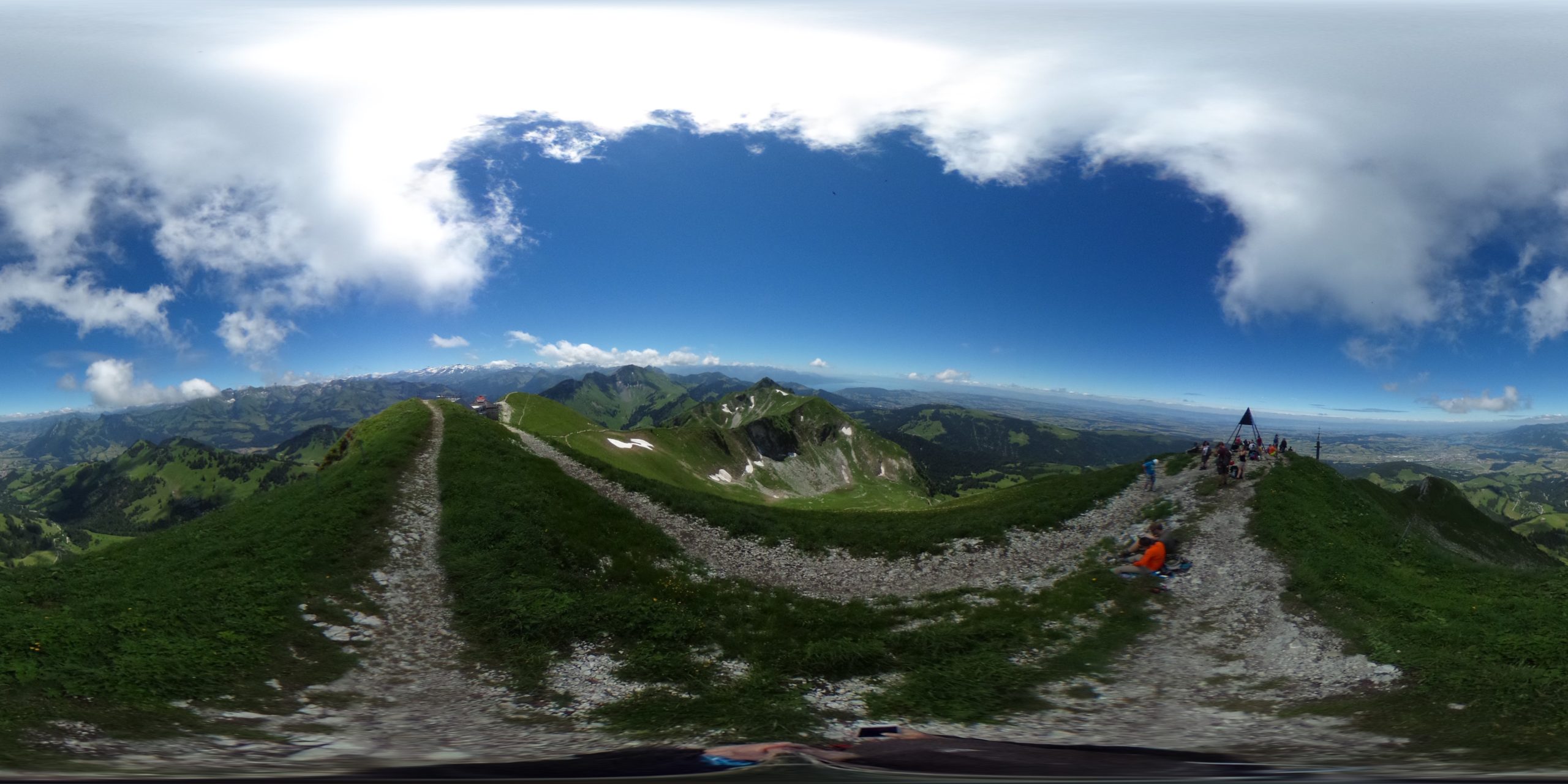
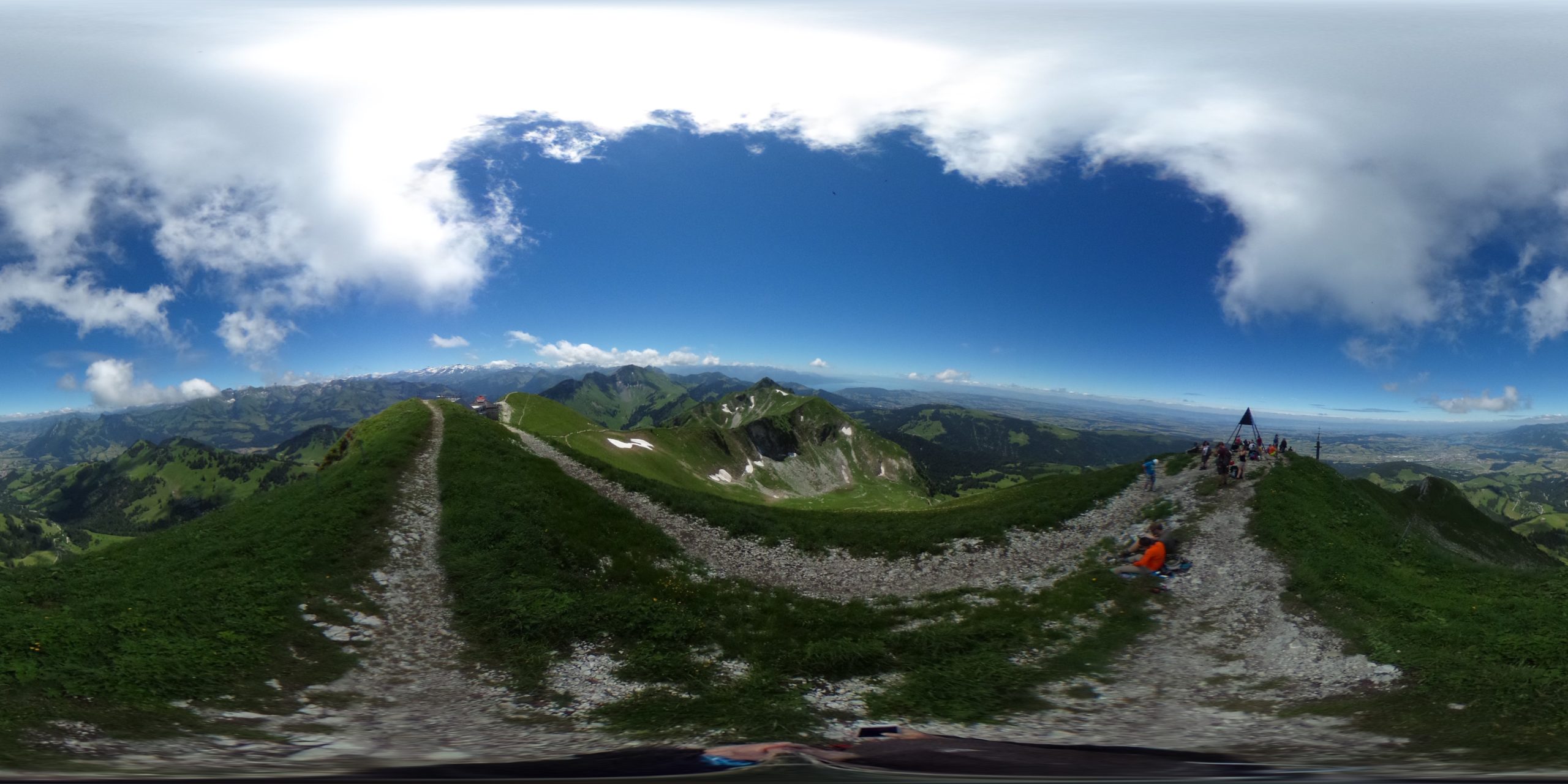
Today I tried a Via Ferrata with Climbing shoes. With a group we went to the Moléson which you see in the picture below. This mountain stands in the middle and has fantastic views on to Neuchatel, the Lac Leman, Bulle and more. The drawback is that this mountain is often in cloud due to its location and height. [caption id=“attachment_3042” align=“aligncenter” width=“660”]Heading to Moléson Heading to Moléson[/caption] If you’re still reading despite the mention of clouds then you will see that this is an enjoyable place to visit. It is located in Gruyère, known for its cheeses and the Giger Museum. I don’t think I have visited either of the two latter options. Climbing is more fun. Today was different. I took the blue easy route and I wore climbing shoes rather than normal shoes because I wanted to see whether the experience was pleasant. At first it was worthless to have these shoes on because of the mud and humidity. They did become more fun as we climbed. The person in front of me was a novice at Via Ferrata so she was fighting for the courage to move onwards and upwards. This gave me plenty of time to get as much contact with the rock as possible. I focused on using the natural rock as foot holds as much as possible and I even tried to use the rock as hand holds. My reservation about safety meant that I did not want to fall with via ferrata gear. The rock on this via ferrata is perfectly adapted to rock climbing shoes when it is drier. The rock is friable and this provides justification for climbing shoes. Rather than two or three foot holds that you can use with hiking boots (which I usually use) I used slivers and cracks of rocks. I tried not to “felix the cat” too often. That is a term a climbing instructor used South of the Alps when I took climbing lessons and as I like the term I share it. I have been practicing via ferrata for five years now and I have explored almost all via ferrata within a two hour drive multiple times. As a result I know that I can do them and I know what to expect. This means that I can be generous and climb last. I can help novices and beginners experience the sport for the first time and through experiments such as climbing shoes on a via ferrata I keep myself entertained. Leukerbad and other such via ferrata would be interesting with climbing shoes because of the rock type. They are not essential and I did this out of good humour. I was perfectly happy using hiking boots for the first five years. And now for desert, a view from the top. [vrview img=“http://www.main-vision.com/richard/blog/wp-content/uploads/2016/07/molesontop.jpg" pimg=“http://www.main-vision.com/richard/blog/wp-content/uploads/2016/07/molesontop.jpg" width=“500” height=“400” ]

360 photos of Via Ferrata

Yesterday I was up above Leysin climbing the Tour D’Aï via Ferrata. It was an opportunity for me to take 360 photos of Via Ferrata. The beauty of panoramic pictures is that they provide you 360° of vision both vertically and horizontally. It means that you can get a sense of size and scale. You can look at the person exploring the via ferrata and how precarious their situation is as easily as you can admire the beauty of the landscape. [vrview img=“http://www.main-vision.com/richard/blog/wp-content/uploads/2016/07/R0011307_20160701130638.jpg” pimg=“http://www.main-vision.com/richard/blog/wp-content/uploads/2016/07/R0011307_20160701130638.jpg” width=“500” height=“400” ] Another great aspect to 360° photos is that you can show specific bits of via ferrata and show where the challenging bits are. “Here is where the via ferrata is overhanging” so that you can assess whether you have the strength and courage to try that section or “Here is how high up you are” and so you get a sense of whether you would be paralysed with fear or enjoy yourself. [vrview img=“http://www.main-vision.com/richard/blog/wp-content/uploads/2016/07/R0011321_20160701133926.jpg” pimg=“http://www.main-vision.com/richard/blog/wp-content/uploads/2016/07/R0011321_20160701133926.jpg” width=“500” height=“400” ] Most via ferrata are like the one that you see in these images. You have what I call staples, pedals and occasionally direct contact with the rocks. In other places you have spikes or you have to pull yourself up along the cable. With these images you see how well equipped the via ferrata is and you are not going in to the unknown. This is good when taking less experienced people. A side effect of 360 pictures is that you capture a self portrait of yourself in situ over and over again. It is by nature of the medium rather than desire.