Archives

Cycling Trip to Lausanne and Back

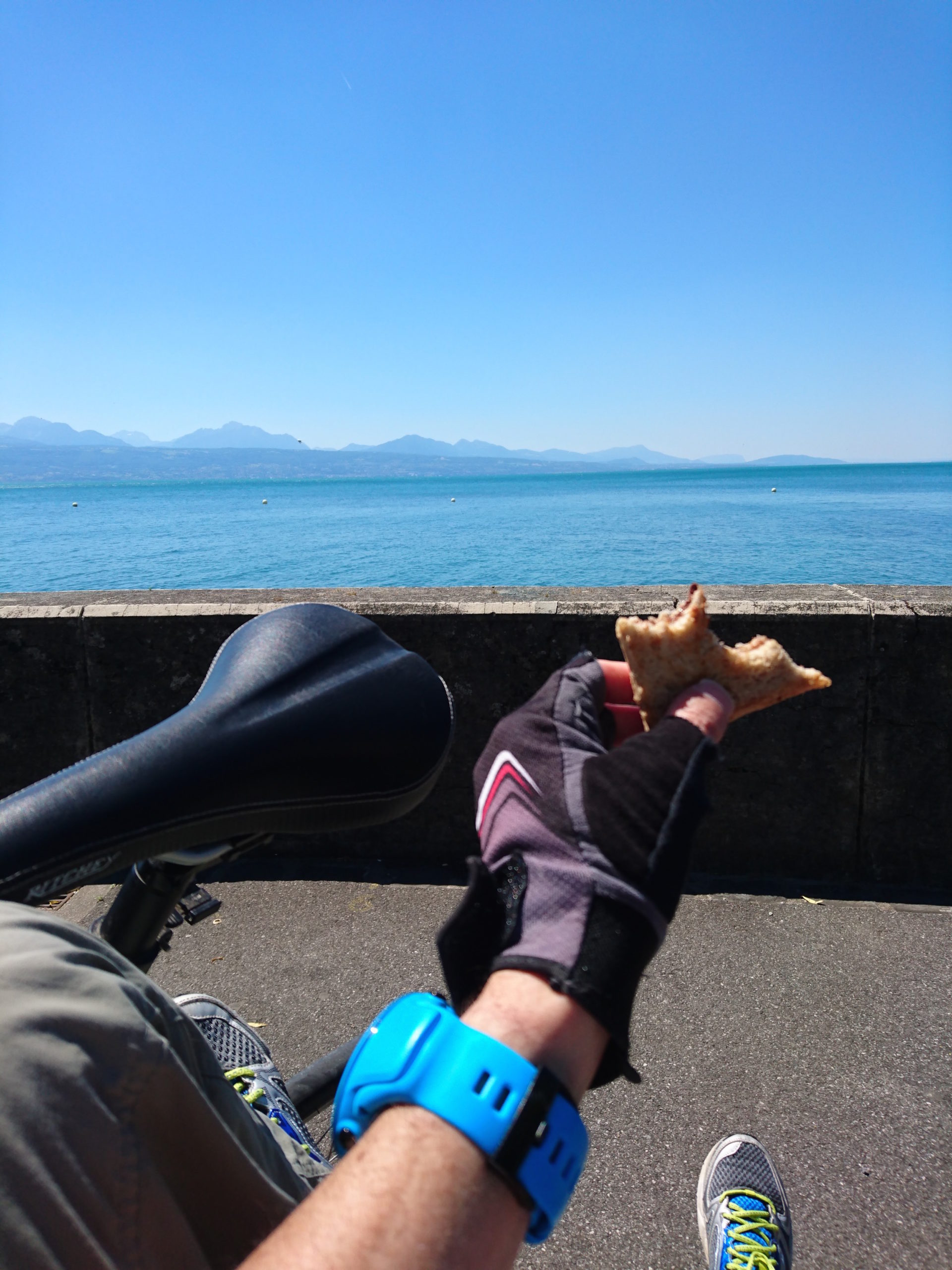
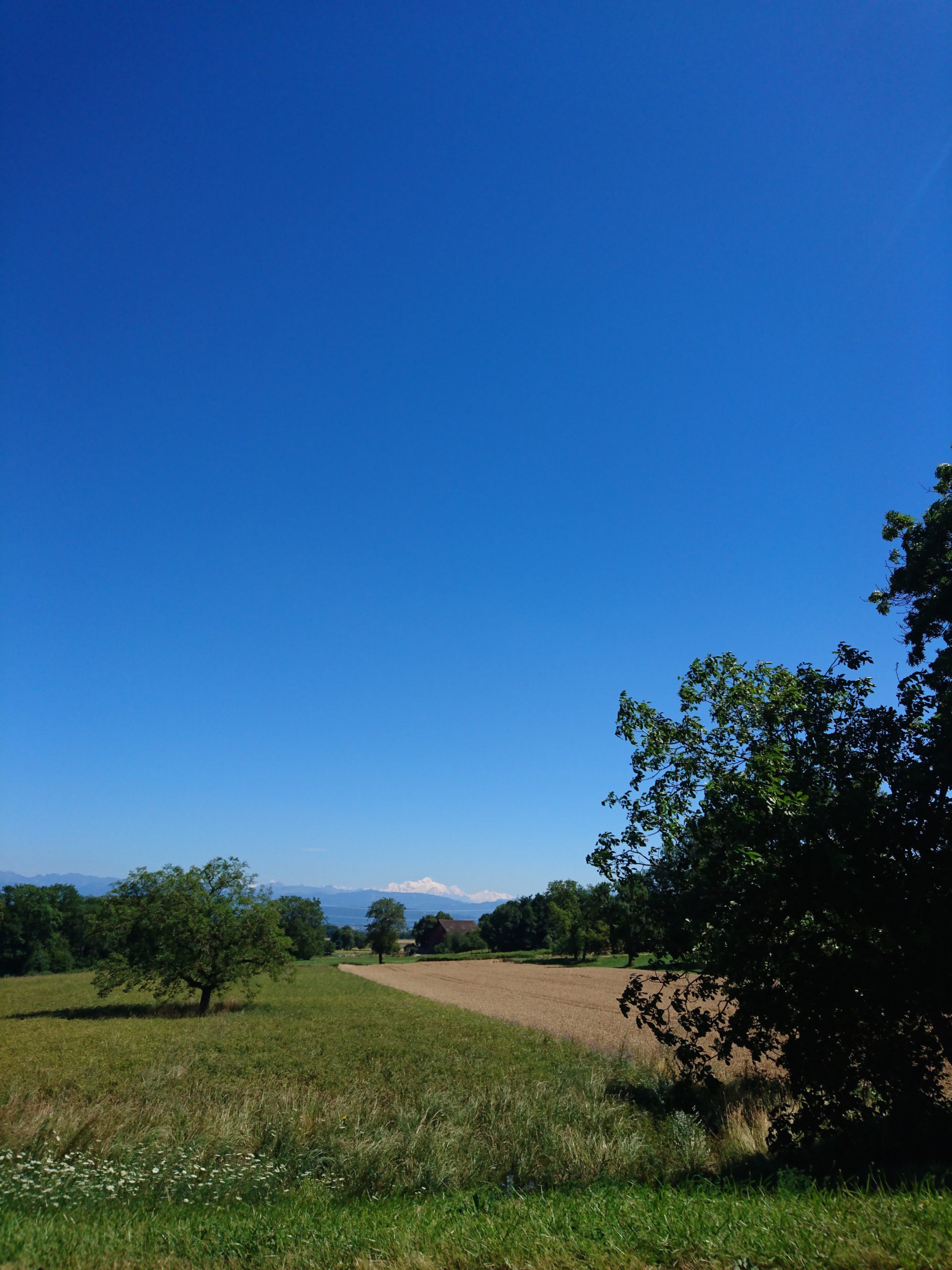
When I set off on my cycling trip to Lausanne and back I thought that the strong wind would force me to turn around and that I would abort the attempt by the time I got to Rolle or Morges. As I continued cycling I fought the wind and I made slow progress. When I was in the dips or along certain walls I had a break from the wind. I continued on with the effort. A nice portion of this route is on cycle paths so you are protected from traffic. Sometimes the cycle path is on the side of the road and at other points it is on a pavement at the side of the road. Near St Prex the route bifurcates from the road and goes through a 30km zone. You rejoin the road a few minutes later. Around Ouchy the roads were relatively quiet. [caption id=“attachment_3136” align=“aligncenter” width=“660”]I stopped in Ouchy to recover I stopped in Ouchy to recover before cycling back.[/caption] The air temperature when I set off was about 20°c with wind. As I cycled I never felt too warm. It was a great temperature in which to cycle over a long distance. For the first hour I was drinking Jura water before switching to electrolytes for the route back. I usually carry enough water or snacks for part of the journey and when I feel the need for a rest I stop and pick up more supplies. It keeps the weight down. I was lucky when I cycled back towards Gland because the wind continued blowing in the same direction. The wind that I had spent the outward journey fighting was now in my back. As a result despite muscle fatigue the cycle back was comfortable enough and I still managed to get a good time. The challenge when cycling from the foot of the Jura is that you eventually need to spend energy to get from the lake uphill. It might be psychological but the place from which I like to climb from the lakeside is through Gland. There are a number of routes with reduced traffic or you can take the main road. In this case I took the main road and when I was passing the train station I felt the rear wheel wobble so I stopped to check the wheel but it seemed fine. I then cycled a little further and then heard the rear tire flopping. A thorn had made its way in to the tire and punctured it. I had noticed that there was a cycle shop on the lake road so instead of going to the two sports shop near the bouldering gym I went to this one. The owner was just about to leave when he saw me pushing my bike. He was very helpful. He helped me replace the tire and pump it up again so that I could continue my journey. I had always worried about getting a puncture and I was lucky that it happened in such a convenient place. I had to walk back about two kilometres but in the end the inconvenience of the puncture was quickly resolved and I could head home. It provided me with time to recover before heading up the hill once again. I am amused that it was a thorn. I cycle around rocks, glass and other hazards on the road and nature got me with a simple thorn. To be fair I had cycled about nine hundred kilometres before getting a puncture. [caption id=“attachment_3137” align=“aligncenter” width=“225”]Some of the landscape you see Some of the landscape you see[/caption]   In the back of my mind I was always ready to cycle to Lausanne and then catch the train back but my endurance lasted both ways so I skipped the train. My next challenge will be to cycle around the Lac de Neuchâtel which is meant to be about 96 kilometres depending on the route you choose.
IFSC Climbing World Cup Villars 2016

I will be present at the IFSC Climbing World Cup Villars tomorrow. For me climbing has always been an active rather than a passive sport. It has been a sport where the landscape is nice and the crowds are small. Tomorrow will be the first time that I go and watch as other people climb. It’s not that I don’t watch people climb. Between climbing gyms, bouldering gyms, via ferrata and Rock climbing it is a sport that I have explored in depth. What I haven’t explored in depth is climbing with an audience, climbing as an event, climbing as a competition.

What helped make Pokemon Go popular

There are a number of reasons which make Pokemon Go popular. I believe that the Ingress User base plays a key role, that marketing had an effect and that curiousity also played an important role.

Big user base

Ingress has a large and vibrant community of players. These players are so passionate about this game that they are willing to walk 30 or more kilometres a day whilst staring at their phone. They are ready to climb to the peaks of some mountains and brave rain, sleet, snow, high winds, mud, heat and the cold. How many of us have had our fingers go numb as a result of playing ingress after all. That passion for the game was seen by children and Ingress playing parents let their children play. The children found it fun and so when they heard that Pokemon Go was coming out they automatically wanted to use this game. This adds a second dimension. Parents who enjoy playing Ingress are likely to have more than one mobile phone and more than one data sim. These parents are ready to give a mobile phone and sim card to their children. These children are then likely to play with friends. Yesterday evening when I was with Ingress players they had already switched to Pokemon Go and they kept commenting on the number of children they saw already playing the game. Remember that we live in a globalised society. Whether you live in France, Belgium, Germany, Australia or the United States you will have heard about Ingress, about Pokemon Go and you will have been curious to try the new game

First thoughts on Pokemon Go

My first thoughts on Pokemon Go are that we can level up fast. They have taken all of the Ingress Portals that Ingress players and I have created and turned them in to whatever the locations are called in Pokemon Go. I could research the names and terms but I am not that obsessive. Pokemon geeks can let me know in the comments. Is this why they stopped accepting new portals a year ago, to make porting the data from one server to the next easier? This morning I walked and went from a beginner to level four and a half. I was able to collect many pokeballs and pokemon creatures. Levelling up is easy. You get 100 points per pokecreature and 500 points for every new creature. You can upgrade or evolve individual creatures as you collect the required resources. One of my favourite features so far is that you can incubate eggs by walking. So far I have eggs that require 2-5km of walking to spawn. This means that you can go for a hike and keep your phone active. Every two to five kilometres a creature will hatch and you can start incubating the next one. This is a nice feature because it implies that we will not be stuck in a city. Walking in the countryside will have the same effect. The second pleasant aspect is that although there are “portals” as I would call them as an ingress player creatures also spawn all over the place. This means that as a person who spends a lot of time in the countryside I am free to play in a rural setting. One of the reasons for which I stopped playing Ingress was because of the time it took to farm and the need to spend time in towns. With Pokemon Go these challenges are now neutralised. [gallery columns=“4” ids=“3119,3120,3121,3122”] According to the Tribune de Genève this game is only available in the US and New Zealand for now. As I am part of an early adopter community in this part of Switzerland we have been able to access and test the game ahead of its official European release. The software still has a few bugs, at least on the Sony Xperia Z5 compact that I use.

In August I will be at FIFAD

In August of this year I will be at FIFAD as a volontaire. FIFAD stands for Festival International du Film Alpin Des Diablerets. It’s the international Alpine Film Festival of the Diablerets. I want to participate at this event for three main reasons. The first of these is that I have a passion for the documentary film genre and adventure films. I really enjoyed going to Montagne en Scène a few weeks ago and I expect to enjoy having the freedom to watch certain of the films at this event. The second reason I want to go as a helper is that every time I have applied to help at an event I have got something out of it. I have built my confidence. I have met interesting people and I have found new and interesting ideas. In this case I hope to view a number of the films. The third reason is that I will have an opportunity to spend a week in the mountains once again. I have frequently been to Diablerets for hikes and just once to enjoy a via ferrata. This time I will get to stay for a few extra days and learn to appreciate the town differently. I will have my 360 camera and via ferrata gear with me. Time to ride a tyrolean in 360 right? I hope it won’t rain too heavily. People told me they got wet last time they went under the waterfall. When I watch an interesting film or hear someone talk about an interesting topic I will try to take notes and write related blog posts. It’s good to share the knowledge and passion with you.

Did anything happn?

Happn is a location based dating app, at least in theory. I have had the app on my mobile phones for a year or more and have yet to meet a Happn user in person. In theory Happn shows you who you have crossed paths with and where. It also tells you how many times you have crossed paths with specific individuals. One of the biggest limitations of this app is that for now users of the app are based in cities rather than the countryside. As a result I will cross path with dozens of people I go to Geneva or Lausanne but will cross paths with no one when I am up enjoying a via ferrata. I find this to be a shame. It is precisely when I am on a via ferrata that I want to find people to share the passion with. A few days ago I was at the Plainpalais fanzone in Geneva as people queued up and waited to get in to watch France Versus Germany. I launched the app and saw that a lot of people at the event had the app active. I walked away from the fanzone and forgot about the app. So far with this app I do not remember having any matches or making any real effort to meet people that I see come up. Some apps are fun for statistical analysis rather than face to face encounters. Two people I know have turned up on the app. I have enjoyed a few via ferratas with one of these people and worked on a number of interviews with the other. One is in Lausanne and the other in Geneva. We will see if I ever meet someone via the app. Knowing me it will happn (;-)) when I can be bothered.

Thoughts on "How technology disrupted the truth"

How technology disrupted the truth is currently a popular topic. This statement is a fallacy because technology is not misleading people. People with political agendas are disrupting the truth. If you remember back to the Obama campaigns you will remember that bloggers were seen as part of the solution, not the problem. In the social age when everything shifts towards clicks and audience reach people lose focus on the value that the world wide web and user generated content can play. With the way in which social media have been hijacked by political groups, trolls, flamers and others it is hard to see social media as sustainable.

Summer Nyon

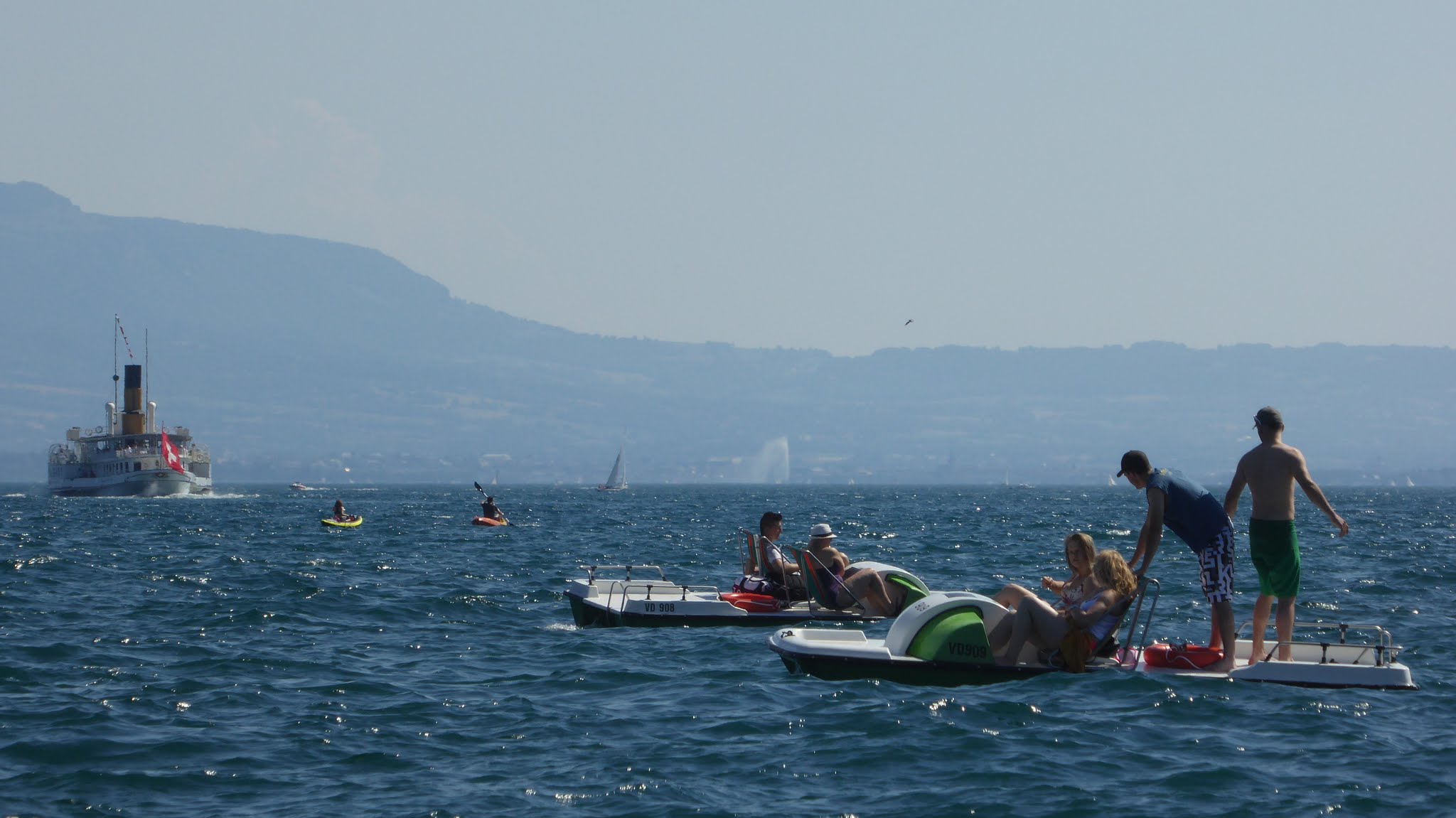
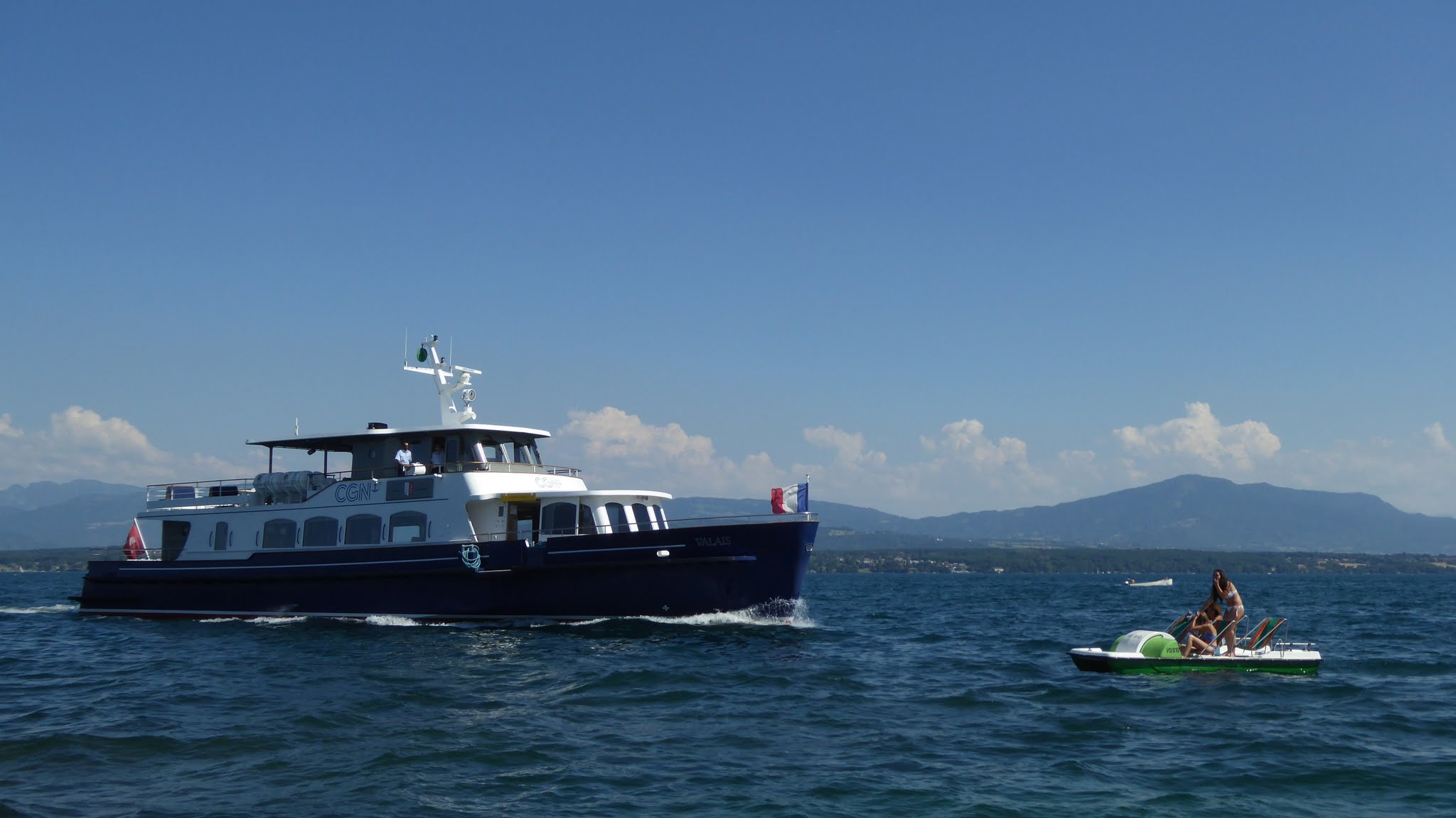
  [caption id=“attachment_3100” align=“aligncenter” width=“660”]Summer Nyon Summer Nyon[/caption] This is an image of Nyon on a day when the thermometer indicated at least 31°c on a sunny Sunday afternoon. In this image you can see the CGN boat leaving Nyon and heading towards Geneva. You can see the Jet D’eau in the background. You can see a sailing boat in the distance, some kayakers nearby and two pedalos. What you don’t see in this image are the people playing volleyball, other people sitting at Nyon Plage or yet more people at the Nyon Swimming Pool. From Nyon you can cycle along the lake road to Geneva or Lausanne and if you feel you have the stamina you could cycle from Nyon to Nyon by taking the long way around. This may take 10 hours depending on your level of fitness and endurance. If this does not tempt you then you could go up to the Jura. You can either go up towards La Dôle and choose one of three routes to get to the doppler radar or you could go to St Cergue and walk from that side to the peak. The walk is short but physical so make sure to take appropriate shoes and something to drink. If those options do not tempt you then you can catch the boat you see in the image above or the smaller boat that you see below. These boats are regular. People like to take the boat from Nyon to Yvoire, have lunch, dinner or an ice cream and then come back. If you have the right friends then you could do this trip on a sailing boat as we used to do frequently with one friend. [caption id=“attachment_3102” align=“aligncenter” width=“660”]CGN boat CGN boat[/caption] Nyon has quite a few activities to distract people in summer so if you’re in the region there are a few events and activities to choose from.

Automotive Narrowcasting

Thanks to cheaper cameras, cheaper editing systems and cheaper means of distributing video content automotive narrowcasting has become an entertaining way to cover the subject. Everyone knows about Top gear, the flag ship of automative journalism and mischief but there are dozens if not hundreds of lower budget and fun alternatives. One of these alternatives is by Motor Trend, an automotive magazine that provides written reviews of new cars and other automotive news. Their about page ignores their video activity and yet this is the part that I enjoy. When I watched this specific episode it reminded me of articles from Popular mechanics because it is about reviving an old vehicle that has been dormant in a garage/barn for many years. They show us the steps that were carried out in order to make it road worthy and then they throw in a road trip and fooling around for good measure. Some of these projects are light hearted and fun. The idea for the PreRangerRoverLandeRunner is amusing. “…_they combine an old Range Rover with a Ford Ranger to build an overlanding prerunner that can also play in the mud and rockcrawl with the help of Maxxis’ Bighorn MT-762s.  The build process uses the eyechrometer and by the end of the video their machine is broken. _ The stats for this channel are impressive. They have 50 channels and twenty four thousand videos. The average views per video is fifty five thousand two hundred views although globally they have one billion three hundred thousand views overall. Those figures are no longer about narrow casting.

Automation and the changing face of broadcasting

When I first wanted to become a camera operator cameras could cost more than one hundred thousand francs a piece and a simple edit suite would cost more than seventy thousand francs per edit suite. This was a setup with a player and a recorder. Producing content for broadcast was expensive. These days automation and the changing face of broadcasting allow anyone with a creative idea to get out there and do it. For context imagine that from the moment I wanted to do camera work to the moment I was able to edit that material I had to wait for several years. As I had no access to edit suites I would read books by Eisenstein and others and I would prepare a paper edit. I would have a list of shots and build sequences in my imagination. This changed with the coming of the Miro DC30+ and Adobe Premiere. The first time I edited someone thing alone I spent a day for a two minute video. I had to learn to use the technology after all. This was fun. I bring up this topic because Sky News and Sky sports are making camera operators and other skilled technicians redundant. Why have three or four camera operators when you can sit one person at a console who can control each camera remotely. When I was at France Télévision a few years ago I saw such a system. On the one hand it means fewer jobs for camera operators and on the other it means less indoor work. I bring up this topic because both the United Kingdom and the United States are having “We hate foreigners” movements. Fifty two percent of British citizens who voted this time voted against the rights and freedoms of Europeans. They voted this way because there is a narrative in Anglo-Saxon media that foreigners steal jobs, that they are willing to work for much less money and that this is undercutting the demand for their skills and expertise. That narrative is wrong in a global economy where automation and more efficient work flows are being implemented.