Archives

Climbing in Saint George - a short drive from Nyon and Morges

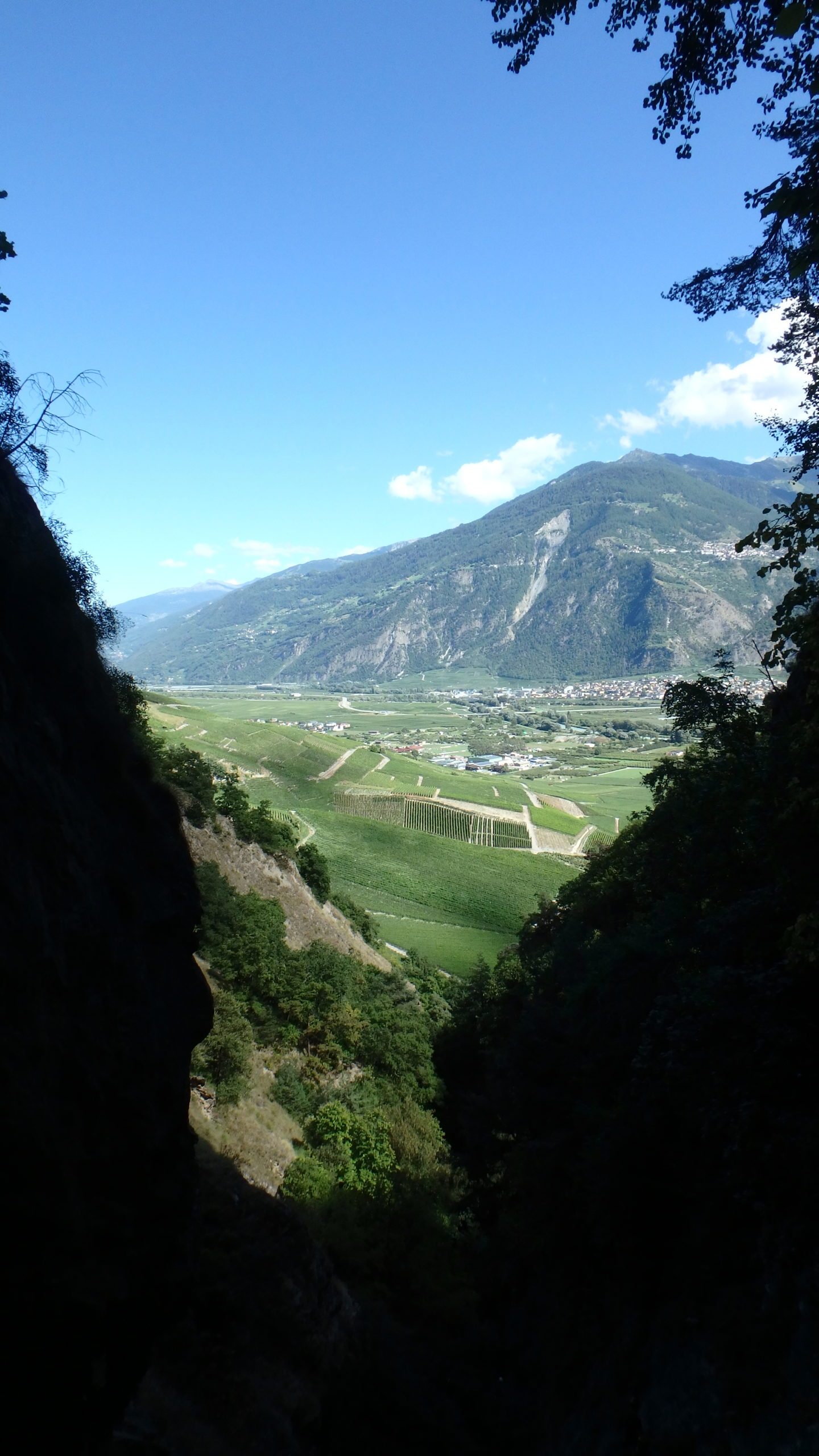
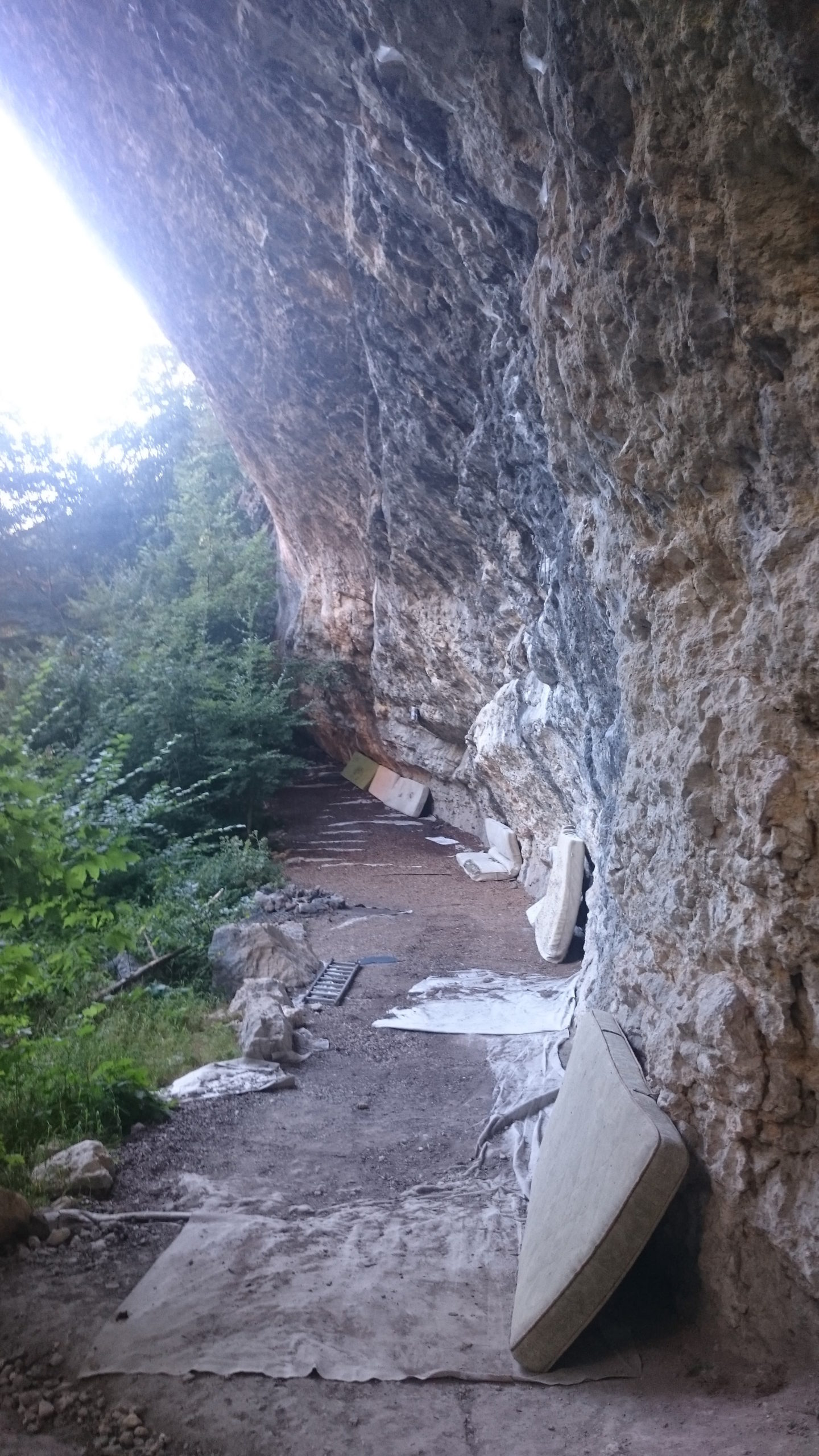
Climbing in Saint George is interesting for those living or working between Nyon and Morges. It provides routes from 4c to 7a and above and should cover most skill levels. Access time is a few seconds. You park your car near the lumber yard and a few seconds later you’re at the climbing wall. The image below is to show how short the walk is. It is also there to facilitate your finding the place should you want to climb here. I mention this because Sunday someone said that she liked to go to various climbing walls but that she often found it a challenge to spot the correct location. The site that you see in this image varies from 4c to 6a+. The gradient is slightly positive so you are more likely to slip than slide. Most of the routes start easily but getting to the end is the challenge. Some of the finger holds are tiny and it’s better to use new shoes. I’m using old worn out climbing shoes so my traction is not optimal so I climb using my heels when possible. To the right of the image above you have a small path that leads to a nice rock surface that is overhanging. Under this overhanging rock you find traces of barbecues, mattresses and a few quick draws. The climbing here is technical. It starts from 7a onwards so is more interesting for those climbers with the finger strength and endurance to attempt sustained overhanging climbs. [caption id=“attachment_3311” align=“aligncenter” width=“576”]Saint George Overhang climbing Saint George Overhang climbing[/caption] This is a nice location and if you walk further along, to behind the location from which I took this picture there is a cavern. This site looks interesting and yesterday there was an interesting sound. In a nearby valley or clearing Swiss military were practicing with .50 calibre guns. I called it artillery but a former British Marine classified the type of gun. If I was given the choice between Dorénaz and Saint George I would choose Saint George for climbing because if I’m going to climb a wall by a road it might as well be after a short drive. For further information on this climbing wall: Saint George
Climbing in Dorénaz

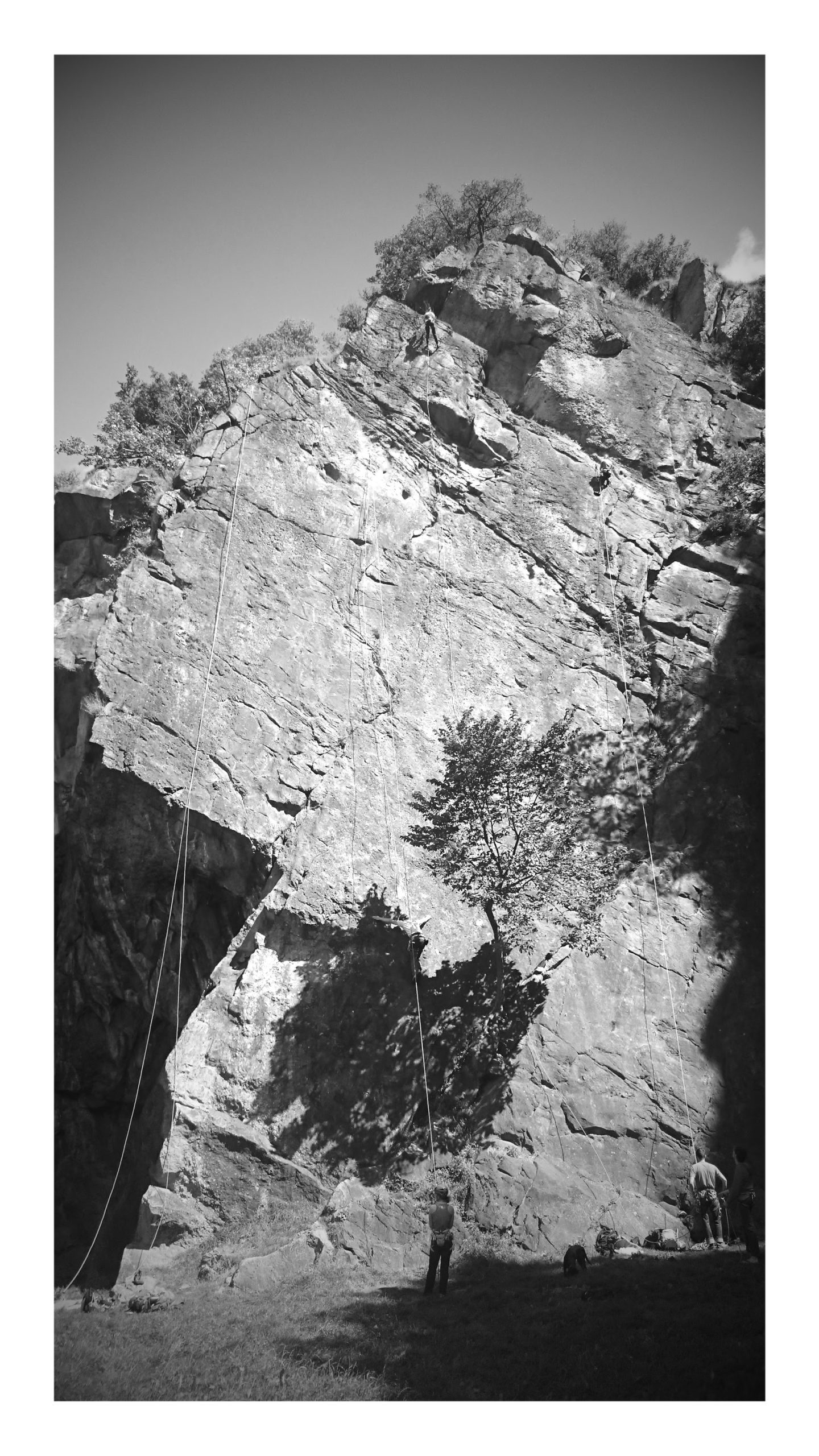
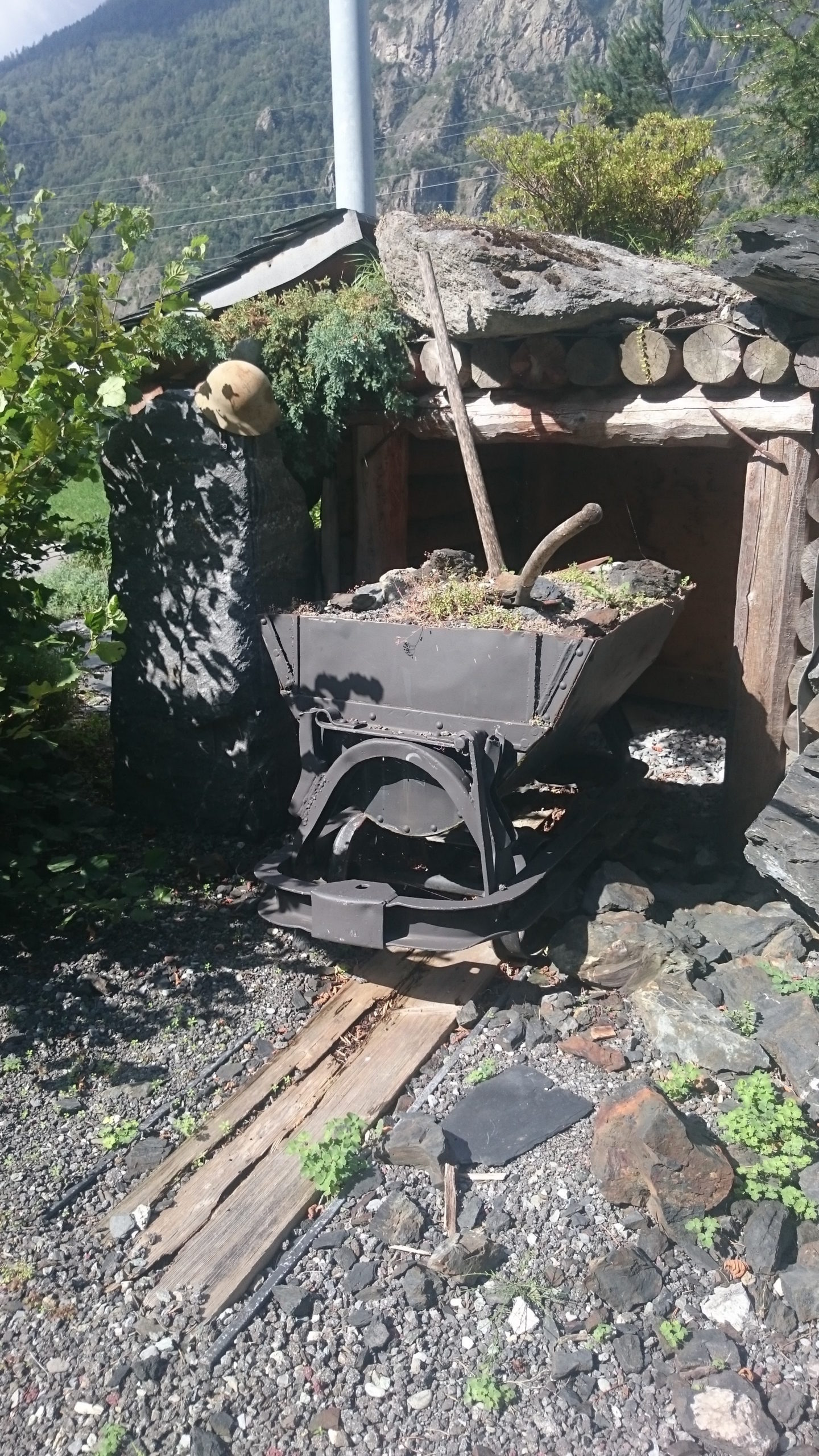
Dorénaz is a small village on the way to Sion and about 18 minutes from Saillon. It is also a few minutes from Aigle. I walked around the area before climbing two of the routes and I noticed that the rocks around here appeared to be magnetite. I saw rust where old climbing equipment had been removed. The magnetite idea came from the rust colour on some of the larger blocks that had broken free decades ago. [caption id=“attachment_3305” align=“aligncenter” width=“576”]Climbing in Dorénaz One of the climbing walls in Dorénaz[/caption] As I continued the exploration of the village I noticed that on one roundabout they have a mining wagon so I looked up the village but there was no mention of mining so I extended the research to include mining in the region. It is at this point that I found mentions of anthracite mining in this village. As this pdf illustrates coal mining was one of the local activities. The coal was hard to extract for two reasons. The first is that the deposits are only thin and they have been folded by geological activity. In 1881 they extracted 900 tons of coal from one of the deposits. [caption id=“attachment_3307” align=“aligncenter” width=“576”]I did not expect that Dorénaz was going to be a former coal mining town. I did not expect that Dorénaz was going to be a former coal mining town.[/caption]

The Third part of the Saillon VF

Yesterday afternoon after two top rope climbs in Dorénaz we drove to the Via Ferrata de Saillon to climb this one. It is a via ferrata that I know well. This time I decided that I wanted to try the third part of the Saillon VF once again. What makes the third part special is that it is marked as TD+, more than very difficult. This is a more technical climb for people who are familiar with the sport. [caption id=“attachment_3301” align=“aligncenter” width=“576”]Looking towards Saillon OLYMPUS DIGITAL CAMERA[/caption] The first time I tried this via ferrata I was with a group but climbed it as a solo effort. I went at my speed and I just wanted to complete it as quickly as possible. The challenges were being able to handle the long drop below and the physical demands of the via ferrata. When I climbed it alone I increased my heart rate by a lot and my muscles felt that they were weakening so although it felt excellent it made me skip this portion on two or three subsequent trips. For a while people would frequently get trapped on the third part and there was a sign reminding people that if they have any doubt they should not do it. If the helicopter is called in it will cost you 3000CHF or more. Imagine all the equipment that you could buy or the holiday that you could enjoy with this money. Yesterday we climbed the first two parts of the via ferrata with no problems. We went at a comfortable speed and the group stayed as one. When we got to the third part two novices went up and went across to the bridge to watch us climb and we formed an action plan. This time we moved as a team. We went forward and rested frequently. We rested before the overhang and then again after the overhang. We rested before climbing the rope ladder and then again after. Finally we went to the last challenge, the vertical ascent and we rested on a nice slab of rock. We then climbed that final bit and although it is demanding the muscles coped well. I really like that I found this climb so much easier than the previous climb. I don’t know whether rock climbing, paragliding and the pace helped. I know that in future I will feel confidant about doing part three. My training and this pace paid off.

Paragliding from Plan Praz to the Mont Blanc

In this video we see someone paragliding from Plan Praz to the Mont Blanc. To do this the individual finds ascending air at a number of points going from 2800 metres up to 5000 meters before finally landing on the summit of the Mont Blanc. This video gives you a practical example of how a good paragliding flight should go. When I flew at Les Diablerets last week I was surprised that we don’t feel the wind as much as we would expect when on a parapente and I was surprised that you do not feel when you are going up or down. In this video you hear a beep that increases in frequency and intensity as you ascend. The faster it beeps the faster you are climbing. There is another beep that we hear just once in the video that indicates that the parapente is going down. It’s a shame that in this video we do not find out how long the flight lasts. We hear him at one moment speak about the need for patience as he looks for pockets of rising air to raise him to the desired altitude. We hear him comment about how certain people seem to struggle and we hear that his breathing is more laboured as he gets higher. It would be nice to see them take off from the summit and head back down in to the valley. It must be nice to ascend the Mont Blanc in such a way. We seldom hear of people ascending the Mont Blanc by parapente so this video is interesting. In this second video we see people hike up the Mont Blanc and take off from the summit. The view from there must be spectacular and the feeling must be pleasant. Many of us have seen the vista from the Aiguille Du Midi but imagine seeing it from a place as calm and quiet as below a parapente.

Colin Furze and the 360 Swing

When you have lengths of pipe, a welder, a water container and a big enough garden you can get up to some mischief. Colin Furze and the 360 Swing are an interesting demonstration of this. In the first two videos you see him build the structure and in the next two videos you see him do some 360 swings with the structure. He is a plumber by profession but makes some fun and entertaining videos for youtube in his free time. In these videos he has built a flame throwing guitar, magnetic shoes, built a bunker, created eccentric door bells and more. He also made a firework shooting bazooka and put a motor bike engine in a tuktuk. The video above is a behind the scenes look at part of the discussions and includes some drone footage of the swing being used to successfully complete a few 360 rotations on the swing with and without the motor. When you see him add the paramotor to the swing you see that he has taken the idea too far. By the end of the video he feels a little weaker as you’d expect. I don’t know how many Gs he put himself through. It was enough to make him feel unwell by the end of the clip. I enjoy watching the building process of these eccentric contraptions because we see that safety is taken in to consideration. In either the first or the second video he says that he usually does two things. The first one is built off camera to make sure that he knows what he is doing and when he is confident he builds a component for the second time on camera. In this project we see that there is a reasonable amount of testing to make sure that everything behaves properly before moving on to the next step. https://www.youtube.com/watch?v=N0wfkpBImKw There are a number of videos like this on youtube that teach you about engineering and building eccentric machines. Colin Furze is just one of many youtube video makers to build things and then use them.

Gallantry and Rock Climbing

Gallantry and Rock Climbing are a good combination. In Rock climbing the person with more experience or comfort helps the person with less comfort. In some cases it might be helping people walk on trails and in other cases it may be walking at the pace that is comfortable for others. According to the Merriam Webster website gallantry can be a number of things:

1 archaic : gallant appearance 2 a : an act of marked courtesy b : courteous attention to a lady c : amorous attention or pursuit 3 : spirited and conspicuous bravery

Squadron Scramble - book review

Squadron Scramble is an interesting book to read in post-BREXIT England because it highlights aspects of the Second World War that BREXITers forget about. It looks at how the main character had to flee France via Dunkirk as well as the situation that Polish airmen had found themselves in. First they lost their homes, then they had to flee France when it was invaded and finally they went to England via North Africa. You can read more about Polish Air Forces in France and Great Britain following this link for factual rather than fictional information and context. The book provides us with an easy to read, easy to understand scenario. If you had lost your country and you were flying for a third country would you want to shoot pilots as they parachute to safety or would you allow them to live. If you were in England during the Second World War at what point would you have felt secure and confident that Germany would be overwhelmed and beaten. When would the battle shift from a fight for survival to a fight for supremacy? This book focuses on the air war during daylight hours when Hurricanes and Spitfires were in their element and only glimpses at dog fighting at night. The book touches superficially on a number of topics without providing as much depth and context as it could. This is an interesting documentary about the Polish contribution to the Battle of Britain. It shows how effectively they helped to fight the German Luftwaffe and how they were betrayed by the British people once the war was over. They had fought to defend England and defeat the Germans in order to ensure that their country would be freed from the Germans only to be betrayed when their country was handed over to the communists. Some of them went back to Poland but had to flee to other countries. They were not honoured in the victory parade either. The documentary is interesting as it provides its viewers with a good account of the Polish contribution to the British and Allied war effort.

Climbing Virtual Reality, Uniform and Grip

Climbing Virtual Reality tuition is an interesting idea. Learning to climb is fun because it is a physical and intellectual challenge. The first step is to familiarise yourself with the sensations of climbing and learning to see where foot holds are and where hand holds are. When you begin the hand holds are easy to find and hold on to but as you progress and attempt more challenging routes you need to develop finger strength to hold on to those holds. Climbing Virtual Reality tuition is an interesting idea. In some cases though finger strength is not the only challenge. You also need to learn to read the route and to know which hand to hold a hand hold with, which foot to use on a foot hold and how to reach the next hold. You can learn through trial and error which is fun or you can climb other routes and wait until someone who knows the route that has you flummoxed decides to climb that route. Virtual reality Goggles are an alternative way of learning how to climb a route. In the example provided in the video above Grip by Uniform provides climbers with an alternative. In their example they speak about Shauna coxsey participating in the project and allowing people to film her as she is coached on how to climb a route. In other locations it could just as easily be the route setters. It’s interesting to see such a project because the question we often hear people ask is “How did you climb that route” and the answer is often “I don’t remember”. With this technology it would be easy to provide people with guidance for the routes they find more challenging. It is a new and immersive form of tuition which could help people progress and learn climbing skills more efficiently and within a shorter amount of time.

FIFAD Day 8 - Sylvain Saudan and the winners

Sylvain Saudan was at the FIFAD event on the final day from 11am onwards both to project two of his films and to speak about his experiences as a pioneer of extreme skiing. During the conference he presented his film about the Grandes Jorasses descent as well as his trip to Denali. If you go to his wikipedia page you will find information about all of his first descents with skis. The first film he showed was with music but narrated live as he stood on stage. Rock Ski from The Snaz on Vimeo. What I really enjoyed about his first film and his live commentary is that he brings us back to the skiing style that I learned and really enjoyed. In the olden days (within my lifetime) we learned to ski with our feet parallel and close together. We would leap to turn and it was technically demanding. The skis were longer and thinner. The whole of the edge could be used as this skiing style was before the era of carving skis. As a result it meant that skiing extreme slopes was simplified by having a longer edge. The Denali descent and film were impressive. It took an expedition to get him to the base of the mountain and then up. The cameras were film cameras with three minutes of film before the cartridge had to be replaced. Camera operators had to ascend and wait for him to come back down. It required alpine skills to get to the top and once at the top, in the rarified air he had to change from climbing clothes to skiing clothes, put the boots on and then descend. It took him 7hrs to go from 6200 metres to 1800m. This achievement was never repeated by other skiers. In the Q&A session he said that those who attempted to do the same thing failed. In the evening films that were awarded prizes were screened once again.

FIFAD - Day 7

When we watch the news and when we read articles from France we often hear about the disadvantaged youth and the mischief that they get up to. Par-Delà les Hauteurs, shown at FIFAD, is a documentary about a team of youths who go to the Alps and experience the mountains for the first time. The aim later in the film is to go to the Himalayas and experience the high mountains. Bande Démo “Par-delà les hauteurs” from Monsieur Girafe on Vimeo. This documentary is pleasant because it breaks some of the stereotypes that we have. We see a team of young people who are part of football teams prepare for and then head to the mountains. In the first instance they are introduced to the mountains and then they are given a medical checkup to see whether they are physically sound to go to high altitude for an adventure. In the medical checkup they cycle at a simulated altitude of 4800 metres before being cleared for the trip. They are then kitted up and head to high altitude. In this trip we see them full of energy when they arrive before feeling the effects of altitude, slowing down and in two cases needing to be put in a hyperbaric chamber of sorts to see whether they can counteract the effects of mild hypoxia. High altitude is much about physical fitness as mental stamina. In the end these young people have been given a fantastic opportunity to experience a different culture, to see how people react to them and to see a different landscape than they are used to in their ordinary lives. On this day I had the pleasure of experiencing my first parapente flight and as a result did not watch the other films. One was about wildlife in the Alps and another of the films was Jumbo Wild. They cover topics that I am interested in. By this point in the week I had spent enough time watching documentaries and films.