Archives

The Paradox of "kicking smartphone addictions".

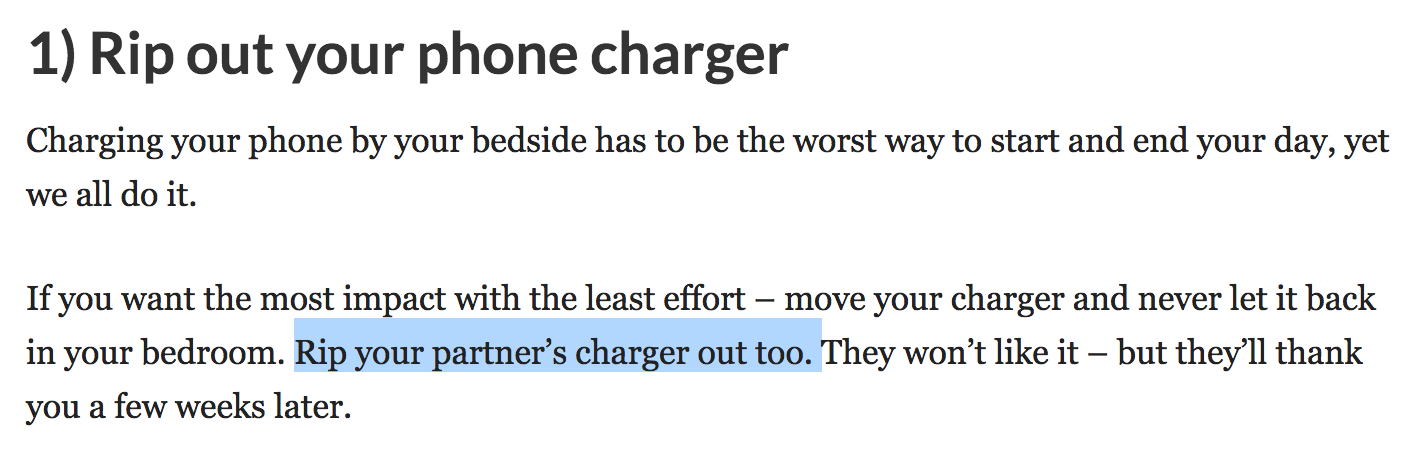
It’s amusing that people think of “kicking smartphone addictions”. We now have a decade of experience in the current social media landscape. We have a decade of using smartphones rather than feature phones. In effect we have had a decade to adapt our lives to the age of the ubiquitous smartphone. We can ignore the Blackberry and Nokia ages where phones were for phone calls, playing snake and business rather than pleasure. [caption id=“attachment_3418” align=“aligncenter” width=“300”]Those that see social media as a disease usually have partners. Those that see social media as a disease usually have partners.[/caption] People who see smartphones or social media as addictive usually have one thing in common. They have a “partner”. They spend their free time with a specific individual. “It’s about finding balance. I became conscious of what matters to me, in my life. My smartphone is still a part of it, but it’s no longer the boss.” I have never been addicted to the device as such. My passions lie with what I can do with the device. I was passionate about Twitter when it was a social network. I was passionate about facebook when it was a way of keeping up with friends. If Twitter and facebook become ego-networks for marketers and public relations professionals then the “addictive” aspect of smartphones vanishes. As social media goes from a conversation to a broadcast and a monologue it delivers another opportunity. It gives us the chance to go back to reading books. As we no longer “socialise” with smartphones the “addiction” is gone. We loose nothing by spending time “offline”. You don’t need to give up the smartphone or any apps. If you’re like me you can pick up an e-book reader and replace Facebook and twitter with reading. If you’re going to passively read an e-book reader is an interesting alternative.
The Gopro Hero 5 karma advert is aspirational

I love sports and I love the outdoors. I really like snowboarding when the conditions are good and when there are few people. I love to climb, to hike and to do via ferrata. Last year during a film festival I was invited to try Paragliding for free and the flight lasted 45 minutes. In light of this you can see why the Gopro Hero 5+ karma above is so fun for me to watch. It’s not that I want a gopro camera. I’ve had at least two of their devices and except for filming two or three dives and two or three via ferrata the cameras have stayed in drawers or boxes. GoPro show adventures and experiencers that I aspire to. For this reason we want to watch these edits. We enjoy these edits. Modern film making does away with cranes, jibs and tripods replacing them with drones and devices like the Karma Grip. If you look at the adverts you see that video production has shifted from being a profession to a pass time. At the time of writing the Grip costs about 350 CHF and the drone has not been priced. GoPro is competing directly with DJI and their product line. With systems like GoPro and DJI are providing the term prosumer evolves. Thrill seekers and adventurers get to play with technology that they can afford to buy and use during their trips or weekend adventures. With this technology fixed cameras are a thing of the past. The camera moves with the action. In practice the camera operator doesn’t need to be an athlete to get in position to get the shot. Assistants are no longer required to carry heavy gear. You carry everything in a bag on your back and it’s ready to use within a short amount of time.

Replacing Social Media with Book reading

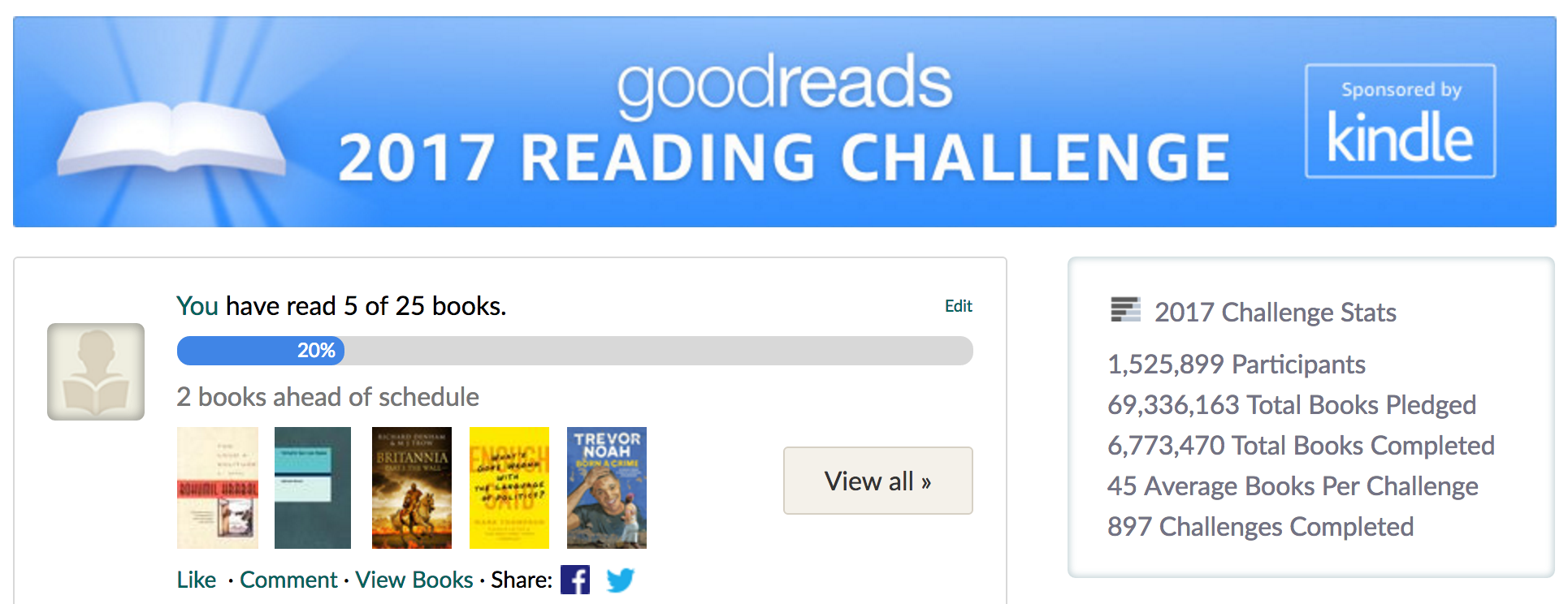
This year I am replacing Social Media with Book Reading because social media is no longer a conversational place. It has become a place for sensationalism and the spreading of fake news and emotional news. As a result of these factors the potential gain of new friendships and interesting conversations has declined. For this reason you might as well find some interesting books and broaden your horizons. [caption id=“attachment_3412” align=“aligncenter” width=“300”]Replacing social media with book reading Replacing social media with book reading[/caption] I currently have hundreds of books on Kindle and Audible and my collection on the Kobo reader is bound to grow. Recently I read Too Loud A Solitude. This is a book I came across by accident. I was browsing through Goodreads recommendations and it came up. The book is interesting because it tells the story of a person who worked compacting books for 35 years. Every chapter begins with the phrase “For 35 years…”. The journey is an interesting one because we see how someone with a passion for books rescues some before they are destroyed. It is worth reading when you have the interest and motivation. Another interesting book I read is Tartarin Sur Les Alpes. This book is interesting because of its age. It is about the early days of Alpinism. It speaks of various mountains and locations that are easy to get to today but that were accessed by horse and carriage at the time. It also explores the early days of tourism. Books require an investment of time of several hours in the same way that television series require. You can read a chapter or “episode” a day or you can binge through them reading several chapters in a single day. They usually require from seven to 21 hours to get through just like television series seasons. It’s easy to lose entire days. I like e-books and I like audible books. As a result of this I can walk around with hundreds of books at a time and read from one book and then another. It transports me to different time periods and places. For a moment I stop living in the present. With audio books I can drive, hike or walk at the same time. I can be a bookworm without being stuck in a building. It’s a shame that we don’t read more.

Life Cycle by Northcube AB

Life Cycle by NorthCube AB is a life tracking application available on iphone. It allows you to keep track of your sports activities, time spent at work, sleeping, shopping, socialising and more. At first it knows nothing about it. It learns of your home location, your work location, where you go climbing and do other activities and then automatically logs the time spent doing various activities. At the end of the day you can see how much time you spent at work, at home and running errands. If you go for a walk, a bike ride or a run it detects the difference in cadence and will log that sport. I did get false positives when riding the scooter. It logged this as cycling. It also keeps track of the time you spend in transportation as well as the time you spend commuting to and from work. They are separated so that you can see how much of your day is devoted to commuting as opposed to travelling between locations for other activities. If you practice sports such as swimming or climbing you can tell it that at this location you practice that sport. From this moment on every time you go to this location it will log it as being for that sport. This is valid for socialising, coffee, the cinema and more. At the end of the day you can see a summary of how long you spent doing each activity. At the end of the week you can see how much time you spent on each activity. The bigger the donut slice the more time you spent on an activity. Assessing whether you spend too much time commuting, at work or socialising is simpler. As a freelancer working in a number of locations you could mark the locations where you worked and at the end of the week log your hours to double check that they are correct. This app is simple and intuitive to use. Unlike Foursquare/Swarm and other apps it requires minimal interaction. This app is a natural progression from apps such as Google Latitude.

Reaction to Social media and the loss of identity

My answer to:

Social media and the loss of identity

From 1996–2007 I saw the World Wide Web, discussion forums and other places as opportunities to socialise with like minded people. Over the years we went from one platform to another using nicknames rather than our real identity. in 2006–2007 there was a shift. When Twitter came about I would post about my dissertation progress and eventually converse with more and more people. Eventually the @ symbol started to be used for answers and then we discussed meeting in person.

On the rise of disinformation through the dumbing down of Social Media

For years I have been complaining that social media has shifted away from conversations towards marketing. It has shifted away from peer to peer conversations towards a broadcast model where crowds listen to and share individual sources rather than interact within a social network. As a result of this communication shift people re-share content rather than create their own. Until the election of Trump and Brexit it was unpleasant but had to be seen as part of modern life. We had to accept that sensationalism and dumbed down content were popular. We had to accept that most people saw social media as RSS rather than conversation. Within the last year we have seen that the shift from social media being conversational has shifted towards trolling, disinformation and misinformation. We see that people speak about living in a “post truth” age and more. In such an environment we see that people hear what they want to hear and vote for what they idealise rather than what makes logical sense. Brexit and Trump are consequences of people following idealism rather than realism. In such an intellectual environment social media, rather than encouraging the flow of information and context has had the opposite effect. When Obama was running for President the blogosphere was seen as a gate keeper, as part of the fourth estate, as part of the checks and balances. With Trump and Brexit we see that the Tabloid press in England and Troll armies in other countries have deliberately misguided people, deliberately made them vote against their own self-interests. For years I saw the web as a place to socialise and make new friends but within the last year, with troll armies, marketing and more I see that conversations are declining. The Return on Investment that I used to enjoy as a human rather than a marketer justified the time I spent socialising via social media. In 2016 the Return on Investment of using Social Media became negative. I watched youtube series, I read books, I read mainstream media, I listened to podcasts. In 2017 I want to replace the time that I spent on social media on reading books. In this day and age the cost of social media exceeds the potential return on investment. I finally find that social media is a waste of time. It took a decade for me to fall out of love with social media.

The Tiny House movement and travel

The Tiny House Movement and travel combine well together. In this video a Czech couple bought a fan and transformed it into a self contained home to live in for a year. They chose it because they wanted room for the surfboards, wet suits and more. It has space for cooking lamb shanks, socialising and sleeping. You can enter the van both from the front and the back. I really like the idea of this van. It would be fun to travel for a few months from place to place, do what there is to do, see what there is to see and then move on. This would adapt well to hiking, climbing, via ferrata and other sports. It allows you to live comfortably without spending money on hotels, villas or other places. The project cost them around 10,000 dollars to build so if you work and save up for a few months you could easily take a gap year and afford to do such a project. Working on such a project does require some skills in wood working. He said that it took hundreds, if not thousands of hours to prepare the van. If you’re travelling then a few steps a day for a few weeks would get to this final result. At one moment they speak about the herb garden that they have in the glove box. As they had the space they planted some mint and other herbs for cooking. As a result of this herb garden they said that when driving on rough roads the Mint plant gets shaken about and in the process the van smells of mint. It’s a natural air freshener. In a month they will move on and sell the van to continue travelling. If I was travelling to New Zealand I’d like to try living in a van like this and use it as a base to go hiking, climbing and enjoying other sports. This seems like a pleasant way of travelling.

The Golden Dream - The Golden Cage

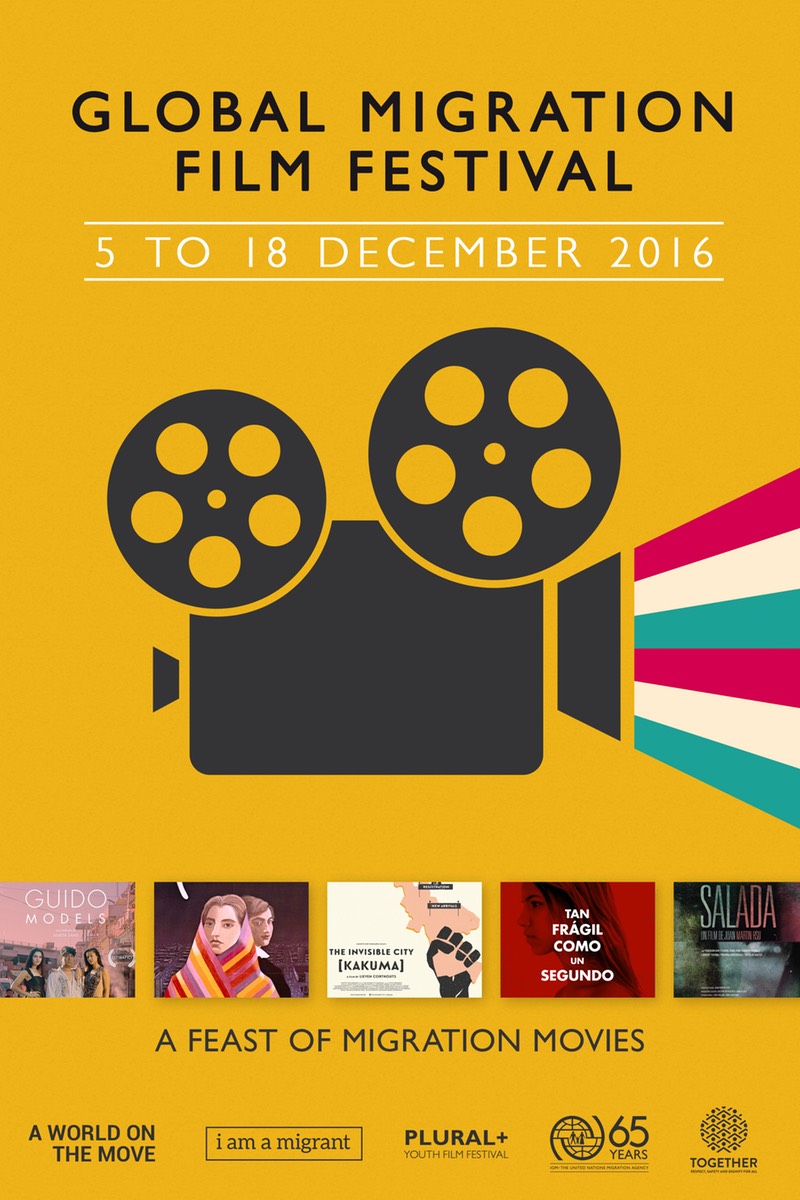
The Golden Dream, known in Spanish as The Golden Cage is an observational film that follows three teenagers as they travel to Guatemala along railroad tracks north towards the United States. During the journey they need to work to make money, face attacks from the police, immigration police and gangs. When one of the characters finally arrives in the US he works cleaning a slaughterhouse after the workers have finished their shift. Trump supporters and Brexit voters need to watch these films because the trip from economically less developed countries to economically more developed countries is not an easy one. It requires the taking of risks. In this context they face organised crime, heat and other challenges. I watched this film at the Graduate Institute yesterday night. It was shown within the context of the Global Migration Film Festival. During the discussion at the end of the screening the panel spoke about some of the other challenges that people face such as human trafficers and more. Two aspects we do not see are the injuries that people sustain falling off of trains and rape is alluded to rather than shown. The Invisible City [Kakuma] - Trailer (ENG) - Lieven Corthouts from Cassette for timescapes on Vimeo. People need to watch these documentaries and films. Awareness of these issues needs to be endemic to the Western World. Yesterday they said something to the effect that “This is not a crisis, this is a norm.” They said that because this was a situation that has been going on for decades changes need to be made. Permanent solutions need to be found to improve the lives for all of those that are affected. It is a shame that rather than see a growth in compassion and cooperation we are seeing people like Trump elected and ideas like Brexit adopted. The trend needs to be reversed and that is where documentaries and films can help open peoples’ eyes. Society needs to move away from populism and fast. [caption id=“attachment_3391” align=“aligncenter” width=“200”]The Global Migration Film Festival The Global Migration Film Festival[/caption]

Steep - A Snowboarding, skiing, Parapente and Base Jumping game

Winter is coming and snow has fallen on the local peaks and then melted again. The temptation to go snowboarding in real life is back. While waiting to go and do sports in the real world Ubisoft give us the opportunity to simulate the experiences of snowboarding, skiing, base jumping and paragldiding. I know three of these sports. I ski, I snowboard and I recently tasted my first paragliding flight.As I watched the trailer above and Jack Septiceye’s video of the game it reminded me of so many of the extreme sports videos I have watched. It also reminded me of the FIFAD event as well as the Montagne En Scène events. It pays a nice tribute to the culture of snowboarding and extreme sports that many of us have grown up with. It also harkens back to the days when I would edit the events that are mentioned in the trailer to this game. This would be a good game to have in the chalet while waiting for the snow to fall or the conditions to improve. I understand why the game filled me with passion. I liked seeing places that we know. It’s because the game developers are in Annecy so they’re playing in the same landscape as us. They’re snowboarders and skiers so they understand the sensations and they’re trying to emulate them in the game. When watching the paragliding sequences I like that we hear the flight computer’s beep as you ascend at different rates. It’s one aspect that you really notice the first time you try paragliding. That’s a nice touch for the game. From the videos I have watched so far it looks as though they have managed to capture all of these sensations in the game. This looks like a really enjoyable game to play. The game should provide people with a nice amount of escapism. As they get used to the controls and as the community for this game grows so the ties that bind this community will grow. It looks excellent.

Learning about Tiny Houses

Learning about Tiny Houses is interesting. There are a number of features/documentaries online where people build their own tinyhouses either from shipping containers, trailers or other structures. The aim of these tinyhouses is to maximise space and reduce costs. Some of these homes are entirely off the grid. They collect rain water and solar panels provide power. The bedroom is often built above the kitchen and climbing wall holds are used instead of ladders or conventional stairs. One home folds out from a truck to become a castle. One tower serves as a toilet and the second one serves as a shower. The space above even features a bath. Another Tiny home is designed as a tree house providing a beautiful 360° panoramic view of the landscape around. This tiny home is interesting because it’s built out of half a shipping container. For a change the bed is below and the living room is above. The kitchen and office are next to it and there is a shower from which to watch birds. I have seen a lot of people speak about minimalist living, living off the grid and living out of cars, campers and other vehicles. By watching videos about tiny houses you begin to understand that there are certain basics that you need to have and that these basics fit in to small spaces. If you have a van, a caravan or other vehicle then you can live as comfortably as these people. This last video would make for a perfect summer home for recent university graduates or high school graduates. It’s small, light and mobile. You’re self sufficient to a great extent and as long as it’s warm you have your own space. It’s amusing that in at least three videos we hear about people learning to be neater through living in such small spaces. As a scuba diver, rock climber, cyclist and geek the biggest challenge for someone like me would be to find a place where I could store my diving gear and especially the scuba tanks. They’re bulky. Diving gear also needs to dry properly to avoid the smell of the lake (as I used to dive weekly in the lake). My view of living in a tinyhouse has changed through the watching of these documentaries. It shows you that what you want is functionality rather than size. You want “gadgets” as these maximise how you use available space.