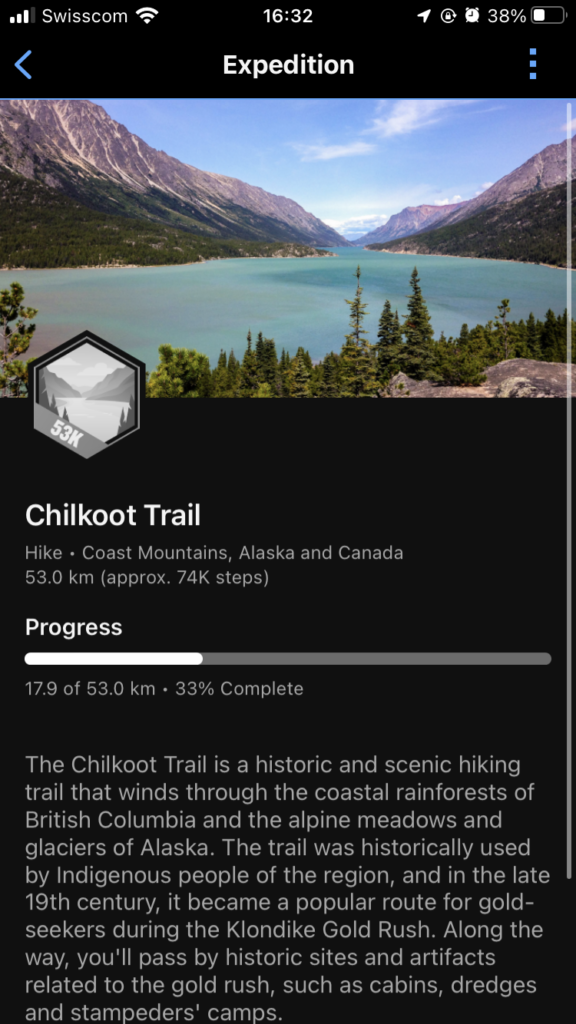
Walking

Connected Watches and Psychological Profiles

Connected watches know everything about us. In theory they listen to us 24 hours a day for years in a row. My Apple watch has been on my wrist for over four years, every single day. It has been for swims, runs, rock climbing, via ferrata, office work and more. 

The watch knows how much I walk, when I get up, when I go to sleep, how well I wash my hands, how exposed I am to noise and much more. It also knows whether I am moving energetically or lazily. It knows if I am walking faster or slower. It also knows how rested or stressed I am, by looking at heart rate variability. 
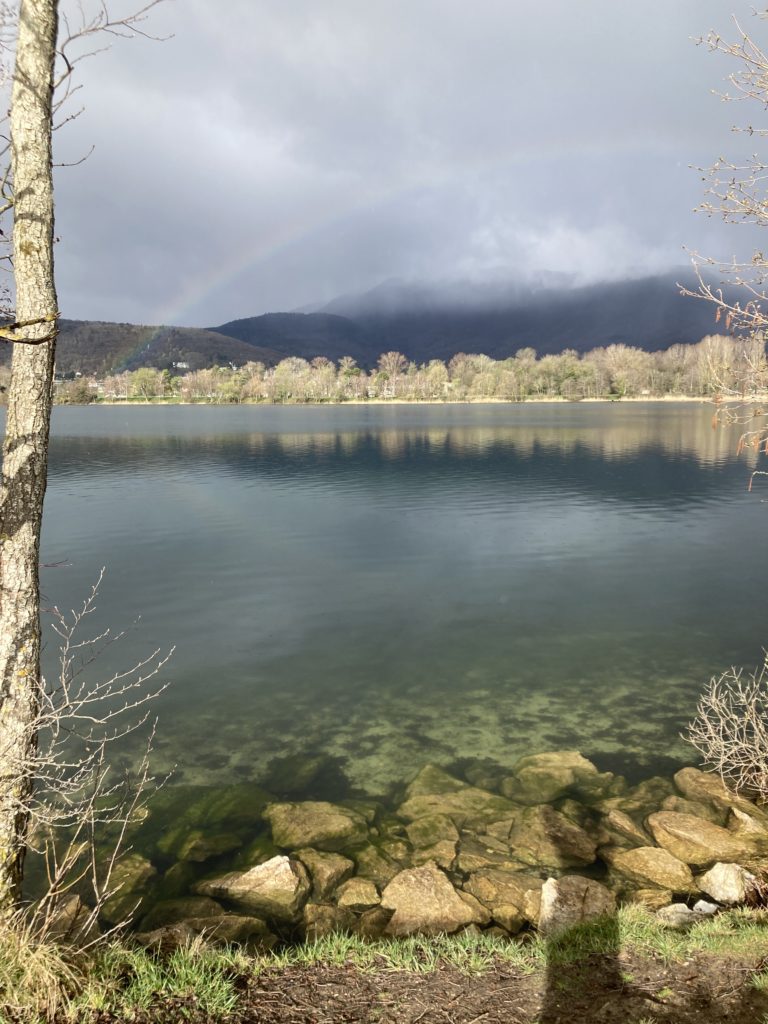
Lac De Divonne

It’s a lake that was dug out when they built the A1 motorway. The quarry that was left behind became a lake. For a long time cars could drive around the lake.

View of the Lac De Divonne

The loop around the lake is good for walking, cycling, rollerblading and more. It is around 3.6km long and there are plenty of parking spaces beside it. If you want there is another option.

On The Habit of Daily Walks

Men’s Health has an article about a person that walked 10,000 steps a day for a month, when his normal step count is 4000. According to the Pedometer++ app on my phone I have taken more than 10,000 steps a day for 140 days in a row. I have to take 10,000 steps for at least six days in a row before I can have a lower step day count. Usually the only reason my step count is lower than 10,000 is that I spent the day driving from one European country to another.

Walking With A Fear of Dogs

I walk every single day, whether it’s raining, windy, snowing, a heat wave and more. I like heatwaves because dog walkers usually stay in. We live in an age and society where fear of dogs is not respected. Yesterday I was on a walk and i saw two big dogs. One was on a leash and the second was free to roam. That freedom to roam encouraged me to divert my route to go through a muddy forest.

Garmin's Auto Goal

Garmin allows you to select the number of steps you want to take in a single day, or let it be set automatically. For a year or two I allowed the goal to set. The result is a step goal that fluctuated from 12,000 steps per day to 15,000 steps or more. This was fine, because I ignored it.

A few days ago I decided to set it to a fixed ten thousand steps a day. Many will say that the 10,000 steps per day doesn’t matter, and I agree. I took 21,000 steps today so I overshot the mark by a little.

GPS Accuracy Contrast Between the 45s and Instinct

Yesterday afternoon I was looking at the GPS track for a run I did with the 45s and I was struck by how wide of the mark it was, compared to the same run with the Garmin Instinct. With the Garmin instinct the GPS track fits like a rail to the satellite and road map. With the Garmin Forerunner 45s it is quite a way out.

How Big Is The Difference?

With the Garmin Instinct GPS track you can see so precisely that you can tell which side of the road I was running on, as well as when I switched from one side to the other. The GPS track is highly aligned with the walk or run.

One Hundred Day of 10,000 Steps

Today marks 100 days in a row of walking 10,000 steps a day. It helps that we’re in winter than in summer because my step streaks are broken when I go for bike rides. Step counters don’t count pedalling as steps, so it’s easy to lose a streak.

I could pretend that I have learned ten things by walking ten thousand steps a day but the truth is that I haven’t. I simply have a habit of walking that is not affected by snow, rain, wind or other. I walk every day, and sometimes the streak is consistent enough to reach 100 days according to an app by Pedometer.

A Run And A Walk

I am going for a run and a walk three times a week at the moment. The run is set by the Garmin Coach and the walk is set by the route I have chosen to use on that specific day. By running the first part of my daily walk I increase my fitness, according to Strava, Sports Tracker and one or two other apps.

At the same time by running, rather than walking these routes I am saving time. A walk that would usually take ten minutes per kilometre is cut down to seven, or less. The runs have gone from 1.6 km, to 2.4 to 3.2 and more. As the runs get longer so the distance I cover increases, and so the daily walk distance takes less time, as it is run instead. The aim is still to run 5km comfortably, not to increase the distance beyond 5k, for now.

Mud and Walking

I go for walks, runs or bike rides every single day, whether it’s rainy, windy, snowy or a heatwave. As a result of this I often walk along routes where mud forms. Sometimes I come home from walks and my shoes are spotless, thanks either to a drought, or paradoxically due to the rain.

Recently we had snow and it was cold so my shoes were relatively clean. I could come home, stomp a few times and my shoes would be clean. Other times, like the last two days I have found that the mud is sticky and hard to remove. It’s dry enough to behave like clay, rather than mud. It gets stuck between the studs that stop you from slipping. I tried skewers, running water, snow banks and most recently a brush that I keep in the post box, in the locked section. I don’t want to come home and find that the brush has been stolen.