Video

A Nonverbal Autism Video Interview

I saw Horyou share a link to Speechless with Carly Fleischmann. This is a Nonverbal Autism Video Interview carried out via typed words on a tablet.  The text is read out electronically. The interview is warm and convivial. It stands out because it does not use a fast talking or energetic host. The interviewer does not talk, in the conventional sense. They could easily have inter-titles rather than synthesised voice. It is because they show the challenge of this interview that it is interesting. It shows that charismatic fast talkers are not the only people with an opportunity to interview artists. It shows that given the right circumstances anyone can interview artists and that desire and interest are required but that solutions can be found for other challenges. It opens up the world to a diversity of people. Imagine video interviews in sign language for example. There is no reason for a specialist channel not to take on this challenge, to fill this niche. Three things make this possible: Video production costs have gone down so it is easy to find the budget to record such an interview, technology makes communication for nonverbal people much simpler and finally Youtube makes content distribution to an audience easy. This video has three and a half million views. I will find more videos like this. I believe that they play an important role in modern society where we believe that everyone should be treated equally, to have equal opportunities. It is too easy to idealise the charismatic radio presenter who has a way with words and forget that charisma can be found in people’s intellect. You see it through the laughter in the interview, you see it in the way the interviewee is so relaxed. It’s a shame that there is just one interview. Imagine it as a weekly show.
Automotive Narrowcasting

Thanks to cheaper cameras, cheaper editing systems and cheaper means of distributing video content automotive narrowcasting has become an entertaining way to cover the subject. Everyone knows about Top gear, the flag ship of automative journalism and mischief but there are dozens if not hundreds of lower budget and fun alternatives. One of these alternatives is by Motor Trend, an automotive magazine that provides written reviews of new cars and other automotive news. Their about page ignores their video activity and yet this is the part that I enjoy. When I watched this specific episode it reminded me of articles from Popular mechanics because it is about reviving an old vehicle that has been dormant in a garage/barn for many years. They show us the steps that were carried out in order to make it road worthy and then they throw in a road trip and fooling around for good measure. Some of these projects are light hearted and fun. The idea for the PreRangerRoverLandeRunner is amusing. “…_they combine an old Range Rover with a Ford Ranger to build an overlanding prerunner that can also play in the mud and rockcrawl with the help of Maxxis’ Bighorn MT-762s.  The build process uses the eyechrometer and by the end of the video their machine is broken. _ The stats for this channel are impressive. They have 50 channels and twenty four thousand videos. The average views per video is fifty five thousand two hundred views although globally they have one billion three hundred thousand views overall. Those figures are no longer about narrow casting.

Slow Motion Climbing

It is interesting to watch Slow motion climbing because you get to see precisely what people are doing. You get to see how each muscle group is moving and you see how much the body swings as someone jumps from one hold to another. It allows you to appreciate the subtlety of the moves. People like to say that rock climbing is about technique rather than strength but it is evident from these slow motion sequences that muscle groups are working hard. You see the arm muscles, the arm muscles and the back muscles move. You also see how the legs act as counterweights. The video above would be better if it was one or two minutes. The same can be said about the video below. What makes slow motion interesting is to catch details that you would not otherwise notice. Ideally slow motion edits should show the action in real time and then show the same action in slow motion. The beauty of slow motion is that you can see how technically perfect a move was. In some cases a person starts from vertical and goes for another hold. In this action they go from vertical to horizontal, swinging on their fingertips. Slow motion brings the effort to life. There are other moments where a massive effort, when seen in real time, is clear to see When you watch that same motion in slow motion it looks relaxed and serene. That is the beauty of this medium. Slow motion should highlight the beauty of a well executed move to help emphasise that it was technically good. Slow motion should be used sparingly.

Flowing water - a visual experiment

Flowing Water - A visual experiment is a simple one minute video. The first images were filmed at the Arboretum in the Jura and the timelapses show clouds playing above the Jura near La Dôle. La Dôle is where the doppler radar is located. That radar shows rainfall and precipitation so that air traffic controllers can advise pilots of weather conditions. With the amount of rain that has fallen over the last six or more weeks every river is full of water. As a result of this they are flowing fast and debris can be seen. When rivers flow fast they are fun to watch. The next step would be to capture waterfalls over a period of minutes or hours. If we stopped recording just as the rain stopped we might get interesting results. The peak wouldn’t appear until soon after the rain stopped. I was lucky with these clouds because they moved quickly from one side of the screen to the other. They also formed and dispersed quickly. As a result I could set the interval to take images every few seconds. I could quickly see the result and adjust. When I filmed the clouds I filmed the ground and the trees as they came in and out of the shadow of clouds, I filmed a tighter shot where you could see the transmission mast and then I pointed to the sky and tried to capture the movement of clouds with blue sky as a backdrop. Some moments are fun to watch.

The First Day of Summer

The good weather is finally back. I took this opportunity to go out and film around La Rippe which is on the border between France and Switzerland. From here you can see the Mont Blanc and the Jura. If you look to the South West you can see Geneva’s Jet D’eau and the Salève. I found the first location’s vantage point when I had a day off from work. I don’t remember where I was cycling or driving the scooter but I went up. To get to it you have to head up a steep hill which is good when you’re cycling as it builds up your endurance. It can also be fun on the way down. Now that the weather has improved I have a number of locations that I want to film. I want to experiment both with 360 video and flat video. I want to go to interesting locations and share the highlights with you. The better the weather the easier it will be for me to get the material. I would have ranged further today but as I will be climbing this evening I prefer to preserve that strength and endurance. Tomorrow I can range further. The three sports I would like to focus on this summer are climbing, both conventional and via ferrata, hiking and cycling. Each of these sports is feasible in the landscape around here. Hikes can take you by some spectacular scenery. The challenge will be to decide whether to film with the 360 camera or the conventional one. Time will decide. I can easily carry both cameras but it is always better to focus on one format at a time.

The pleasure of narrowcasting

Three things have made the pleasure of narrowcasting rather than broadcasting a reality. Broadcasting is finding something that as many people as possible are interested in watching. This is mass appeal television. European Football is one example, british rugby another, skiing another and tennis as a last one. Each of these has a large budget to spend because of the mass appeal of the content. It means that you can experiment with Ultra high definition, 3D broadcasts and more. In essence it is content that is easy to justify. Narrow casting is the opposite. Narrow casting is the opposite. It’s about providing content for a small number of people. This means less interest, less money and therefore less feasible. Early attempts at narrow casting include both cable television and community videos. The problem with cable television and community videos is that they are not on demand so unless you’re ready to watch the content at the time it is aired or the time when it available on VHS tape you missed it. Youtube, DailyMotion, Vimeo and other video distribution solutions started by allowing people to upload random clips with low production values. As interest grew and as people uploaded new content from pirated shows to pirated music, from home videos to more so the focus changed. I look at the early days of vlogging when iJustine streamed content live, Seesmic when we chatted with each other to webcam vloggers, game play videos and more. As these low brow content makers showed that they could amass an audience and as advertisers saw that they could generate an income so other people could come along. I recently noticed that Jay Leno has a show on youtube about his garage. We see him talk about a car per episode, around 25 minutes a piece. In these shows he speaks at a relaxed normal pace. We see him talk about cars. We see him show content from photo books and in general we get the feel that we used to get from browsing through magazines and books like in the good old days. With Video on Demand services like youtube we are coming to a new age in video content where the content we can browse through and watch documentaries like we used to browse through newspapers, magazines and books. We can learn about niche topics in a medium that would have been prohibitively expensive in the past.

360 timelpase videos

360 timelapse videos provide us with interesting new opportunities. Imagine for example placing the camera out to see near Weymouth beach and watching as the tide comes towards the camera and then beyond it towards the city. Imagine watching as the sun rises on one side of the Leukerbad Valley and sets on the other. Imagine that BBC Natural history unit sequence of sand dunes moving across the landscape one day at a time for a year.

The Daily Show - Trevor Reacts to the Orlando Shooting

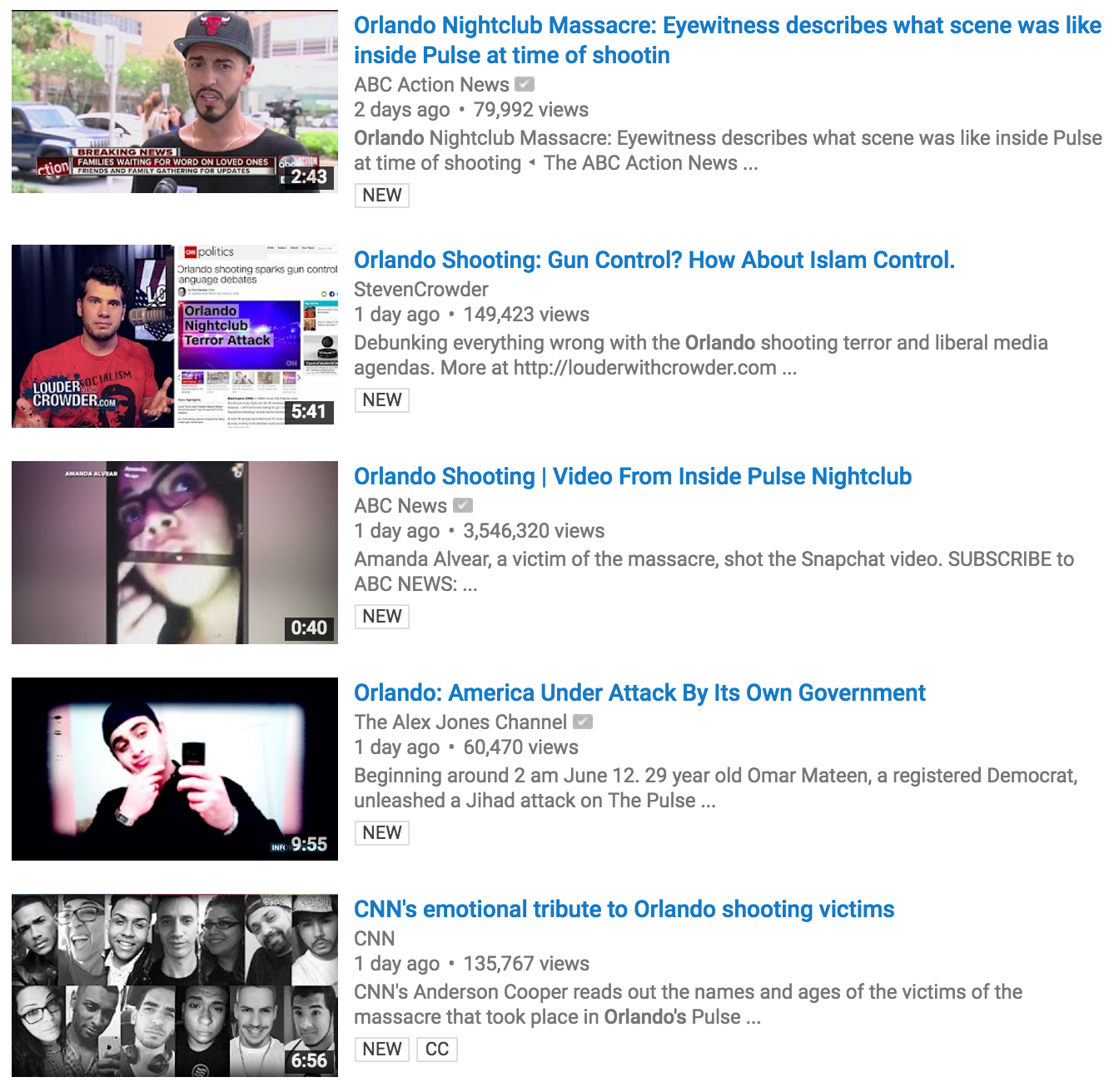
I have been watching The Daily Show with Trevor Noah for a while now and I like the insight and analysis that his shows provide to current affairs programs. I like his shows because he provides a different perspective than other news. He is a South African who moved to the US and work on the Daily show. In this show he explores cause and effect. He speaks about his childhood and tying shoelaces. He speaks about running and falling “a lot” and then about how his mother told him to tie his shoe laces. What I like about his show is that it is calm, factual and logical. He makes the occasional joke but it helps strengthen the point he has just made and provides a transition to the next point. What is interesting about this comedy/current affairs show is that it also pokes fun at mainstream news shows and the way in which they try to deflect the conversation away from the key issues. News and current affairs should provide insight and analysis without worrying about what shareholders, lobbyists and other groups want the message to be. They should provide people with facts and context. We are in the age of On Demand videos and it takes the average web user seconds to find the content that will provide them with the message or conclusions that they want to justify. Search for Orlando as a key word on youtube and you will find emotional video content. Emotional content In a healthy news environment you should have two main sources of information. Mainstream media should provide you with the facts and the context of what happened without prejudice or assumptions being made. Once these sources of information have been exhausted then we can shift towards the emotional talk shows, opinions and columns. What I see at the moment is emotion taking centre stage and obscuring reality.

Rain and the Gear 360

zproxy - Sep 4, 2016

actually. the device tends to overheat and drain battery rather fast for long recordings.

Rain and the Gear 360

Rain and the Gear 360 are well suited to the weather we are currently subjected to in Switzerland. For the past month and a half we have had rain almost every single day. As a result of this it has limited the number of opportunities to go out and get 360 footage. 360 camera rigs are not designed for rain. Most 360 rigs involve at least six non weatherproof cameras and rigs that are designed for dry rather than wet conditions. To go out in this rain would drown the equipment. With additional funds you could film in these conditions with weatherproof gear but the cost increases. Add to this that camera systems like the Ricoh Theta S prefer clear skies and nice weather for taking video and you see that it is not really worth the effort. By the end of September the Samsung Gear 360 should provide us with a simple to carry, weatherproof 360 camera which could be fun to take canyoning (if they make a specialist housing) or hiking for doing other sports activities where weather proofing is a useful feature. The trend to make devices at least splash proof is good. Another nice feature of this camera is the ability to use 200 gigabyte SDHC cards. with these cards you can record for hours. When the card is full or when you’re changing location you can change cards in seconds and continue working on a project. With the Ricoh Theta S you can record for 45 minutes before you need to transfer the footage, clear the memory and start recording again. With 200 gigabytes of storage one concept that I would love to test is 360° time lapse videos. You could fix the camera to your bike, to a canoe or to some other object and set it to take a picture at regular intervals. So far I have not seen a mention of an interval recording mode but with 200 gigabytes you can record for hours without worrying about storage. You could change the speed in post production. This camera records in UHD rather than HD quality. Video recording is at a resolution of 3840x1920. 360 videos taken with this camera should be more pleasant to view as a result. The 360° video eco-system is still in it’s infancy and most 360 video solutions require people to use a number of cameras. Both Samsung and Ricoh provide all in one solutions along with software to stitch the images ready for post production. They are helping to democratise the medium both by making production cheaper but also by enabling people to produce content. This increase in content will encourage more people to get VR goggles which in turn will justify increasing the budget of 360 video production budgets. It will go from being a niche product to being mainstream.