Underground

Curious about the Via Francigena

Twice I walked on hikes that had portions of the Francigena and now I am curious to try this hiking trail. It goes from Cantebury to Rome but I don’t think I would do the first half, or if I did I could easily pop home when around Montreux.

The Francigena is a hiking trail that goes from England to Rome, passing through several European countries, of which Switzerland is one.
Deepest Airbnb Video

Recently I watched a video of two people going to sleep 1375 feet (about 400 meters deep) down in a cave that had once been a mine.

As they descend they go from daylight to tunnel shafts, to walking in darkness until they get to places where they need to go along cables, with a big drop beneath, wade through water along a pipe, walk by a pump that provides the airbnb place with power.

Cave Exploration in Autumn - Grottes Aux Fées - Vallorbe

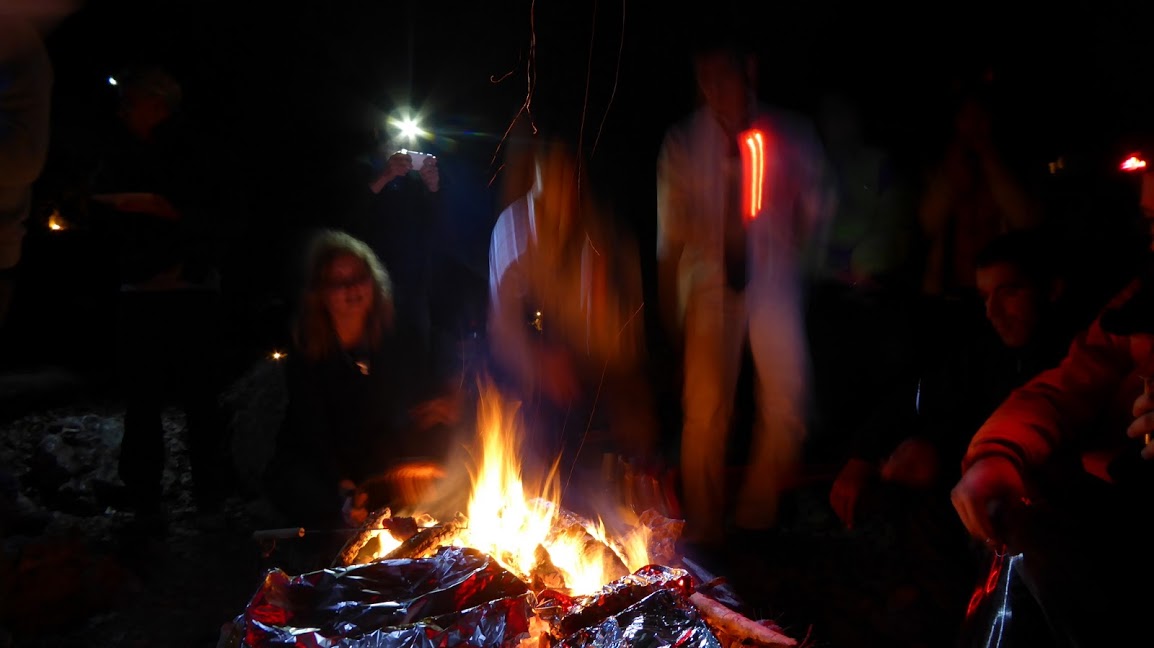
When the temperature drops and we find ourselves living beneath the clouds for weeks or even months going up to the mountains to get above them is always pleasant. Another option is to take advantage of the cool temperatures to explore caves where the conditions are constant year round. For Halloween a group of us went to have a bonfire and barbecue at the entrance to the Big cave of the Grottes des Fées. [caption id=“attachment_2665” align=“aligncenter” width=“660”]Improvised BBQ Improvised BBQ[/caption] We explored both caves. We explored the large cave as far as it was possible to do, had a snack and then we went to the second smaller cave. The video below shows the entrance to that cave. The video above is from when the snow melts. As the snow melts so much water is released at once that it floods the cave around once a year. The cave system has 21 kilometres worth of tunnels, passages and more. Animal remains were found within, mainly fossils and cave bears. The earliest records of  this cave system date to the 1700s with more exploration taking place in the 1800s with notable water flow in the 1950s and again in the 1990s. Over the last decade people have explored the cave system using wind as a way of seeing where new passages could be found. We see in many of the accounts written in french that an important aspect of cave exploration is finding the wind. It marks where big chambers are and where excavation of debris can take place to clear paths wide enough for people to cross through. The large cave is easy to explore as it is possible to spend most of the time and there are no or at least very few squeezes. The large cave terminates at a metal door where progressing further is not possible unless you are with a trained guide to introduce you to the really interesting parts of the cave. The small cave is more interesting to visit because it gets cramped and there are moments where you have to worm your way along. Either your arms are ahead of you or behind you. There is no way to move them once you cross through. In total there are two or three such passages. As it widens after these squeezes the motivation to explore remains intact. Tomorrow we will finish exploring the little cave and in future, maybe in summer we will find a guide to help us explore the rest of the cave system.