Television

An Arte Documentary Series about Cars

Last night I watched two episodes in a documentary series about a brief history of cars. In the first documentary we see a discussion about the history of cars from the 19th century to modern day with the use of archive footage. In the second we see how the car helped with consumerism. In the third I think they discuss the mental health consequences of cars.

What makes this documentaries series interesting is that it goes into a lot of depth, without any sensationalism. It uses interesting archive footage to see how cars have gone from a village curiousity that appeared every so often, to cities that were built for, and around cars.
Leaving Netflix Soon

For the last week, or less, I have been choosing what to watch, not based on what’s new, or recommended, but on what is leaving Netflix soon. With netflix it is very easy to think “I don’t know what to watch” and “I don’t want to watch anything that is being recommended.

By noticing the films that are “Leaving Soon” the challenge of choosing what to watch is simplified. If you have to choose what’s vanishing within a few weeks then the choice is smaller.

The Reason We Stopped Watching TV and Listening to Radio

There was a time decades ago, when we had a choice of five channels. TSR, TF1, Antenne 2, SRF and RSI. Over time we got more channels offered to us, and with satellite TV and cable our choice mushroomed to the point where we could watch documentary channels for a morning, and move on to something else once the programs looped.

Watching More and More

The result of this TV watching is that we watched hours of programs but we also wasted huge amounts of time on ads. That’s okay for a half hour program. You would see ads at the start, ads at the middle, and then ads at the end.

AI, Film, and Social Media

I like to experiment with Bard and chatGPT. I like to see what their limits are, but with time and effort I like to get beyond their limits and get them to do what I want, without failing too often.

DJI and other brands have had self-editing options for years now, so the idea that software would edit the footage taken by the brand’s devices is not new. What is new is the desire people have to let AI replace their own creativity, and inspiration, to give the AI’s creative vision rather than their own.

Netflix - Browse By Language

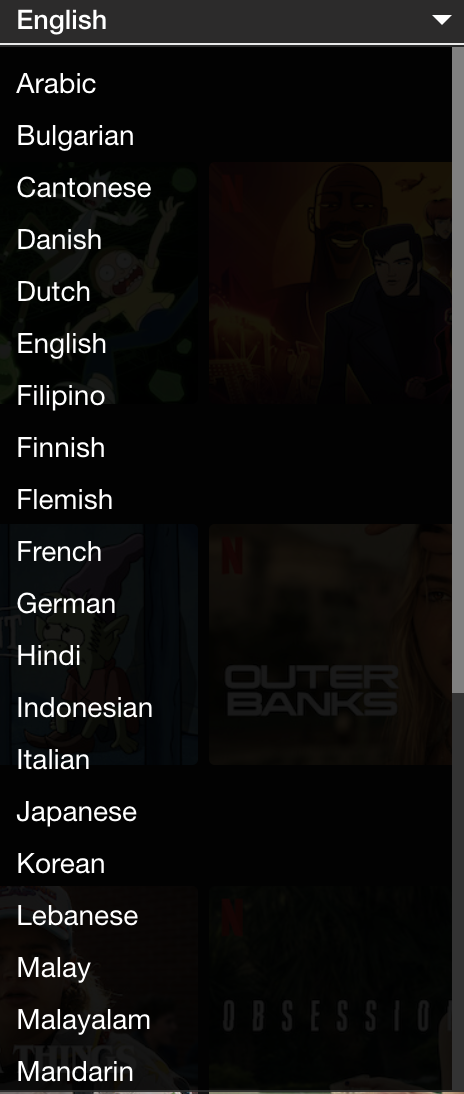
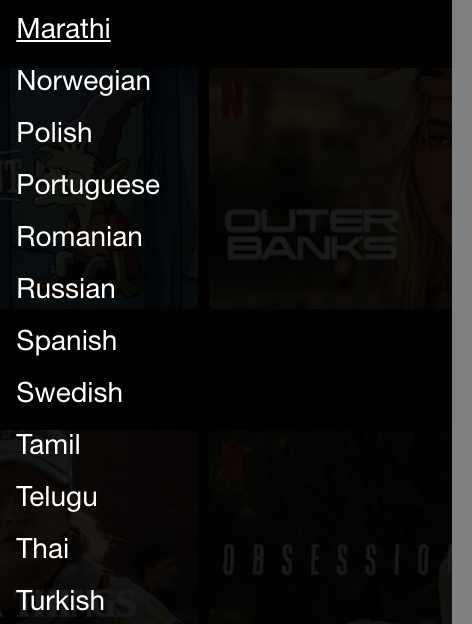
Recently Netflix added a Browse by Language option which means that you can browse for content by original language. Yesterday I saw that I can browse for content in French, Italian, Polish,, Korean, German and many more languages. I could list more but that’s dull. Instead I want to focus on the opportunities it opens up. 

With YouTube, Apple Films and other platforms you can search for films but they are either in French, German or Italian in Switzerland and it’s hard to find content that is in its original language. 

Northern Exposure and Blowing Bubbles

Northern Exposure is a series about a doctor who finds himself sent to Alaska to be a doctor for a few years. He thinks that it is the middle of nowhere and he has to adapt from enjoying life as a New Yorker to life as a frontier town doctor.  

Early colza in the Canton of Vaud

Early colza in the Canton of Vaud

Although the series is thirty plus years old it still remains relevant today with its exploration of global warming, pollution and more. The characters have existential conversations and in a few episodes we meet the man living in a geodesic dome. He lives in the dome to avoid pollution. He is allergic to aluminium, methane gas and more. 

On Film and Television

I like that I can watch days of television series and that I can’t spend 90 minutes watching films. Television series are about people, places and situations and the characters are realistic. In contrast films are superficial, shallow and too full of special effects for a story to be told. The cinema loses out because it is too superficial, too pretentious without offering something contrast at the end of the donated time. We do donate time to the media we appreciate and gain from.

Digital television in the UK

1.1 The three months to the end of December 2006 (Q4) saw over 1,000,000 net household conversions to digital television (DTV) in the UK, following on from 800,000 additions in the previous Q3. Growth was driven by another strong quarter for digital terrestrial television (DTT), with total sales of DTT equipment reaching 2.4 million. 1.2 The digital cable and satellite platforms also added over 300,000 households between them during the quarter. This means that 77.2% of households now receive digital television services on their primary set, up 3.9 percentage points from the previous quarter. 1.3 With a further 1.4% of households subscribing to analogue cable, the total number of homes receiving multi-channel television at the end of Q4 2006 stood at 78.6%. Source What this means is that narrowcasting is no longer within the grasp of early adopters but slowly getting into the hands of the everyday public. As more people have more choice so their viewing habits and choices will be different. At the same time television is getting a lot of competition from online resources, especially for programs that are aired in territory months earlier than in others.

An impressive personality

How many people have the ability to walk out in front of a crowd of hundreds and a televisual audience of several thousand? I don’t think that many, especially not with the confidence of this young girl. If I understood her correctly her name is Johanna and she is from Romania. I was watching the footage of the Youth Eurovision song contest and when she came on stage I was surprised by the strength of character she displayed at such a young age. Of course, other people were on stage afterward to help with the show. I’ve only watched small fragments of the show but it’s amusing to see young people perform. They have such ease and freedom.

Television Series

I love watching television series on DVD and straight from the hard disk. You never understand the complexity of the storyline until you spend 12 hours or more watching entire seasons of series like Scrubs or House. If you look at the series scrubs you’ll get to know the characters very well and they’ll become far more interesting than if you were to watch only an episode a week. That’s probably why they have channels where you run a series every day for a number of days before going back to the beginning again. The best example of that is the Simpsons and Mash. How many times have you seen certain episodes? Recently I enjoyed watching the series House because it’s analytical nature. You’ve got a patient and you run tests, and lot’s of lumbar punctures. For some reason that seems to be one of the favourites… probably because it’s the most interesting. When I finished watching a few episodes I saw how greatly I enjoyed the series but more than that how diagnostic you think you become. I don’t mind that you can cure diseases or anything of the sort. I mean that the series is exploring how reason and empirical knowledge can accumulate so that when you see something out of the ordinary you try to understand it. You start to notice smaller things. It’s great for students, It’ll encourage you to diagnose various situations and find solutions. The most recent series I’ve been watching is Dexter. After I came back from New York I was curious about the program. The adverts had peaked my curiosity therefore I had to find a way by which to access the series. I’ve been watching the series and I’m enjoying it. I watched the first episode on my video iPod, to see just how watchable series were on an i-pod. It’s not that bad. I watched the next two or three episodes on my laptop since that’s more comfortable. The beauty of holidays is staying in a quiet place and doing what you want, driving around and more. It’s just over a week until I go back to England and the fun starts again.