Half a Million Steps in July
In July this year I took half a million steps as I was banned from driving. I’m using that phrase for comedic effect. As I had one arm in a sling driving was out of the question for a few weeks and then it was out of the question because my tendons and muscles were in need of physio therapy.
Carbon Footprint
By not using the car for around one and a half months alone I avoided using at least one tank of diesel for every month of injury and one scooter tank of petrol per week of petrol.
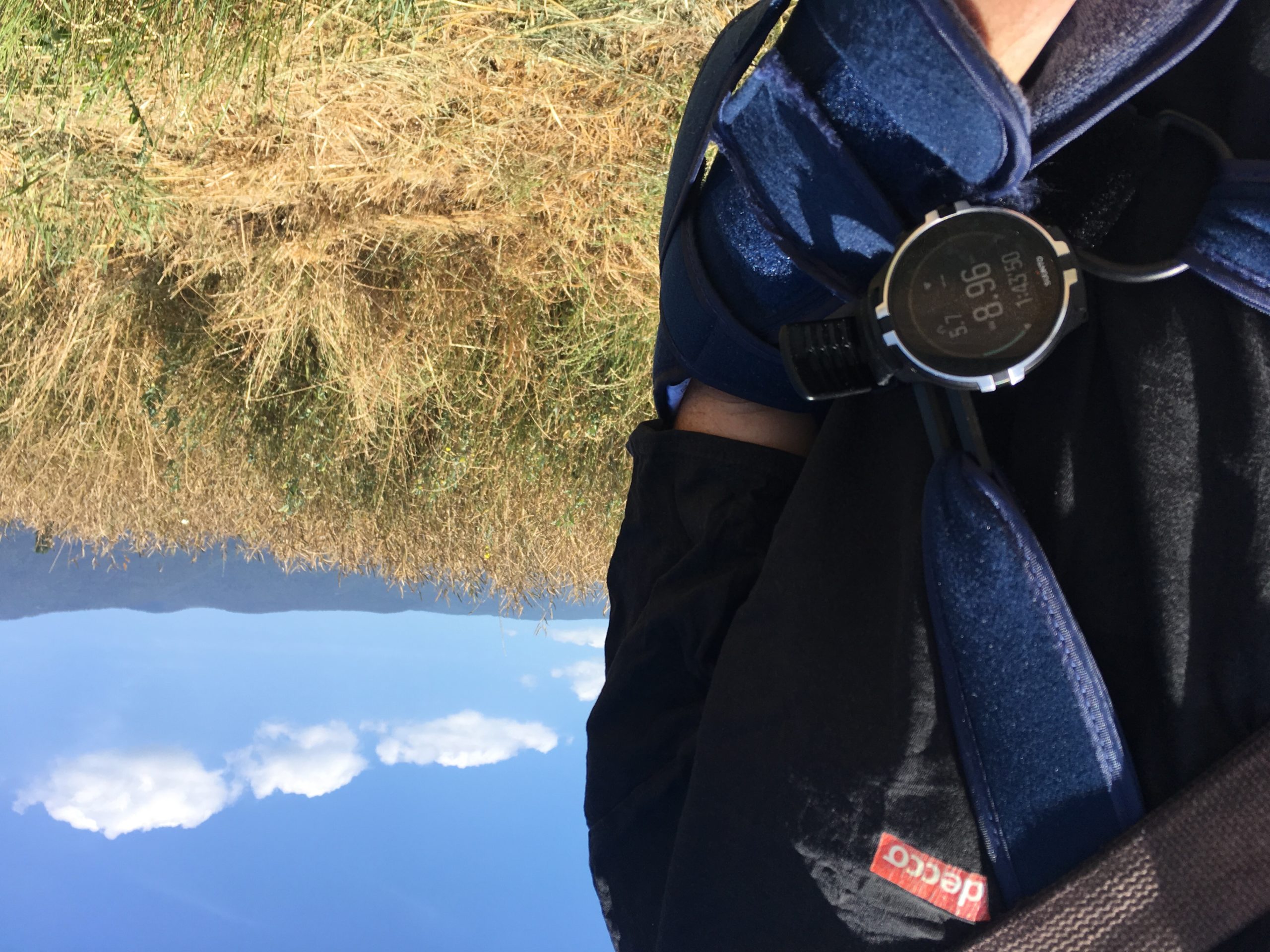 I extricated myself from beneath the bike and dragged it to the side of the road and reached into my bag to get a bottle of coke to help with the shock. I drank it and tried to recover before walking home. This accident happened just meters from my home. A driver helped and asked if I wanted a ride to hospital and I said “no” because I was so close to home. Within a few minutes I stood up and limped to put the bike in the garage and walk up to my apartment. I sat there for twenty or more minutes; thought about resting and seeing if the pain would decrease. I could feel that my left arm was limited in motion and my right wrist was in pain. It felt as if the injury was serious enough for a walk to the hospital three kilometres away. When I felt relatively certain that I wouldn’t faint along the way i started to walk. A friend who lives in the same apartment was driving a post van and asked if I needed a ride and I answered yes. Rather than being delivered to hospital by ambulance I was delivered in a postal van. First joke opportunity. I checked in to the hospital and was checked. I told them that my left arm hurt and that my right wrist hurt. I was asked if I had a helmet. I said “yes”. The medical person took my blood pressure, heart rate, checked my stomach for injuries and then told me to go to reception, take care of the bureaucracy and wait for the doctor to see me. The wait was a long one. When I finally did see the doctor she checked the mobility in my arm and thought I had probably not broken anything in my left arm but wanted it x-rayed anyway, along with my right hand. The X-ray was painful. When the doctor saw me after looking at the X-ray she said that I did have a small linear fracture in my humerus and that it had to be immobilised. My hand was not even mentioned. For the next two days I struggled with everything from opening the doors and windows to getting dressed and showering. For a short period of time I thought I would need to ask for help with daily tasks. I was sad about this injury because it meant that cycling and climbing were no longer possible for at least two weeks. I had just changed my yearly cycling goal to 3000km. For over a month I could not drive or put any weight on my left arm. I couldn’t cook much. I couldn’t drive and I struggled to shower. Due to this injury I had to walk everywhere. I walked to the shops and just to get out of the house. I was walking 15-20kms a day, during a heatwave. I enjoyed walking. As I walked everywhere I took plenty of pictures and completed my via alpine route one goal. I walked over a hundred kilometres a week.
 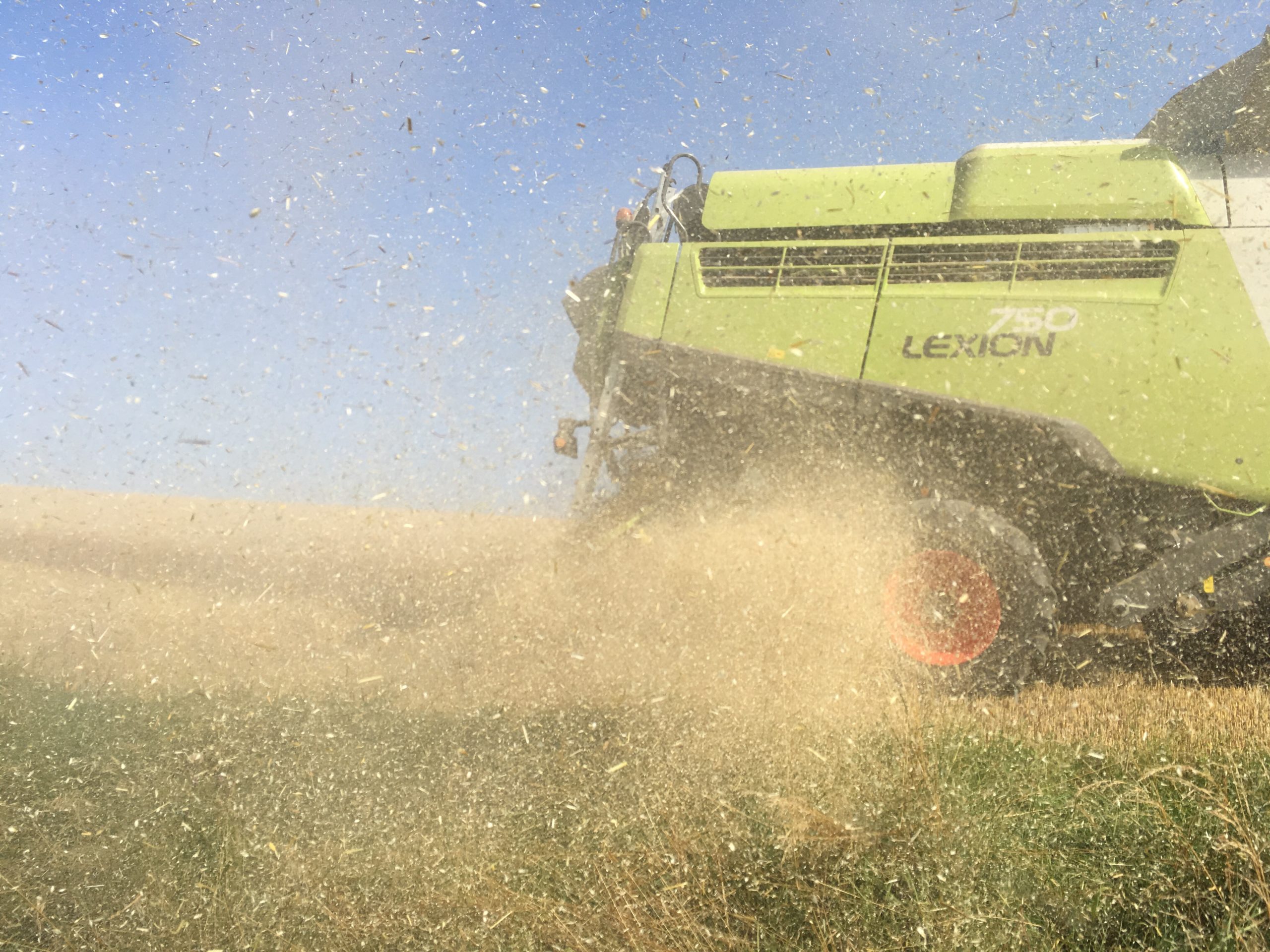 Aside from walking I also needed to rest and recover. I would turn on the television and watch the Tour de France on France 3 and France 2 every single stage. This was my best way of resting and recovering. When I could use my arm again and started physio I started to spend more and more time with the arm brace. This was a good time to get it to dry out. With the summer heat it got soaked. Eventually I did feel well enough to travel and left for Spain where I swam every morning in the sea and every afternoon in a pool. The sea was between 26-27 degrees and the pool was at a pleasant 30c. I swam half an hour in the morning and half an hour in the afternoon. Swimming was a good sport because it’s a soft sport. You can easily modulate the effort according to whether you feel pain or not. It also requires no lifting or extra strain as the bone recovers.
 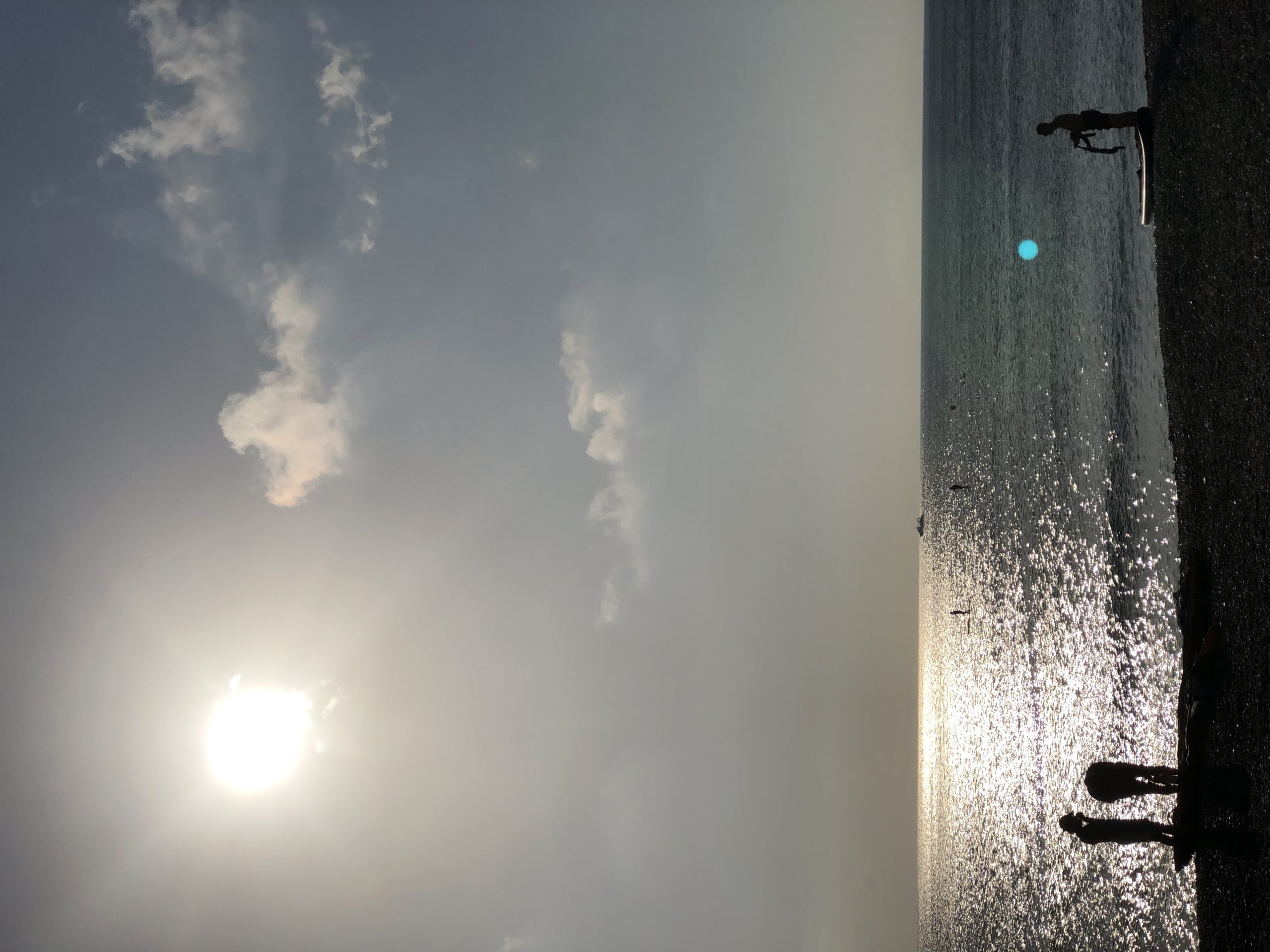 I love swimming but the main issue with this sport is that water is cold and that air is also cold. I love to be warm so I enjoy swimming most when I know that I will stop shivering sooner rather than later. I almost always swam with a mask but often with a mask and snorkel. In so doing I could see how few fish were around in the sea but also to reduce the strain put on my arms. With a mask and snorkel you don’t need to pop your head above the surface for every breath. You can also make a gentler effort and avoid straining the bones that are mending. I tracked these swims with both the Suunto spartan wrist hr Baro and the Apple Watch series four. Neither had any issues. I used the Suunto in the sea and the Apple Watch in the pool. The problem with Suunto is that they do not accommodate pools shorter than 25 metres so the stats it gave were wrong.
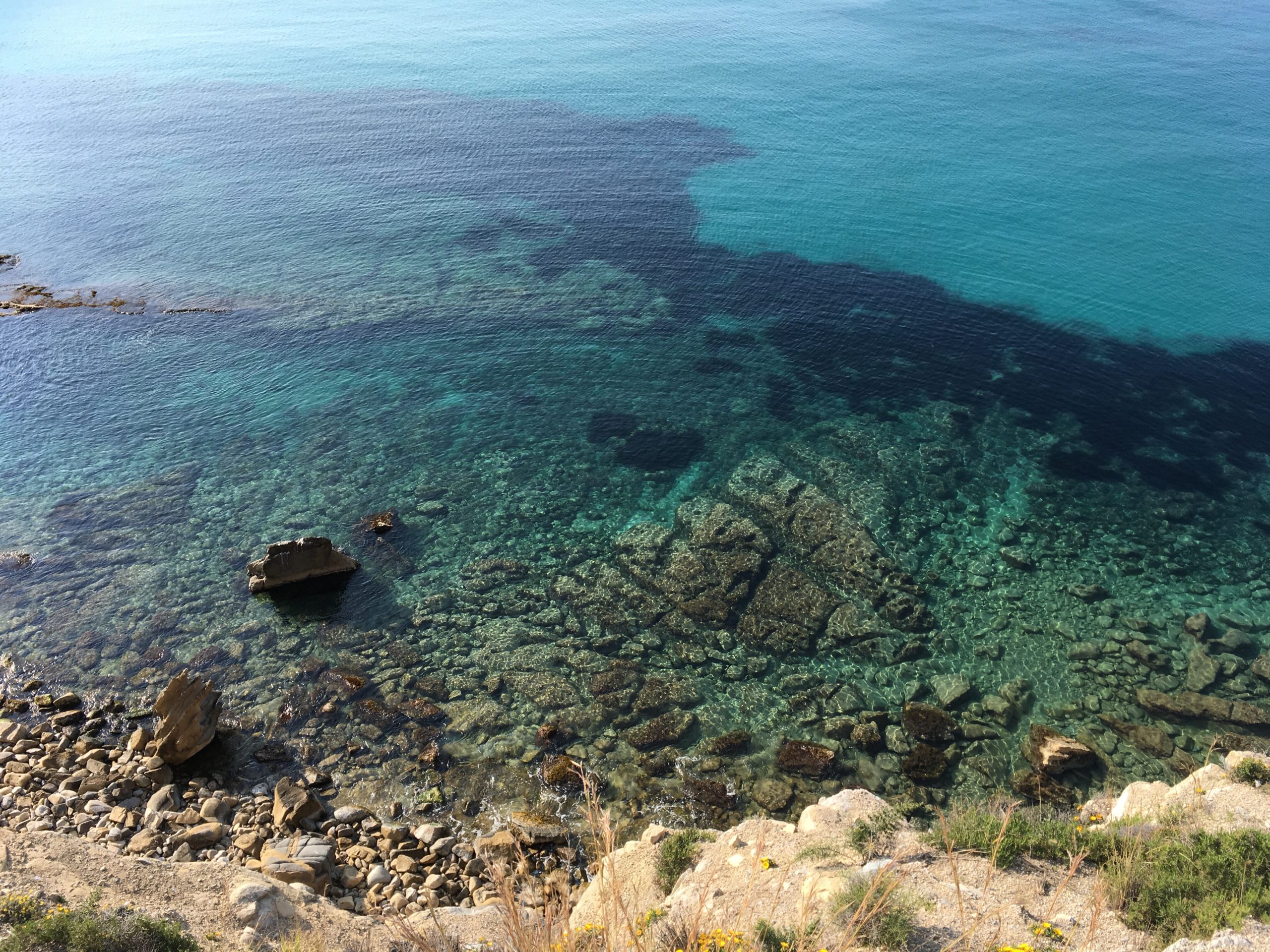 From the image above you can see that the water is really clear. I thought that with such clear waters I would see a lot. I was hoping to see fish, maybe an eel or two and maybe some crabs. It’s good to dive and snorkel close to marine reserves. In marine reserves fish are allowed to mature and grow and eventually they branch out to other areas. As a result diving and snorkeling are more rewarding. It’s at the supermarket fish section that I saw the most fish. It’s a shame that they were lying dead, on ice, rather than swimming underwater. In effect I see as many fish in the mediterranean as in the lakes of Switzerland and France so you travel for the climate rather than aquatic life. People need to allow the seas and oceans time to recover. It’s a shame not to see much aquatic life. I should try again in a different location where there are fewer people. I might be luckier.