Documentary

The Earth Race Documentaries.

Sometimes I stumble across documentaries that I feel excel in their genre. One such documentary is Earthrace: The Power Boat Race around the World. This is a one and a half hour documentary charting the fundraising, awareness building, race preparations and then the actual race, including logistics and more.

I like this documentary because the editing rhythm is in keeping with the story. The story is told in a logical and chronological order with no excessive editing, no breathless commentary, no excessive use of music. It is one and a half hours exploring the project from its start until its temporary conclusion.

Documenting climbing feats

Documenting climbing feats is an interesting challenge because you deal with issues of accessibility, projects that can last for months or even years and in some cases you’re dealing with the prospect of the climber understanding the problem, and then achieving his goal. For two or three years I really explored ideas for a climbing documentary before losing steam. My interest in the topic was still there but I couldn’t think of whom to put in front of the camera. 

The Dawn Wall film

One of the reasons for which this film is so powerful is that it’s written in the way that Heinrich Harrer wrote about the Eiger. It’s documenting not just a single attempt but the entire process. In doing so we get to know the people well. It gives us some context about their early days and then it spends a big amount of time on the process that led to a succesful ascent of the Dawn Wall. 

Magnetic - Geneva premiere

Yesterday I went to Magnetic’s Geneva Premiere and I really enjoyed some segments of the film and found that others were less interesting. Keep in mind though, that this film is two hours long and that this increase and decrease in interest is normal. 

What made this screening special is that many of the people that we saw in the film were present at the event. Before the film started they were presented to us individually, said a few words and then one person won some skis and another won for tickets to a ski resort. 

CuriosityStream - a place to find interesting documentaries

Yesterday I started exploring CuriosityStream, a video streaming website that makes finding and watching documentaries easy. You can have a trial run of seven days but after watching three documentaries since yesterday evening I am convinced that it is a place where I want to watch more content. 

I like documentaries that are well produced and enhance my understanding of topics. The documentaries I have watched are Dawn of the Oceans and the first episode of Quantum Physics yesterday. Today I watched Ships that Changed the World. 

Glacier Exit - A short documentary showing a glacier's retreat

https://vimeo.com/198306286

Originally they meant to go out to have an adventure. They interviewed an individual about how the glacier’s rate of retreat has been increasing over the years. “I used to come here with a snow plow. Now I need a lawnmower”. 

Global warming is visible around the world. Rockfalls have made hiking dangerous. There have been rockfalls at “Les Cosmiques” as well as along one of the routes I walked last year near Zermatt. 

D-Day Film archives on Facebook

Yesterday D-Day Film Archives were shared on Facebook. These film archives were of landing crafts landing troops on the beaches, of battleships firing rocket salvos at the coast, of gliders being pulled by planes, of paratroopers getting and more. Over the years films have been preserved by transferring the footage from one film stock to another and then transferred from film to tapes. The problem with film and tape is that they are stored in a physical location that only archivists have access to. This means that if we’re curious about seeing the footage, like the footage included in this post we would have to go to the film archive and ask for permission to see this footage. Within a few hours, days or weeks we might get an answer. We would have transport costs, access costs and more. The advantage of digital video archives accessible online is that everything is accessible within a few seconds with the right keywords. This means that a child hearing about the Second World War for the first time can do a quick search and see this footage. History, rather than being words on a page, is brought to life. It stops being an abstract subject for the mind. In this footage, we see our grandparents and our nephews and nieces see their great-grandparents. An effort, by the international community, should be made to preserve, digitise and then make available as much of this film material as possible. The technology exists today so that, at the very least, we can have digital backups of all of this material and in the best case scenario for this material to be available for future generations to watch and study. I have already spent 15 months as a video archivist and media asset manager and I would like to continue this line of work. I find it to be a fascinating and interesting way to learn about history. It inspires to find books that contextualise the material that I am seeing on screen. This material makes us more informed citizens of the society in which we live.
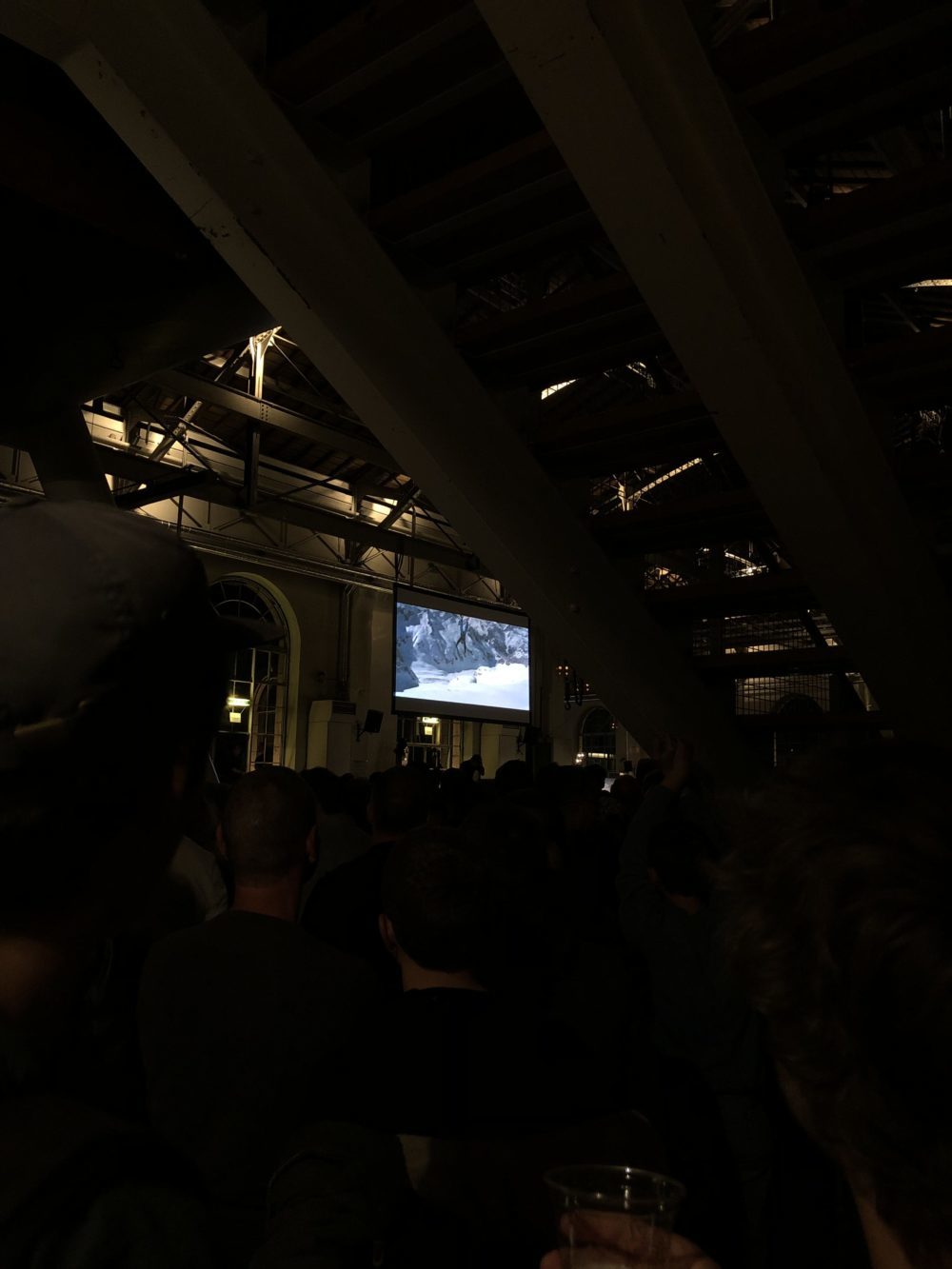
Dirty Gold War screening at the Graduate Institute.

I went to watch Dirty Gold War at the Graduate Institute at lunch time today. The film is interesting because it makes you think about the environmental impact of gold mining. We’re familiar with the stories of gold mines in South Africa. We’re familiar with the stories of the gold rush. We don’t often think of the environmental impact of Gold mining in rain forests in Latin America. This documentary introduces the topic well. It brings our attention to the fact that when people buy luxury products like gold watches, bracelets and other objects they are buying objects that have no environmental or ethical credentials. It leads us to question when the luxury industries will be accountable to such considerations. Mobile Phones, laptops, televisions and other devices all contain traces of gold. If that gold is sourced from environmentally unfriendly sources then we are contributing to the destruction of the rainforests and the poisoning of ecosystems. Fairphone and other companies with such goals benefit from such documentaries because we are shown why their goals are so important. It contextualises their mission and their reason for being. It also helps to put pressure on all electronics manufacturers to do more to reduce their impact on the environment. Dirty Gold is a topic that does not get much attention. As I reach the conclusion of this blog post I find that Dirty gold points to a music album rather than gold mining. We need to raise awareness of this topic. People are wearing wedding wings, luxury products and using electronic devices that are in part for the degradation of the environment. As awareness of these issues grows so companies like Apple, Sony and others should work to ensure a clean product line, from raw material in the ground to the finished product.

The Great Wide Open - Episode 5

The Great Wide Open is a different climbing video than I am used to because it discusses history, culture and American identity. It speaks about the American Independence day and watching fireworks from “Devils tower”, a laccolithic butte. This is an interesting rock formation. The rock has vertical cracks that are impressive to see. There are many aspects that I like and enjoy about this video. I like the visuals and I like the discussion of history and opportunism and passion. The segment that I like less is about death. I associate death with scuba diving rather than climbing. Recently I have watched quite a few documentaries about climbing and death. The film Sherpa and one other explored the themes both of mountain professionals and the risks they take and the other looked at climbers and the risks they take. They’re interesting topics but exploring the lives of people who live their passions is more pleasant. One person said “I think too many people live their lives, five days looking forward to the two day weekend and they don’t look forward to their life on the small amount of time we have on this earth.” That’s why I enjoy watching documentaries about this topic. For brief instants we get to dream and to aspire to new things. There is a lot of attention in the media today about how women look and how they are perceived. The focus needs to shift away from how women look and focus instead on what they can do. Climbing news and videos are one way to achieve this goal. We see women who excel at their chosen sport and this has a positive effect. It takes us away from the superficial and presents us with the concrete. In climbing we notice women for their prowess rather than their looks and this is positive. I appreciate them for their ability  to challenge and overcome their fears. I frequently climbed with someone who was afraid and I would not hesitate to do it again. Enabling others is a good quality to have.

Squadron Scramble - book review

Squadron Scramble is an interesting book to read in post-BREXIT England because it highlights aspects of the Second World War that BREXITers forget about. It looks at how the main character had to flee France via Dunkirk as well as the situation that Polish airmen had found themselves in. First they lost their homes, then they had to flee France when it was invaded and finally they went to England via North Africa. You can read more about Polish Air Forces in France and Great Britain following this link for factual rather than fictional information and context. The book provides us with an easy to read, easy to understand scenario. If you had lost your country and you were flying for a third country would you want to shoot pilots as they parachute to safety or would you allow them to live. If you were in England during the Second World War at what point would you have felt secure and confident that Germany would be overwhelmed and beaten. When would the battle shift from a fight for survival to a fight for supremacy? This book focuses on the air war during daylight hours when Hurricanes and Spitfires were in their element and only glimpses at dog fighting at night. The book touches superficially on a number of topics without providing as much depth and context as it could. This is an interesting documentary about the Polish contribution to the Battle of Britain. It shows how effectively they helped to fight the German Luftwaffe and how they were betrayed by the British people once the war was over. They had fought to defend England and defeat the Germans in order to ensure that their country would be freed from the Germans only to be betrayed when their country was handed over to the communists. Some of them went back to Poland but had to flee to other countries. They were not honoured in the victory parade either. The documentary is interesting as it provides its viewers with a good account of the Polish contribution to the British and Allied war effort.