History

Reading to Understand The Past

When I read books i read to be transported back to a different time and a different way of thinking. That’s why i read James Bond books, among others. The books are old-fashioned but it is that obsolescence that makes them interesting.

They take us to a time before travel as we know it today. Imagine reading about being sun burned and sun oil. Imagine reading about speeding cars. Imagine reading about a time before road safety laws and speed limits. Imagine reading about when scuba diving was still exotic and more.

Twitter and SMS

Back in the good old days of Twitter the length of a tweet was limited to the length of an SMS. The aim was to make it possible for people to tweet and have conversations using GSM phones. With short messages we could leave the keyboard behind and read messages on our mobile phones.

Jaiku was similar except that it was more advanced, having an app that played well with Symbian devices. With time, and the advent of the iphone and ubiquitous data plans so platforms like Twitter and Jaiku could add images and more. With time Seesmic experimented with video and instagram with images. Instagram thrived because it made uploading and sharing images fast and easy, even in the days of limited bandwidth.

Version Control, Engineering and Rocket Engines

Every Rocketdyne engine was fine tuned and perfected by hand, from plans, that were modified but not updated. This means that each engine was unique. It would take trial and error to build them again.

With GIT and other forms of version control the entire process could theoretically have been logged and preserved, not so, in this context. Interesting video.

https://www.youtube.com/watch?v=ovD0aLdRUs0

Perm 36 YouTube Video Visit

Last night I watched a video about a visit to Perm36 but it covered just the trip. The video below is far more complete and informative. I am currently reading Gulag by Anne Applebaum, rather than The Gulag Archipelago, like she mentions. I started reading it decades ago but never finished it. I read A day in the Life of Ivan Denisovitch in a single day.

https://www.youtube.com/watch?v=vgtjgPtGmx0

Reading Gulag, The Gulag Archipelago and other books helps give some context to what Soviet Russia was like. As I read Gulag by Applebaum I get the feeling that Soviet Russia was about enslaving people to make profit for some whilst everyone else suffers. From this perspective what the Soviet Union would morph into, at the end of the Soviet age would make more sense.

Apollo Comms - A Series on YouTube

I have not studied electronics but I have studied the Google IT support course among others so I have some basics of how computers and tech work. This type of documentary series is interesting because it brings history to life, and explains how things work. It is not sensationalist, does not use too much music and more. It just guides you through how technology works.

https://www.youtube.com/watch?v=v49ucdZcx9s

I was surprised to hear that transmission was as low as 2 watts and as high as just 11 watts. I also learned that for some communications they used just two watts of power for Apollo 13, 57 hours into the mission, to reduce power consumption. Of course on Earth they had a 270ft antenna to receive the signal. Compare this to a radio station that may use 50,000 watts. I don’t remember how many watts were used in satellite broadcasting but from a quick skim it’s about 20 watts but this goes to smaller and smaller dishes on earth. Starlink uses about 2 watts of power.

Funerary Relief - Colourised

When we have seen hundreds of statues and other objects over the decades of our lives, it is easy to assume that statues and other objects are just statues, that they have no colour, but of course they did. What was just a relief becomes a 3d painting after colour is added. It brings sculptures and reliefs back to life.

https://twitter.com/chapps/status/1393686718033719301

With 3d modelling it is easy to reproduce an exact replica of a painting or sculpture and then imagine how it would have been colouried. Tweets are frequently shared, that show statues and other objects as they would have looked when new. With mosaics we see them dry and dull, but with water they come back to life.

Roman Fish Salting in the Mediterranean

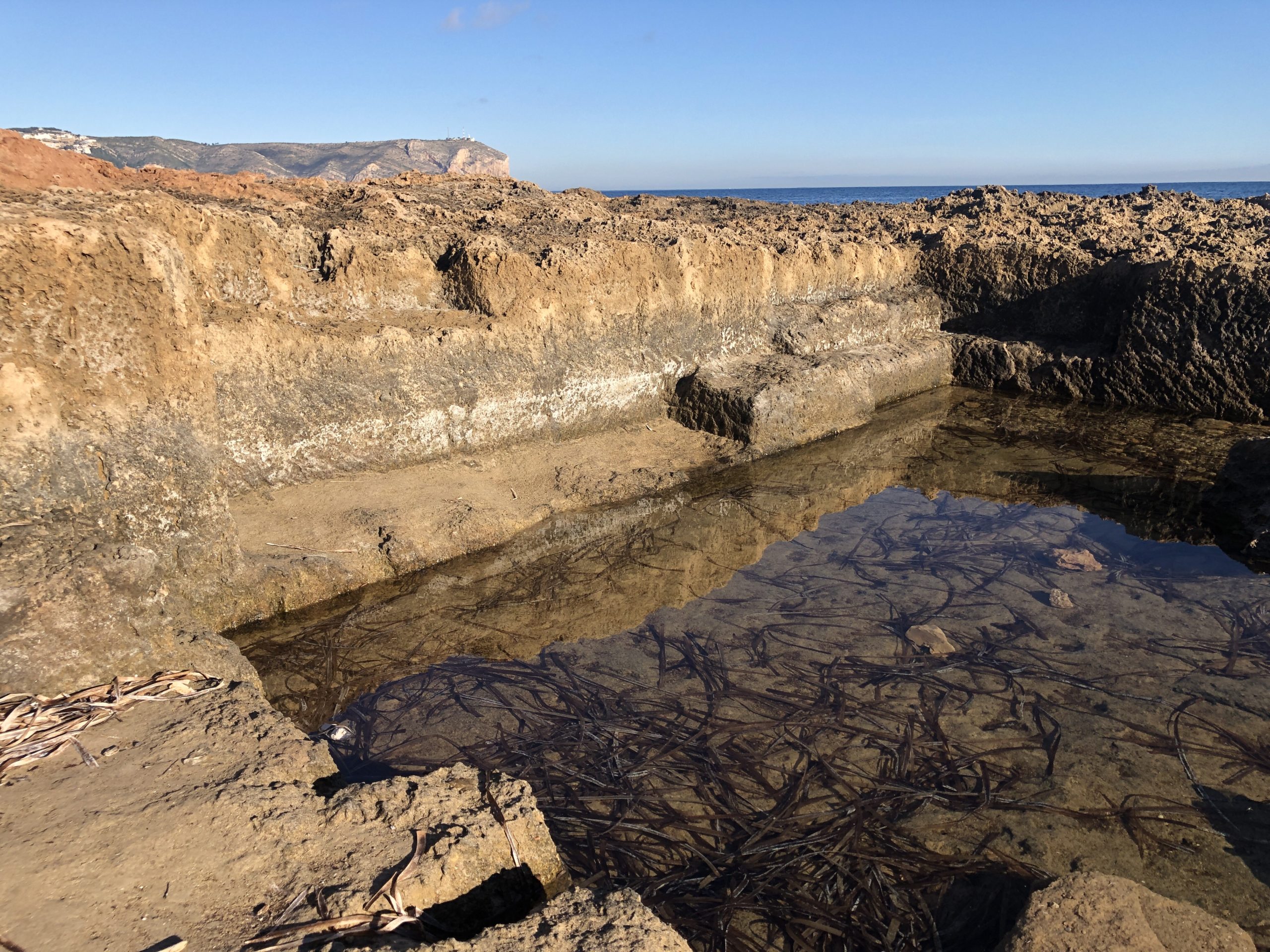
Roman Fish salting bath

Roman Fish salting bath

For years I heard about Roman pisciculture baths near the sea in Spain and I thought that this is where they would keep fish for eating, like they did in medieval Europe. That idea is wrong. The pisciculture that you have near Javea, Cadiz, and other parts of the Mediterranean coast were for the production of Garum and other salted fish versions.

The Romans on Twitter

Over a few months I have seen that tweeting about the Romans is growing in frequency. The accounts that I see are tweeting about Roman Britain. They share images of mosaics, digs and new discoveries. It is a way to follow archeology and Ancient history in a modern context.

https://twitter.com/romanmosaics/status/1411934843928199170

By following tweets about the Romans in Britain it is a way of being reminded on a daily basis about new discoveries, new experiences, and new places to visit. It is a way of seeing how extensive Roman Britain was. People walk along the roads, show remnants of ruins and more. They also share the opening times of museums and areas of interest as well as events that may be taking place.

Empire Of The Deep and Brexit

I am currently reading Empire of the Deep, The Rise and Fall of The British Navy and to read it within the context of Brexit is interesting. We already know that the British gave up on the Catholic Church because Henry the Viii wanted to change wives and the Pope said no. (I am oversimplifying it, for the sake of this blog post.) While reading Empire of the Deep I see that the English have a very long history of being at conflict with Europe.